"Behind every report there is a story"
How Plavi telefon turns a child's call into help for the whole family

- Bosanski/Hrvatski/Srpski
- English
Bosnia and Herzegovina's only helpline for children takes every report of violence seriously, even when the truth turns out to be different. For one 14-year-old girl, that made all the difference.
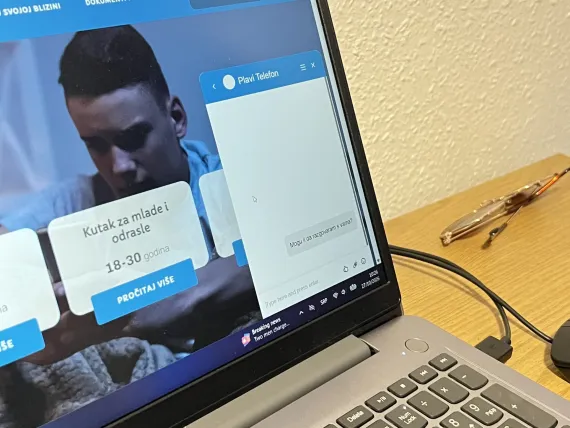
The first contact was a phone call in late summer 2026. A few days later, Lana* came back through the chat. Writing was easier than talking. She was 14, and she had something difficult to say: her father was violent towards her and her mother, and he controlled every mark the family spent.
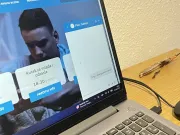
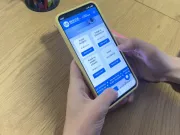
On the other side was a counsellor from Plavi telefon (Blue Phone). This free and anonymous helpline for children and young people has been run since 2013 by the association Nova generacija, in partnership with UNICEF. Its counsellors are psychologists. They listened, asked careful questions and explained to Lana what would happen next.
"When a child calls us, we listen, offer support and counselling, and help them understand what they can do next. If they tell us about violence, we also explain our obligation to report it and what will happen next," says Bobana Lipovac, a counsellor at Plavi telefon. "The report goes into the child protection system, to the centre for social work and the police. They are the ones who check what is really happening in the family."
What the centre found
The centre for social work already knew Lana. She had been showing risky behaviour for some time, including self-harm and online contact with men she did not know. When social workers visited the family, they found no evidence of domestic violence. They did find something else.
Lana's parents disagreed on almost everything about raising her. Her father was very strict and her mother very permissive. Without clear and consistent boundaries, Lana had started acting like an adult in a home where no one was really in charge. Her reports of violence were, at least in part, a form of rebellion. They were also a sign of how badly she was struggling. During her conversations with counsellors, Lana spoke about self-harm and suicidal thoughts.
"Children sometimes experience strict rules and punishment as violence," Lipovac explains. "But no report is ever dismissed. Behind every one of them there is a story that needs to be resolved. In Lana's case, the call did not uncover violence. It uncovered a child who needed help, and a family that needed support."
A response for the whole family
The response came quickly. The centre for social work began working with the whole family. With the parents, the focus is on setting boundaries together and agreeing on how to respond to Lana's behaviour. Lana is in psychotherapy, which helps her step out of the adult role she had taken on. She also has regular check-ups with a psychiatrist.
Today, a social worker visits the family every week. The counsellors at Plavi telefon learned about the outcome from the centre. Sometimes, Lipovac says, children call back themselves to tell them how things turned out.
When the call is not about violence
Not every conversation ends with a report. When a child describes a problem that is not violence, counsellors spend 30 to 40 minutes, and often much longer, helping them talk it through. Then they help the child find someone nearby: a community mental health centre, a psychotherapist, a school psychologist or another adult they trust. "There are no small or unimportant problems," Lipovac says.
What girls tell the helpline
Girls contact Plavi telefon more often than boys. An analysis of more than 77,000 contacts between 2013 and 2025, carried out with UNICEF and the University of Banja Luka, shows that girls, especially younger adolescent girls, are also more likely to talk about violence and suicidal thoughts. Almost 15% of contacts concern abuse, violence or gender-based violence. More than a quarter concern mental health.
"Girls report more, but they are also more often the victims," Lipovac says. Today the most common topic on the line is relationships between young partners. Counsellors increasingly hear about control and violence in teenage relationships, sexual threats online and intimate images shared without consent. Girls are most often the targets of sexual violence online.
Keeping the line open
Plavi telefon can only help children who get through. The line is funded to operate on weekdays from 9:00 to 17:00. Between January 2022 and April 2025, 12,481 calls went unanswered, most of them in the evening, at weekends and on holidays. With support from the Gender Equality Accelerator, Nova generacija and UNICEF launched a campaign in October 2026 to keep the line open until at least 22:00, every day of the year.
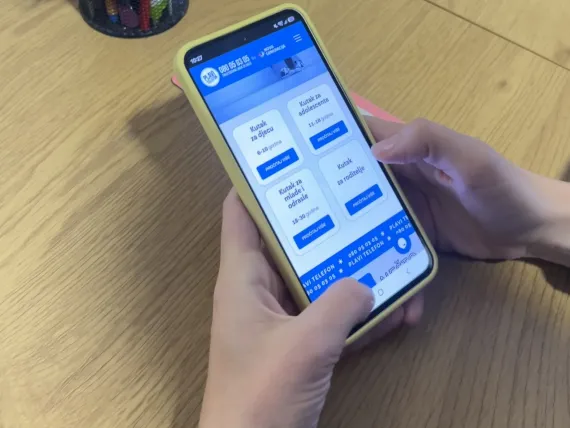
Children and young people in Bosnia and Herzegovina can reach Plavi telefon free of charge on 080 05 03 05, or by chat and email at plavitelefon.ba.
*In line with safeguarding standards, the child's name and some details have been changed to protect her identity.
This activity is implemented as part of the Gender Equality Accelerator joint programme, implemented by United Nations agencies in Bosnia and Herzegovina (UN Women, UNDP, UNFPA and UNICEF) with financial support from the European Union and the governments of Denmark and Sweden, in cooperation with the Gender Equality Agency of Bosnia and Herzegovina, the Gender Centre of the Federation of Bosnia and Herzegovina and the Gender Equality and Equity Centre of Republika Srpska.