
The World of STEM Professions
How a Career Guidance Training Helps Girls Choose Professions Aligned with Their Abilities and Values
- русский
- English
“Every door is open to you,” adolescents often hear at graduation ceremonies. In many ways, this is true. Belarus has a strong education system, social support mechanisms, and a wide range of academic institutions and fields of study to choose from.
Yet career decisions rarely begin with a blank page. By the age of 15-16, adolescents have already developed internal social filters that shape the professions they consider possible. These filters are built from parental expectations, portrayals in films and media, teachers’ comments, and peer conversations.
It is similar to shopping in an online store: you enter and immediately apply filters — color, size, style. Out of 500 options, only 20 remain. The same happens with professions. Formally, the choice appears broad. In reality, it narrows into a tunnel.
Choosing a future path is difficult for any teenager. But for some, the field of options is even narrower — and the filters stronger. Girls often limit themselves due to stereotypes about “female” and “male” professions. Adolescents without parental care frequently choose what seems practical: enrolling after Grade 9, selecting a clear and familiar specialty, and entering independent adulthood as quickly as possible. When these two factors intersect, the range of choices becomes particularly restricted.
These young people need additional adult support — not to decide for them, but to help them revisit their filters and retain the most important ones: my abilities, my values, my preferences.
Because this decision will genuinely shape their life trajectory.
To support adolescents in making informed career choices, UNICEF in Belarus, with the support of SOS Children’s Villages, launched a pilot series of career guidance trainings for girls without parental care titled: “The World of STEM Professions: Where Can I See Myself?”
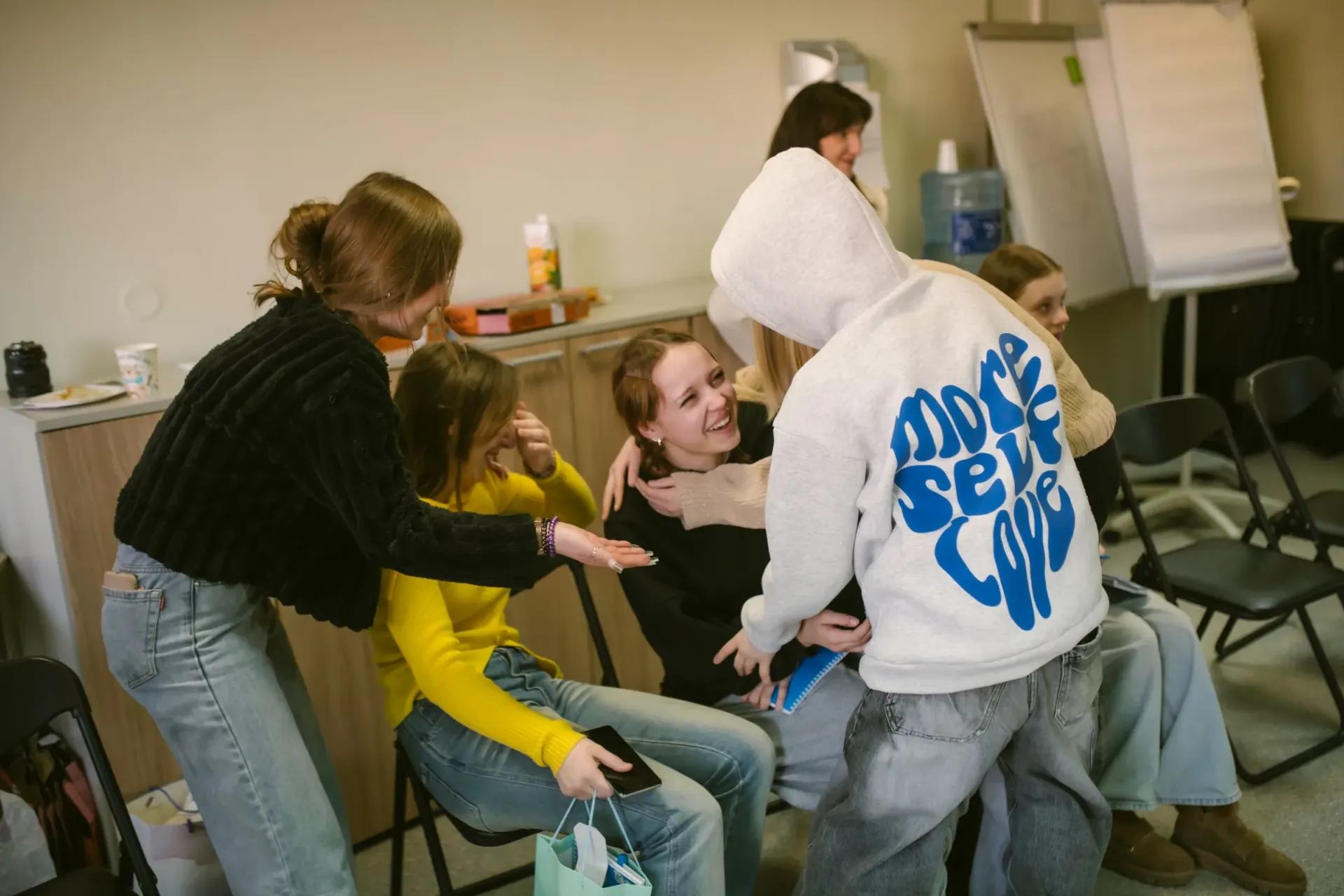
Inside the Training
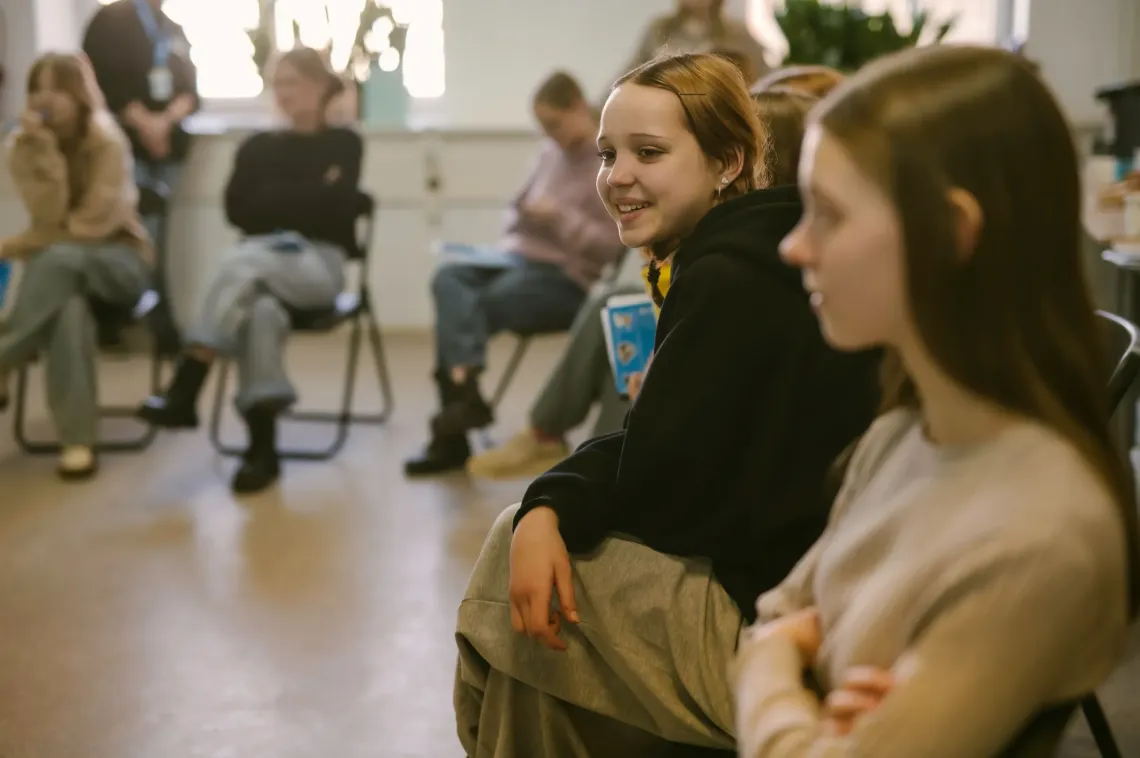
At the first session, Masha, Elvira, Sasha, and the other girls barely spoke. At the second session, they admitted they were tired of the topic. Tired of answering the question: “What do you plan to become?” Some shared that exhaustion and heightened responsibility made it easier to simply choose whatever adults recommended — or whatever their grades allowed — just to stop being asked.
The girls confidently listed what they were “definitely not capable of.” But when the conversation shifted to their strengths, there was silence.
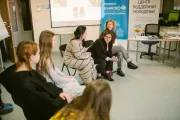
There was no dramatic breakthrough. Gradually, through simple exercises, group agreements encouraging support and “no silly questions,” and conversations with women working in engineering, technology, and science, the atmosphere changed. At some point, the room grew louder. Curiosity began to replace fatigue.
Questions emerged:
“Were you afraid?”
“Did you ever fail?”




What Is STEM — and Why Does It Matter?
STEM stands for Science, Technology, Engineering, and Mathematics.
Today, STEM is not simply a cluster of professions. It represents an approach to learning and thinking — the ability to work with data, understand technologies, analyze information, and solve complex problems.
In Belarus, elements of the STEM approach are already integrated into the education system: interdisciplinary assignments, project-based learning, specialized engineering classes, STEM centers, and the National Children’s Technopark.
The infrastructure exists. But another question arises: Who chooses these pathways?
What Is the Challenge?
Globally, STEM fields demonstrate a persistent gender imbalance. In Belarus, only about 20 per cent of young women are enrolled in engineering, manufacturing, and construction programmes.
At the same time, findings from Programme for International Student Assessment (PISA) indicate that the gap in mathematics performance between boys and girls is minimal. In Belarus, the 2018 assessment showed nearly identical results (475 points for boys and 469 for girls).
The issue is not ability. It is stereotypes and self-selection — the very social filters that narrow choices.
For years, girls receive implicit messages: choose something “feminine”, something compatible with family care, construction is difficult, engineering is a male environment. In films, engineers are typically men. In advertisements, builders are men. Even in fairy tales, rescuers are often male. If these filters remain unchallenged, they reproduce themselves across generations — with significant consequences.
STEM sectors include technology, engineering, infrastructure, energy, communications, and digital services. These are sectors that drive GDP, exports, and innovation.
When women consistently represent only 20-25 per cent of participation in these areas, a country effectively halves its talent pool. This also contributes to income disparities. STEM professions tend to offer higher income ceilings, greater scalability, and stronger links to leadership and strategic decision-making.
Moreover, in the coming years, up to 90 per cent of jobs globally will require technical competencies. STEM is no longer about “becoming an IT specialist.”
STEM knowledge and digital skills underpin adaptability, competitiveness, and ultimately quality of life.
How Does the Training Help?
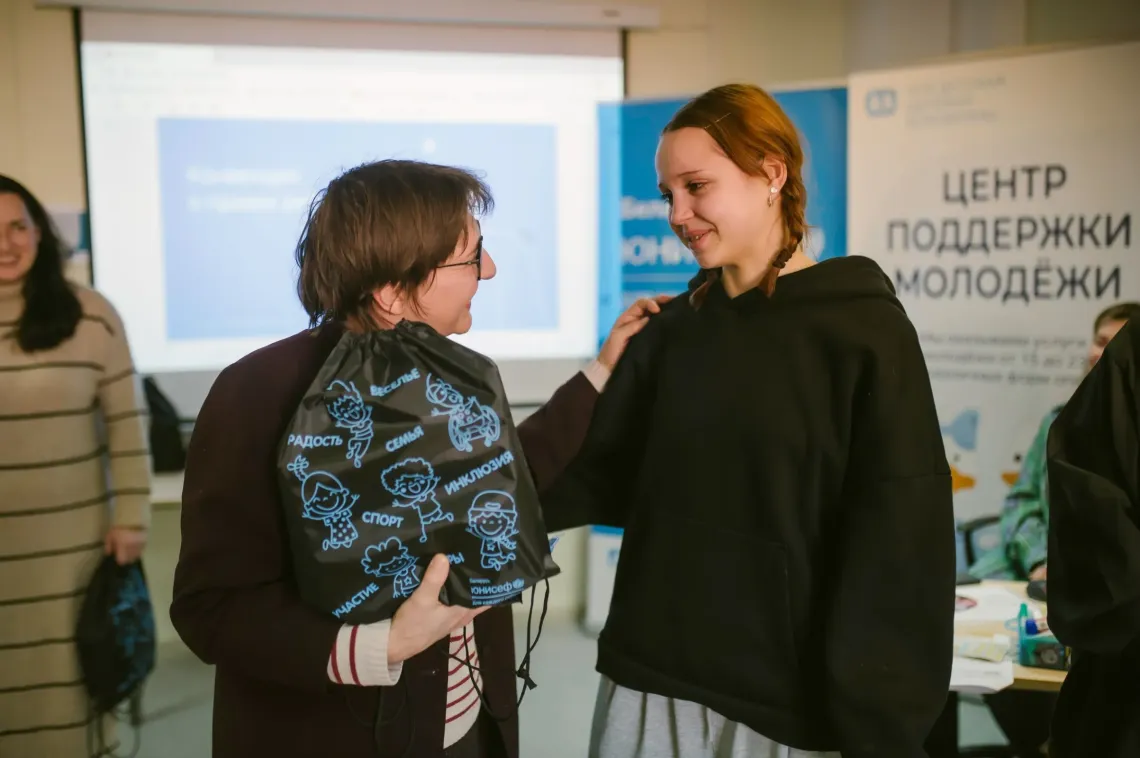
The programme “The World of STEM Professions: Where Can I See Myself?” is not an advocacy campaign urging all girls to enter IT or become scientists. It is a conversation about understanding the world and recognizing one’s possibilities.
During the training, girls realized they were already using STEM skills — when managing personal budgets, planning expenses, analyzing social media audiences, or working with data.
The objective is to expand their sense of possibility and strengthen their confidence in their abilities and digital competencies — regardless of the profession they ultimately choose.
Masha’s Story
Fourteen-year-old Masha (who prefers to be called Manya) arrived at the training with two scenarios in mind.
The first, which she considered “correct” and widely approved by adults — including staff at her residential institution — was to study accounting. She does not rely on her parents’ opinions: two months earlier, she entered residential care after a prolonged and difficult family situation.
“I told parents my GPA was 4.5,” she said. “In reality, it’s almost 9. I just didn’t want conversations and expectations to start.”
The second scenario — one she allowed herself to consider quietly — was becoming a social worker.
“For a long time, I cared for my grandmother after her stroke. I still do. There’s no one else to help her. I know I don’t want to ignore a loved one like my father did. I want to help people. I want to help older people like my grandmother.”
After the training, Masha realized the second path felt closer to who she is. In her mind, it had seemed less prestigious — yet she discovered there are many professional development pathways in the field. At one session, a specialist described her work implementing digital solutions in social services. For the first time, Manya saw that helping people could be modern, technological, and professionally complex — not low-status.
That experience illuminated new possibilities.
“I was naive about professions,” she reflected. “I wanted to be an accountant and didn’t even think about it being a sedentary job. I can’t do that. I need movement. I need people.”
The training focused not on prestige, but on alignment and prospects — values, working formats, personal priorities. Following assessments and individual consultations with a career counselor, Masha developed a concrete plan: required GPA, entrance exams, and further education options.
STEM did not push her into a technical profession. It helped her remove an unnecessary filter — “choose something more practical and prestigious” — and retain the most important one: “This suits me.”


Programme Structure
The training programme follows a sequential pathway — from expanding horizons to supporting personal choice. It began with foundational trainings in Minsk and the Minsk region, aligned with the operational areas of SOS Children’s Villages. Approximately 60 girls aged 14-16 participated.
Rather than listing professions, facilitators explored what stands behind each letter of STEM, examined various technologies — from food production to information systems — and discussed how these technologies shape daily life and which professionals make them possible.
Following this stage, 15 participants continued in an advanced group. This phase included individualized support and practical planning: mapping educational routes, calculating entry scores, selecting exams, and considering alternative trajectories.
Girls discussed skills in demand across sectors and learned to recognize technology in everyday services — retail systems, banking platforms, social services. They met women working in STEM and asked direct questions about fear, failure, and uncertainty.
Parallel sessions focused on self-determination — strengths, values, preferred work environments, and skill development. For many, this was the first time career choice was framed not around what is “prestigious” or “realistic,” but around:
Who am I, and in what environment can I grow?
At its core, the programme rests on a simple principle: First, expand the realm of possibility. Then support each girl in building a realistic, personalized pathway with professional guidance.
What Comes Next?
One of the priorities of UNICEF in Belarus is to work with partners to help prepare a generation capable of navigating the challenges of the 21st century.
While we cannot predict what these challenges will look like in 10–15 years, we know that children will need more than academic knowledge. They will need:
- Critical thinking
- Emotional regulation
- Psychological resilience
- The ability to make strategic decisions
This is an ambitious goal. But when broken into concrete steps, it becomes achievable. With UNICEF’s support, schools have introduced the elective course “My Psychological Well-Being,” and colleges have piloted social and emotional learning programmes. Career guidance is another essential component of this support system — particularly for vulnerable adolescents, including those with disabilities, those living in residential care institutions, and those in contact with the law.
The training series “The World of STEM Professions: Where Can I See Myself?” is a pilot initiative. Next steps include evaluating results, refining the model, and scaling implementation.
What is already clear is that effective career guidance goes beyond informing adolescents about professions. It means accompanying them through the process of choice. It means strengthening their capacity to make informed decisions and build their own educational trajectories.
The doors are indeed open. The responsibility of adults is to ensure that every child has the resources, confidence, and support needed not only to see those doors — but to walk through them.