To teach you to understand your emotions and motivate you to contact a psychologist
A student from Pruzhany tells how she and her classmates came up with a project to develop emotional intelligence

- русский
- English
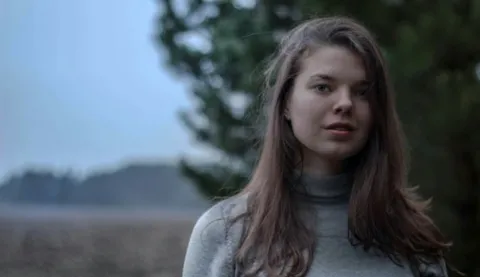
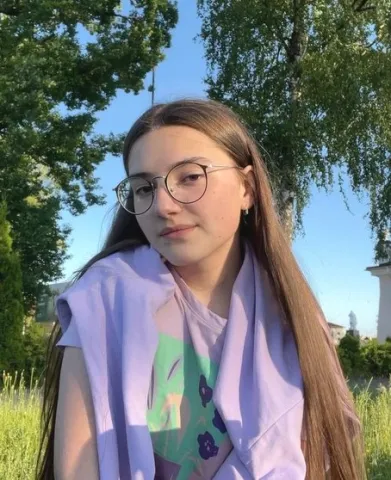
Yana Bobruk from Pruzhany is 15 years old. Like thousands of modern teenagers, she worries about her future. She is about to undergo her final exams, decide where to study and how to build an adult life separate from her parents. It seems that the girl has decided on a profession; she is looking towards linguistics. Yana has already immersed herself in learning English, Italian, and Japanese and wants to master Chinese. When there is worry and anxiety at heart, Yana tries not to withdraw into herself, she knows that she can always talk about her worries with a school psychologist. Or find answers in books on psychology, which she is fond of.
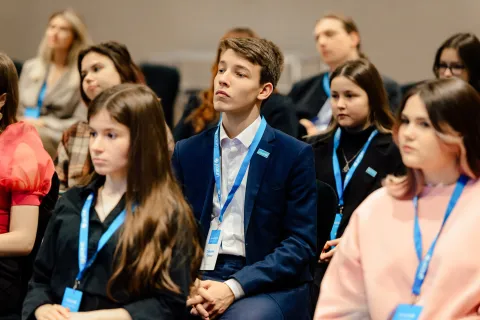
This academic year, the school psychologist invited Yana to join the elective class "My psychological well-being and helping my peers in a crisis situation". There, the girl teamed up with her classmates to become a participant in the Republican training on social design UPSHIFT. It is a methodology that teaches teenagers to identify, study and understand problems in local communities, and then create effective project solutions in the form of products, digital solutions or services. It also helps to develop social innovation and entrepreneurial thinking skills, including communication skills, problem solving, critical thinking, financial literacy, and budgeting.
Such a program has been implemented in Belarus since 2019. This year it was dedicated to the topic of psychological well-being and implemented by the Institute of Psychology of the Belarusian State Pedagogical University in cooperation with the United Nations Children's Fund (UNICEF) in Belarus.

"Public speaking, a teacher called me up to the blackboard, someone is being humiliated in class..."
During the training, teenagers from Pruzhany School No. 1 developed the project "PRO-emotions", which will help peers develop emotional intelligence – skills and abilities to recognise their own and others' emotions, manage them, understand motivation and desires of other people.
"When creating the project, first of all, we thought about boys and girls who were left without parental care; they study with us at school. We noticed that they avoid new acquaintances, sometimes feel insecure, stay away and try to communicate only with "their own". We wanted to involve them in the active life of the school, motivate them to contact a psychologist and start dealing with their emotions," Yana says.
As the main tool for the development of emotional intelligence, we decided to use a currently popular method of psychologists' work, which is metaphorical associative cards (MAC). These are metaphorical associative cards with different images. Each person sees their own associations in these pictures. Such cards help to engage the subconscious mind, analyse the feelings that arise and solve the problem or issue that they have asked for help with. The second deck describes different situations faced by a teenager. For example, public speaking, being called up to the blackboard by the teacher, bullying in class, a child transferring to another school. First, the player takes out a card with the situation, and then a MAC and starts to analyse it, talk about their associations and emotions.
The PRO-emotions project was not included in the list of winners, but this does not stop the team members. They are determined to implement the idea at school – at the elective class on psychological well-being, planning sessions or on school days on Saturdays. The idea has already been tested on some students.
"We gathered together with our wonderful volunteers and children from the shelter to hold a PRO-emotions workshop on psychological well-being, filled with useful exercises, and most importantly kind emotions," Olga Tsebruk, a school psychologist at Pruzhany School No. 1, shares her impressions.
"The beginning of the class turned out to be the most difficult part, when the guys got to know each other and established contact. It was difficult to open up; for obvious reasons they had lost trust in their environment. But we succeeded, and after a few minutes everyone was dancing together, discussing difficult situations and their own emotions, reflecting, expressing gratitude to the volunteers. Together we decided that such meetings would be regular. They help to learn how to manage our feelings, find inner strength and support each other in difficult moments."
The main result of the joint session was that the peers managed to make friends. The volunteers of the school assured that they can be contacted on any issue: help with homework, problems in relationships with peers, and just when it is necessary to talk "heart to heart."

"There's no need to think that everyone is against you"
Thanks to the elective class "My psychological well-being and helping my peers in a crisis situation", Yana began to understand herself better; it is easier for her to communicate with people, understand their actions and motives. Topics such as personal boundaries, bullying, emotional intelligence, and various emotional states of a person are discussed here. This knowledge has already come in handy more than once in her life. For example, when a loved one in the family had health problems and Yana needed to support herself. Understanding her emotions, communicating with classmates during the elective class, realizing that there is a specialist nearby with whom she can talk, helped her to cope with everything.
"I am in very good rapport with our school psychologist. If I am very worried about exams, the future, then I can approach her after lessons, during breaks, talk through my worries, consult. And I'm really starting to feel better. There are a lot of stereotypes about psychologists among the older generation, because they grew up at a time when professional psychological support was not yet so accessible. And I recommend teenagers to contact a specialist if they are faced with bullying, there is a misunderstanding in the family or in a friend group. You can share your problems with a psychologist, they will direct you, help to understand yourself. There's no need to think that everyone is against you.
If you have a healthy self-esteem, no one will want to bully you or devalue your problems. I know that there are special hotlines, junior.medcenter.by contains contacts of teenager-friendly centers all over Belarus, where you can get free help from a psychologist. When we discussed the packaging of our game with MAC, we decided to place useful phone numbers on it, where one can talk to specialists. After all, seeking help is important, and you definitely shouldn't be ashamed or afraid of it."
"Can you give some advice to your peers on how to quickly help yourself in a stressful situation?"
"When I am very worried, I use the "deep inhale-slow exhale" rule, analyse the pros and cons of the situation and ask myself the question "who am I doing this for?". For example, when I'm nervous before performing on stage. After all, first and foremost for myself. If I agreed to something, then I shouldn't be afraid, no one will judge me."
How can a teenager get psychological help?
For example, by contacting social and pedagogical centers (SPCs) that work with situations of child-parent relations, issues of problematic behavior. Not only teenagers, but also parents can contact the SPC.
There are free and round-the-clock telephone lines where you can call in a crisis situation:
- children's telephone line – 8-801-100-16-11
- line at the Republican Center for Psychological Assistance, working during working hours (from 9 to 18) – 8-017-300-2321
And also the experts of the Republican Center for Psychological Assistance of the Belarusian State Pedagogical University together with UNICEF in Belarus launched the talk2ok.by online platform, with the help of which teenagers and young people can receive qualified psychological assistance for free and confidentially in the form of online consultations in the format of audio and video chats, which is comfortable for modern teenagers. There are also peer-consultants on the platform if the child wants to discuss their problem with a peer.