How to support a child in crisis situations and get through a difficult time
Recommendations for parents on how to deal with a child in an emergency

- русский
- English
When you face a crisis situation, it seems impossible to find the right words to explain to your children what is happening. We have compiled recommendations for parents on how to deal with a child in an emergency.
How can I protect my child when I'm scared?
Fear is a natural reaction to an unusual situation. Both for parents and for the child. It's okay to say you're scared too. This way you will let your children know that you are going through this together.
In such moments, children should be given an opportunity to share their feelings frankly and speak as honestly as possible. Children are good at reading emotional cues (facial expressions, body language, etc.). Therefore, you should try to remain calm and speak to them in a soothing voice.
How does an adult stabilize their emotional state:
- relieve muscle tension: first contract the muscles to the maximum, and then relax. Try to feel warmth when relaxing;
- if you are trembling, do not try to calm it down. On the contrary, intensify it: shake your arms, legs, as if shaking off water from them;
- if possible, drink water, sit down, take a comfortable and stable position, put your feet firmly on the ground;
- use breathing practices: inhale deeply through the nose, using the diaphragm ("belly breathing"). Then exhale slowly through your mouth. The main rule is to use twice as much time to exhale as to inhale.
For teenagers:
- support their constructive desire to help others. Help find suitable activities in which they can show their strength and responsibility;
- control the feeling of excessive responsibility and guilt: explain what can really be done and what cannot. "Many adults feel the same way as you, they get annoyed and blame themselves for not being able to do anything else. But none of us is to blame for this";
- explain directly and honestly: "When such events occur, all people feel fear, anger, lose their temper, and even want to take revenge and be violent themselves. Such changes in people's thoughts and feelings happen often. Now it's hard to believe, but in a while we will all return to our usual life and views."
For preschool children:
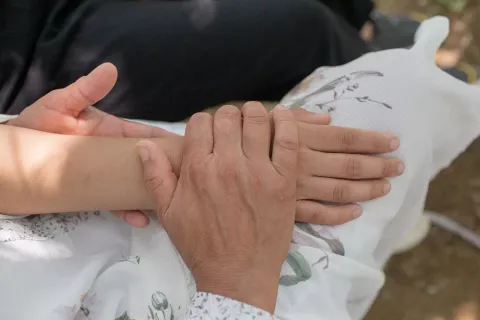
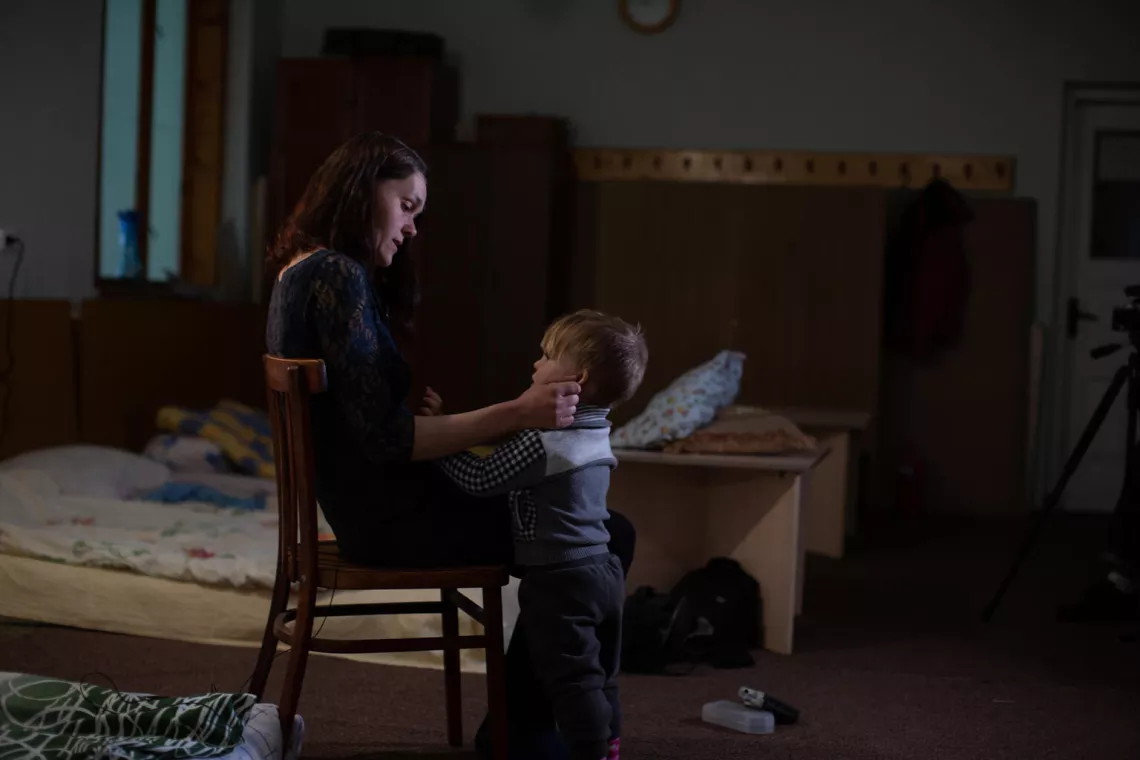
- maintain body contact – pick up the child, hug them, put them on your lap;
- reassure the child that you and other adults will not leave them and will protect them;
- try to learn about the child's fears, encourage sharing emotions: "Take my hand if you are scared. This way I will know that you want to tell me something";
- if possible, suggest drawing or playing. If the child is drawing or acting out a traumatic event, add some positive elements, for example, let a superhero appear in the game and save the day;
- use your imagination. Ask your child to imagine that there is an "umbrella" above their head that protects them from fears, anxieties and adversity. "Hold" the "umbrella" by its handle for 5-7 minutes;
- the child can be offered to inflate a balloon or to blow something off (an eyelash, a speck of dust, a piece of paper on the table, to blow on a finger);
- if possible, help the child to follow their regular routine;
- children may revert to earlier behaviors (thumb sucking, acting up, etc.). Be patient with them, it's a normal reaction to stress.
- Do not allow anyone to shame or criticize children if they are afraid, crying, or experiencing regressive behavior such as urinary incontinence, desire to sit on the lap, sucking on a pacifier or a thumb.
For school children:
- let the child tell you how they feel;
- tell them about the events, but use only the information that is understandable in their age. Avoid the details that can scare them. Answer questions, even if they seem stupid or repetitive;
- emphasize team spirit and strength: "There are a lot of adults doing everything for our safety now";
- maintain tactile contact – hug and stroke the child, hold their hand;
- recognize the feelings of the child, talk about them, give the child an opportunity to express them in any way – to cry, show aggression, be sad, freeze;
- write down the safety rules, even if the child is left alone for a short time (tell them not to open the door, the phone numbers they can call if the parents are away for a long time);
- build a "problem box" where the child can put notes about things that worry them. Read the notes and find answers to questions together.
We were forced to leave our home. How can I explain it to my child?
Remember that it's okay if you don't have all the answers. If you had to leave your home, be honest about not being sure if you're coming back. You can tell your child: "We are now away from home. But please know that there are people around us who are trying their best to restore peace. And we hope we can go home, but we don't know when."
If you need to evacuate, try to break the whole process into smaller actions: "First we put things in backpacks, then we have to move to a safer place."
We were separated from our loved ones. What should I tell my child?
Let your child know that a loved one is doing everything possible to return to them. You can be honest: you don't have an answer right now. But you use every opportunity to learn more. And you will tell them as soon as you know something.
If possible, try calling or texting other family members. If this is not possible, write letters that can be shown or sent later. Remember positive stories related to loved ones. The child must feel contact with them.
One of our loved ones was killed. How should I tell my child about it?
If one of your loved ones has died, the most important thing is not to hide the truth and not delay the painful conversation. It's natural to want to protect your child, but it's best to be honest. Use the words "died" or "passed away" instead of "fell asleep forever", "gone/left". Children perceive everything as it is: if a loved one "left", then sooner or later they will return.
It is important to tell children that it is not their fault that this happened. And to emphasize that if a loved one died, this does not mean that they will also die soon.
Children experience grief in different ways. Be ready for any reaction – from tears to aggression. Perhaps they will not immediately accept your explanation, throw a tantrum. Give them time to get used to this thought and wait until they are ready to talk about it.
Children often want to know more about birth and death, let them ask you, and answer honestly if you know the answer. Or say, "I don't know." Allow everyone to participate in the rituals, customs and forms of mourning adopted in the family, if the child wants to participate in them. This will not harm the child, but will save them from painful fantasies.
An older child can be advised to write down their feelings in a diary, a letter or a poem. Recognize the child's right to feelings, they are real and strong. Say, "I know how you feel. He/she loved you and you will never forget him/her."
We heard a lot of explosions. What can I do for my children?
Talk to your child honestly, choosing words appropriate for their age. Discuss your actions if the explosions repeat. You can say: "There will be very loud noises that we will hear, and when this happens, we will move to a safe place and stay there for a while. When the sounds are very loud and scary, we will hug and remember how much fun we had together." If you have a book, read it together.
What should I do and how can I explain to my children the terrible violence that is happening all around us?
It is important to reassure the child that this is not a normal situation and that it rarely happens. And now many adults are doing everything for the safety of the world around you.
No matter how the child shows his feelings and emotions, there is no need to shame them. Also, do not reproach the child if they are cheerful, laugh and behave in a carefree way at a time when someone feels bad nearby – this does not mean that they don't worry on the inside.
Support your child's natural desire to play and be active. Use your imagination, dream about where you will go and what you will do when it's all over. Remember pleasant events, sensations and images. Even in the darkest of times, there is room for hope.