
How kids help kids
What the funds raised by the Move4Good project and the Children's Race were spent on
- русский
- English
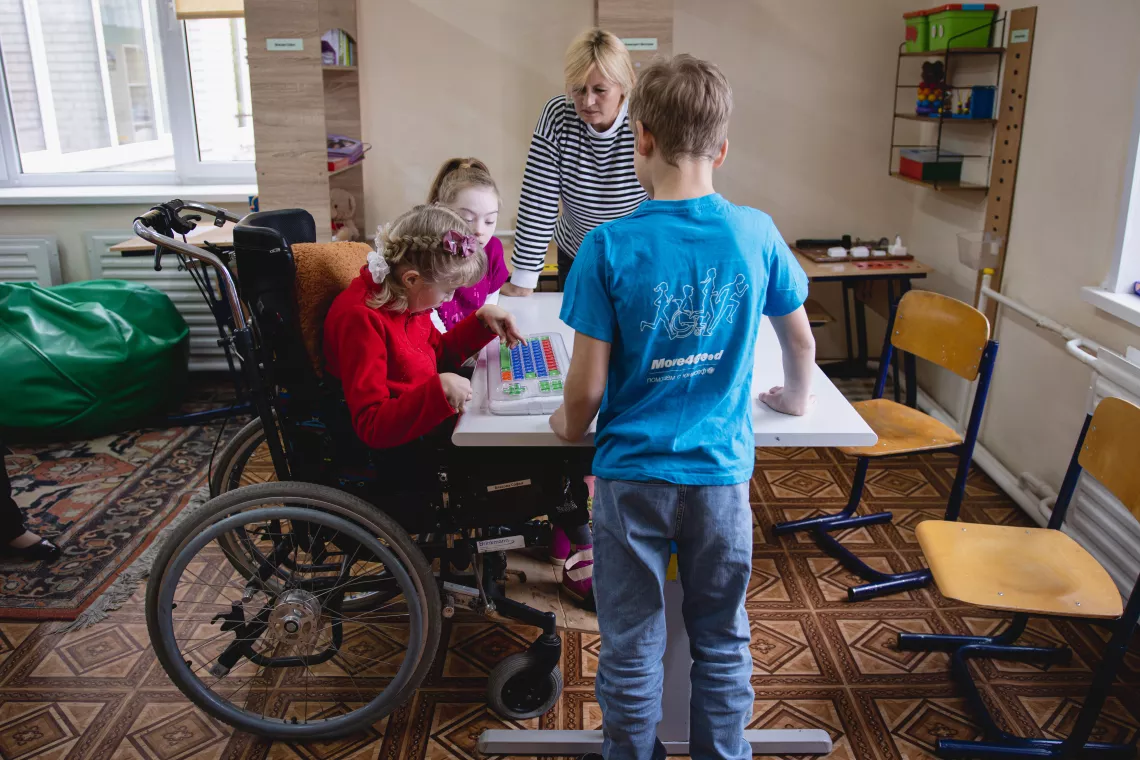
Styopa, Sonya and Maxim are peers: they are 10 years old. They met yesterday and played together. They did not play catch-up, did not ride bicycles, did not even talk. However, they understood each other and had a great time together.
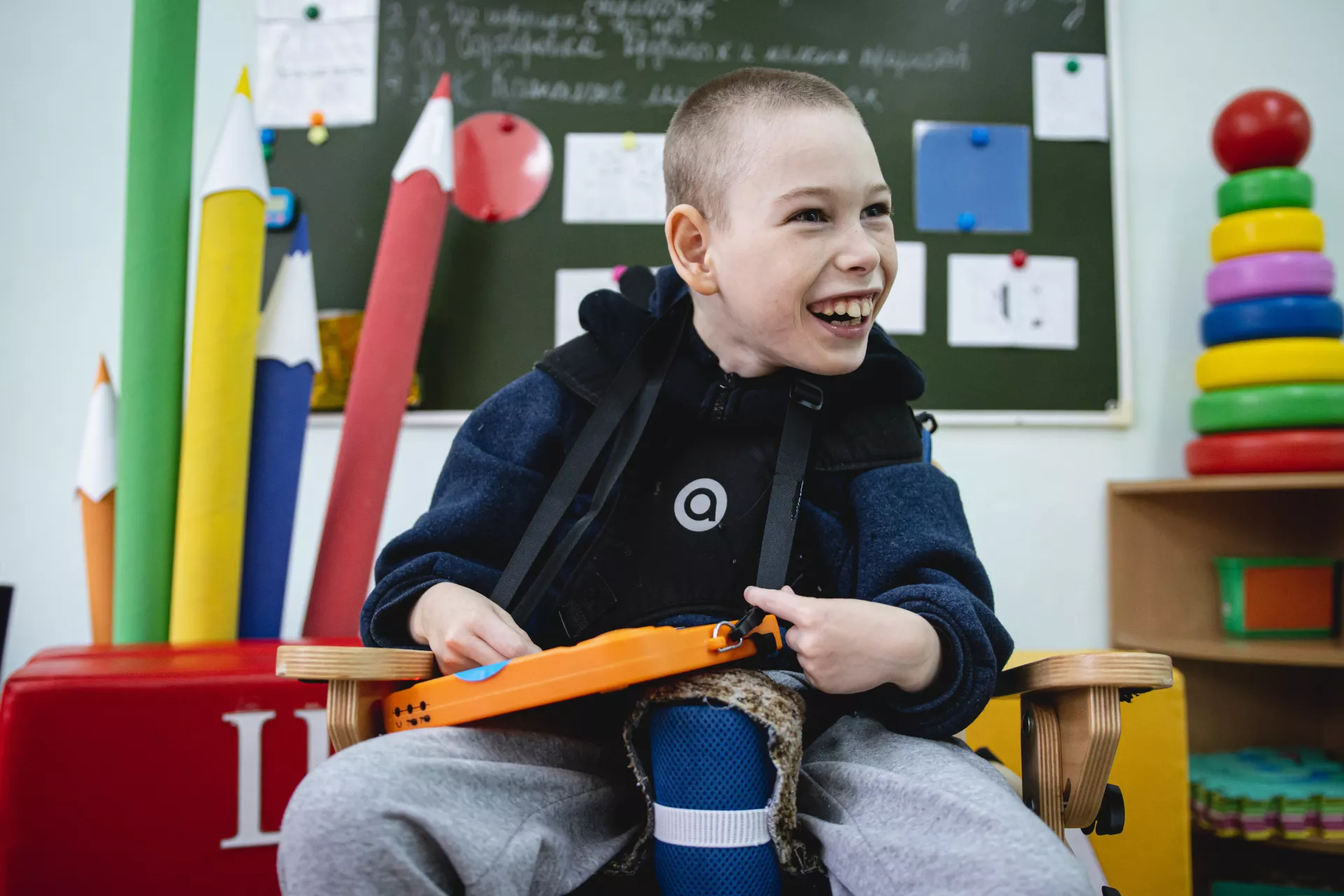
Sonya and Maxim can't talk or walk. They have severe multiple developmental disorders. Styopa communicated with them through special equipment: communicators, a laptop with a keyboard for children with cerebral palsy, and tablet PCs.
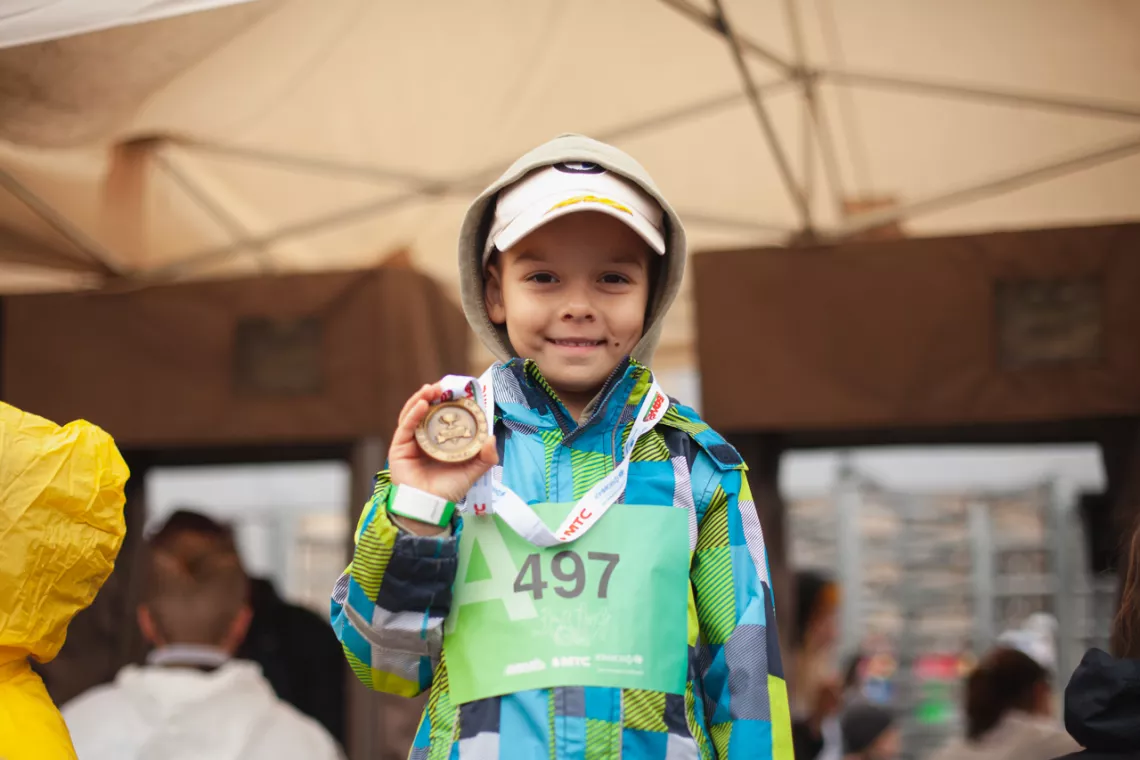
In September 2022, Styopa ran 500 meters at the Children's Race as part of the Move4Good project. Sonya, Maxim and other children with disabilities “run” with him. Not on the race track, but very close: somewhere in the heart area.
The Children's Race was charitable. It was organized by UNICEF and MTS with the support of the Belarusian Athletics Federation as part of the Minsk Half Marathon. Boys and girls participated in the race to draw attention to the issue of inclusion and help fundraise for special (assistive) equipment that would allow children with disabilities and special educational needs to study on an equal basis with others.
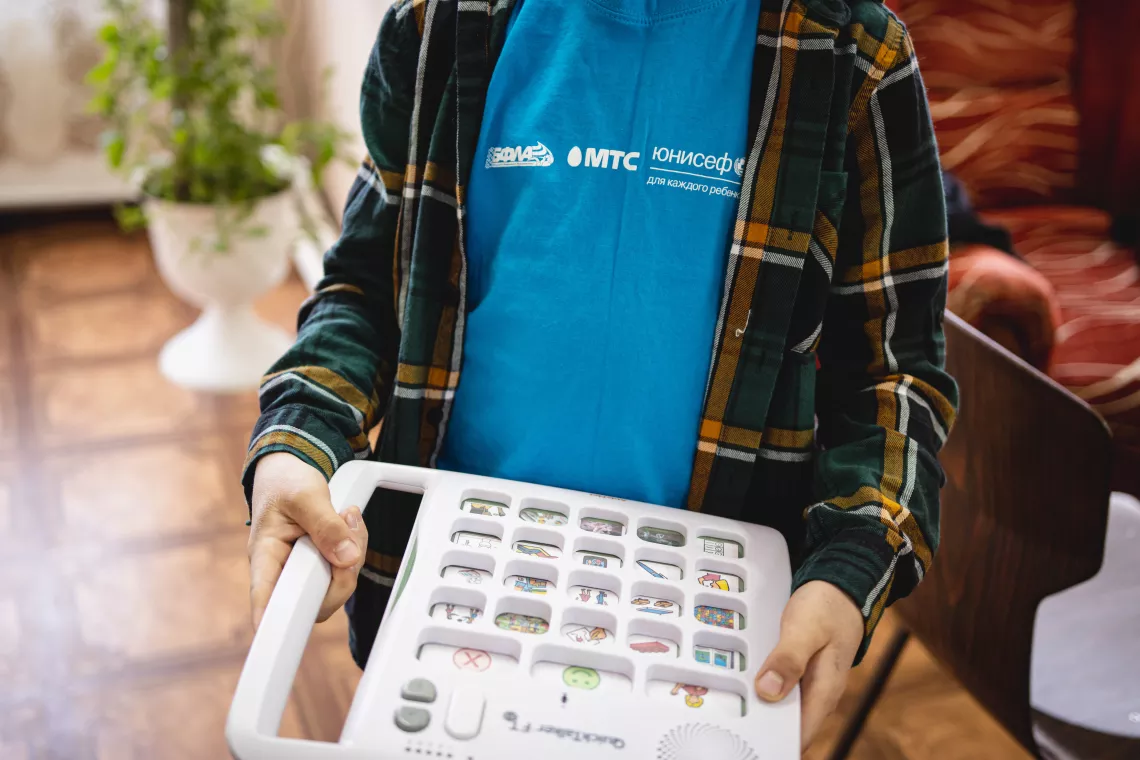
The children who participated in the race have handed over the assistive technologies procured by UNICEF Belarus for the collected funds to the children at the Interventing and Developing Education and Rehabilitation Center (IDERC) in Kobrin.
This equipment includes tablets that are needed to communicate and teach non-speaking children with intact motor skills. Communicators and communication buttons allow non-speaking motor-challenged children to talk about their desires and communicate with others.
Eye-tracking laptops are eye tracking devices that help people with special needs control their computers with their eyes: type, study, surf the Internet, etc. Special keyboards with large bright keys that can be used by boys and girls with motor disorders.
74 children study at IDERC, and 59 of them will use assistive technologies: those who come there to study under a special program daily.
“Children with severe multiple developmental disorders come to us to study,” the Center says. “In addition to motor disorders, they may also have mental disorders, speech disorders, and communicative disorders sometimes. Many have tried regular school or integrated classes, but they decided to join us for certain health reasons.
At the Center, we may develop a targeted individual program for each child. A school curriculum expects children to adapt to others. Moreover, school classrooms have a very high occupancy rate: 20 or 30 pupils each. There are 6 pupils in our classes. We can pay maximum attention and reach out to every child.”
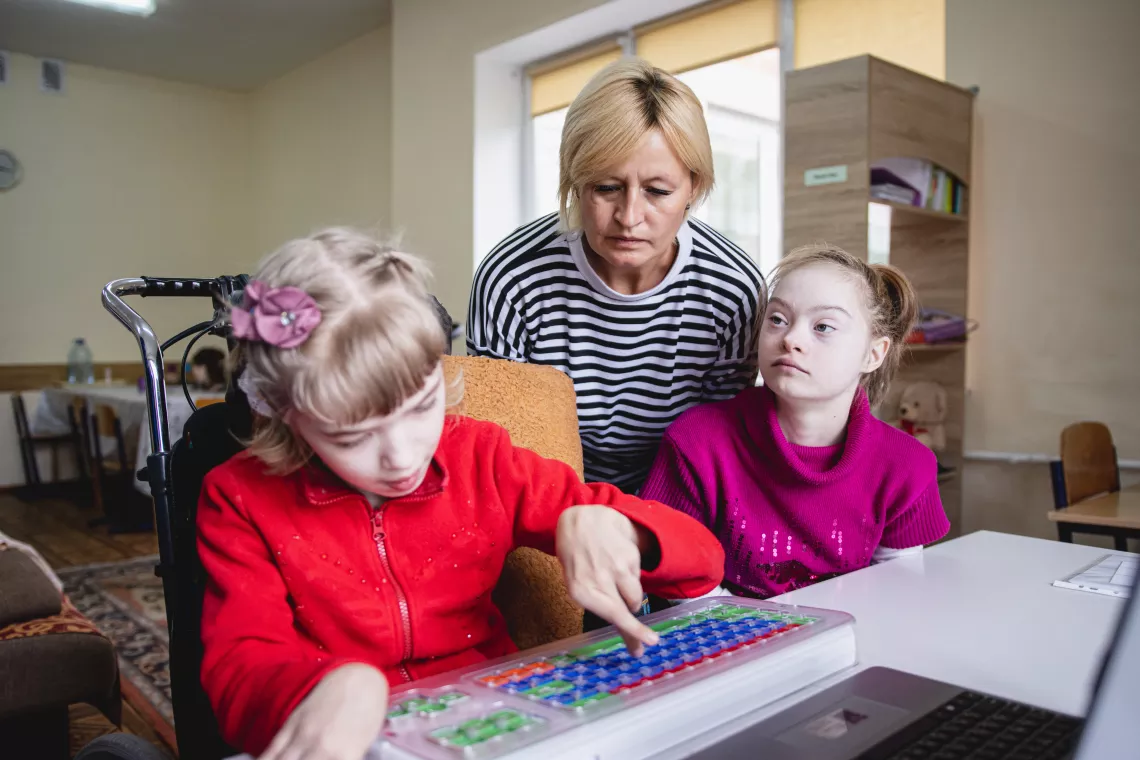
Special equipment will help boys and girls gain access to the knowledge that other children learn. It will help them develop their potential and show that despite their challenges, they have the same creative abilities and the same simple desires: to learn, to play, and to be friends.
Equal treatment of all children, including children with disabilities, is an important step towards an inclusive society, where everyone feels valued and where everyone can exercise her/his rights and opportunities on an equal basis with everyone else.
When Sonya was given a keyboard, the first words she typed were “Thank you!” This is a “thank you” to all concerned people who have donated. This is a “thank you” to all the teachers in the education system who teach children with disabilities. This is a “thank you” to all people who do charitable projects.