With a supportive father and a bold new curriculum, 13-year-old Ayesha is making a mark in science
A new school curriculum in Bangladesh is getting more girls into STEM

At just 13 years old, Ayesha can change an electric switch board, repair a fan, fix a blown-up fuse on an LED bulb and rewire a toy car to make it rechargeable and save on batteries.
“My dad teaches me how electric gadgets work. I like fixing broken appliances, putting things together and watching them light up,” says Ayesha.
Ayesha’s father is a retired army officer who used to run a repair shop for TV sets, fans and other small electrical appliances in his hometown. A few items from his shop are now being put to good use as he teaches Ayesha some practical skills to complement what she is learning in her science projects at school.
A progressive new curriculum
There is a new way of teaching Science, Technology, Engineering and Mathematics (STEM) in Bangladeshi schools. Students like Ayesha now get to pursue their passion in science and showcase the skills they are learning through the practical science projects under the new secondary school curriculum.


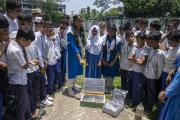
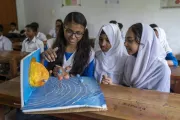
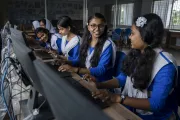
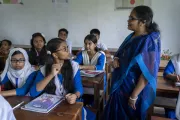
“The new curriculum takes a more hands-on approach and students are more engaged in class, whereas the previous one was about memorizing things. Today they made a solar cooker with two students leading while others observed and chipped in,” explains Ayesha’s science teacher Nanda Rani Das.
The new curriculum makes core science subjects compulsory for children. In the old curriculum, science subjects were elective from Grade 9 which forced students to choose either a Commerce, Humanities or Science stream, and often depending on their scores in previous exams. The new curriculum allows all students to study Science till they complete grade 10. Ayesha’s teacher says this will promote science education, particularly among girls.
Breaking gender stereotypes to bring more girls into STEM
Ms. Das who has been teaching for 22 years says it is not just the curriculum that has changed. “In the past, fewer girls completed school and even those who stayed in school did not want to take science subjects. The perception was that girls are made for marriage and therefore it is not important for them to study too much,” explains Ms. Das.
Gender stereotypes can limit girls’ motivation and participation in STEM. Curriculum and learning materials can also reinforce gender stereotypes and unequal gender norms in science and technology fields. If STEM subjects are made interesting and interactive, it will also attract more children to progress to secondary education and reduce dropout rates after primary school.
“Fortunately, attitudes are changing. It’s easier for girls to venture into science fields today than it was in my time. Girls have more support from their families and their communities to pursue their education goals,” reflects Ms. Das.
Support from all fronts builds strong foundation for Ayesha
Ayesha has always been different, says her father who teaches all his three children – Ayesha and her two brothers – his trade.

“Ayesha can be whatever she wants to be and do whatever she enjoys. What I teach her are important life skills for anyone. If a girl knows how to repair simple appliances, she can help her community in many ways and we need more female electricians,” explains Ayesha’s father.
UNICEF is collaborating with the Government of Bangladesh to reform the curriculum and strengthen the science, technology, wellbeing and employability component in the secondary school curriculum in a gender transformative approach. The goal is to help children and young people to participate in and shape a world which requires innovation and science-based solutions. After piloting in 62 schools in 2022, the new curriculum has been rolled out by Government in all schools for Grades 6 and 7 students from 2023, opening doors for about 4 million secondary school children to explore the world of STEM. UNICEF is continuing its support the introduction of the new curriculum in Grade 8 and 9 from 2024.
“For girls like Ayesha, science and technology education helps to form a self-image of being capable, resourceful, and of being able to contribute to solving important problems and this build their confidence, which is critical for girls given their limited opportunities to act and be seen as innovators in their daily lives,” says Deepa Sankar, UNICEF Bangladesh’s Chief of Education.
Ayesha enjoys recreating the solar system and making solar ovens at school. Through such practical projects, she understands more and more about how the world works and is learning to think like an innovator. At home, she continues to learn from her father and hopes to be an engineer one day.