Securing a healthier future for girls: The Bede community’s journey to embrace the HPV vaccine
With support from UNICEF, dedicated healthcare workers empower marginalized communities to overcome skepticism about vaccination, marking a significant change in their lives
- বাংলা
- English
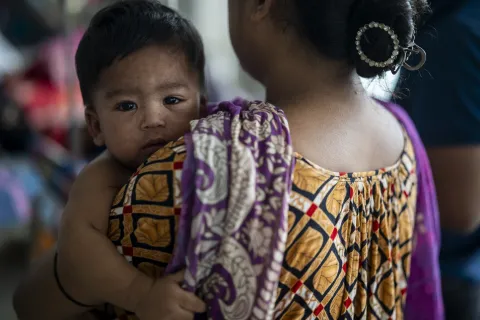
“The fact that our children are growing up in the environment we live in was more than enough for us. We never thought of having adequate access to healthcare services as a necessity,” says Bibi Amena, a mother of seven and a resident of the Bede (nomadic) community in Dhaka’s Aftabnagar. The Bede community, a marginalized nomadic group in Bangladesh, faces numerous challenges, including poverty, lack of sufficient economic opportunities, and access to health and other basic services. Living on boats or makeshift dwellings, they often move from place to place, relying on informal activities for survival.
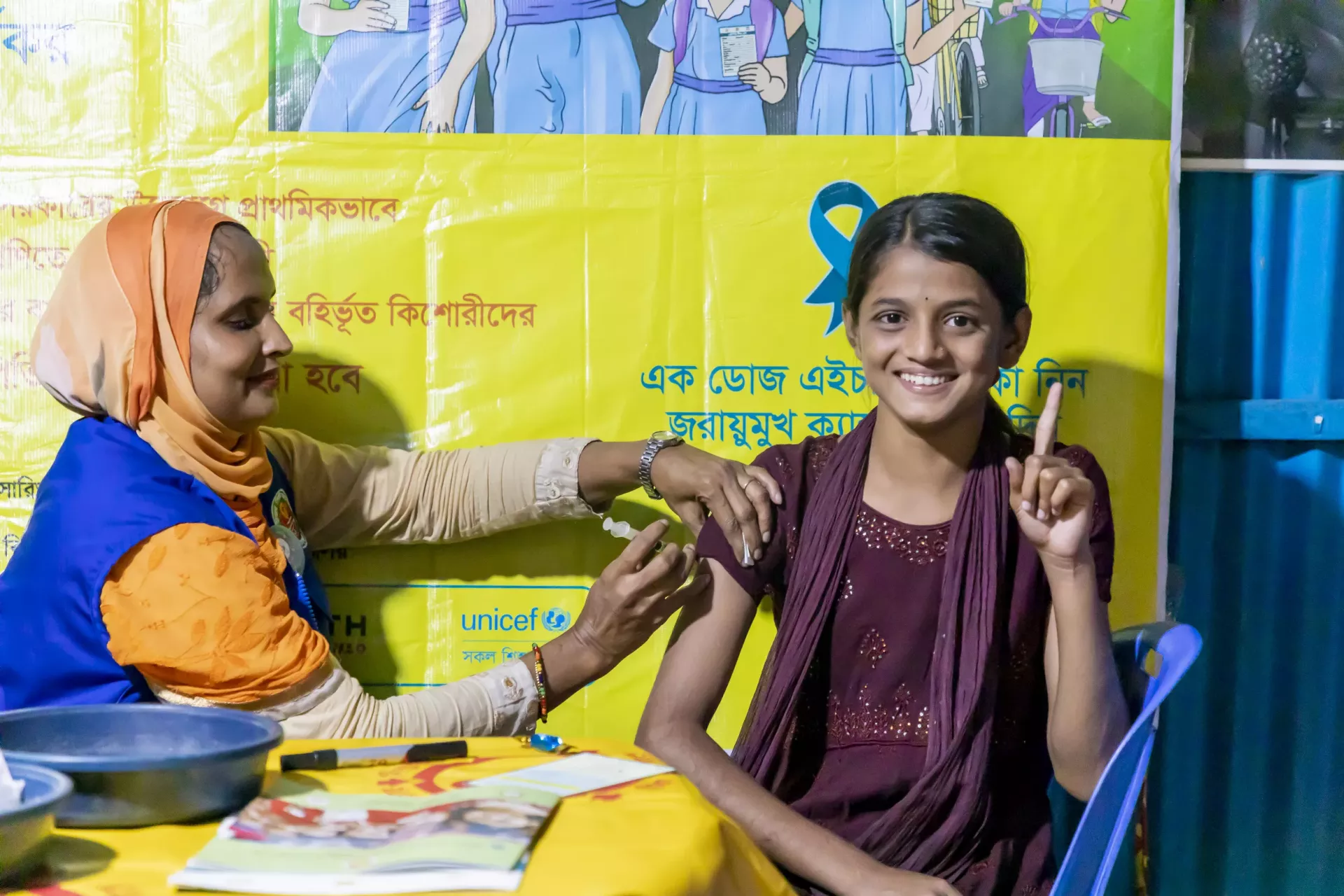
Within this community, healthcare has long been a challenge. Amidst their struggles in accessing adequate healthcare, particularly essential services like vaccination, the nationwide Human Papillomavirus (HPV) vaccination campaign, marked a significant shift for this community. The vaccination was launched by the Government of Bangladesh with support from UNICEF, the Vaccine Alliance (Gavi), and the World Health Organization (WHO). The campaign addressed a crucial gap in accessing healthcare in high-risk areas and hard-to-reach communities, aimed at protecting girls aged 10 to 14.
Addressing healthcare challenges
The Bede community in Aftabnagar is in one such high-risk area. The children from this community were not covered under the Expanded Programme on Immunization (EPI) and were marked a year ago for intervention. UNICEF, together with the Dhaka North City Corporation and the EPI programme of the Ministry of Health, has been conducting the programme in this area for one year, with HPV vaccination being a crucial component. The vaccination, led by dedicated healthcare workers, provided an opportunity for equitable healthcare, previously inaccessible to many Bede children. The vaccination also offered protection against HPV, including cervical cancer, a disease that claims the lives of thousands of women in the country annually and ranks as the 2nd most frequent cancer among women in Bangladesh. Current estimates indicate that every year 8,268 women are diagnosed with cervical cancer and 4,971 die from this disease.1
"UNICEF has been providing technical assistance to the Dhaka North City Corporation (DNCC) and other districts to develop special strategies to identify vulnerable girls from nomadic communities and similar high-risk groups and administer HPV vaccines. We have built on our experience on similar approaches for designing the strategies to reach zero and under-immunized children for routine immunization" says Dr. Riad Mahmud, Immunization Specialist, UNICEF Bangladesh. With support from UNICEF, healthcare workers received training on HPV vaccination and EPI which built their capacity and skill in injection technique and social and behavioral change communication.
“When I got appointed by DNCC as a vaccinator for the HPV campaign, I thought of organizing a vaccination session for the children in the Bede community in Aftabnagar. However, gaining the trust of the community was not easy,” shares Kamrun Nahar, a dedicated healthcare worker, who played a pivotal role in convincing the Bede community living in Aftabnagar to embrace the HPV vaccine. Kamrun proceeded to address the challenge and gain the community’s trust by building rapport with the community leader. However, even with the community leader’s support, she could not convince the entire community about getting their daughters vaccinated against HPV.
Despite facing initial resistance, she approached her work with unwavering commitment and determination. Kamrun spent countless hours engaging with community members, patiently listening to their concerns, and addressing their fears about vaccination, which was a relatively new concept for them. With UNICEF as a crucial partner, she also distributed leaflets and brochures and explained to them how a single dose of the HPV vaccine can safeguard girls against deadly diseases such as cervical cancer and prevent severe health complications and death in the future. To ensure she did not miss anyone, Kamrun visited the community at night when all the people would be available.
Empowering marginalized communities
Initially unaware of the importance of vaccinations, people from the Bede community harbored doubts and fears about the risks associated with the HPV vaccine. However, as healthcare workers like Kamrun Nahar explained the benefits of the HPV vaccine and dispelled misconceptions, attitudes began to shift. Another challenge arose in getting girls from this community registered for the vaccination as the people from the Bede community did not have birth certificates. Eventually, they were all able to get registered by getting their names enlisted manually.


Like many mothers in the Bede community, Bibi Amena too hesitated to get her daughter vaccinated. It was the persistent efforts by Kamrun Nahar that gradually changed her perception. "I know people from my community who had cervical cancer. While some of them recovered, many of them passed away. I did not know that this could be prevented by getting the HPV vaccine and never thought of vaccinating my daughter. Now that I know about this vaccine and its importance, I brought my eldest daughter to get the HPV vaccine today," says Bibi Amena, recalling how skeptical she was of vaccinations due to lack of information and mistrust.
Bibi Amena's journey reflects the shift in belief experienced by many within the Bede community and the role healthcare workers play in educating marginalized communities about the importance of vaccinations. For mothers like Bibi Amena, it signifies a newfound sense of empowerment and agency over their children's health. No longer bound by fear and uncertainty, they embraced vaccinations as a vital tool in securing a brighter future for their children. This transition marks a significant moment in the Bede community's journey towards a healthier future. Reflecting on the experience, Kamrun says, “After counselling them about vaccines, people in the community are not only getting their daughters vaccinated against HPV but are also proactively reaching out to me when a baby is born in their community, asking me about the vaccinations needed for the child’s overall wellbeing. It makes me very happy that I helped the girls in this community in receiving the HPV vaccine and to witness the community's understanding of the importance of vaccination.”
Ensuring health equity
Out of the 24 girls in the community, all 24 have been successfully vaccinated against HPV in the one-day session. "My mother brought me to get the HPV vaccine. She told me that it would protect me from diseases and ensure a healthier future for me. I want to encourage all my friends in my community to take the HPV vaccine so that we can all stay healthy and stay away from illnesses,” says 11-year-old Lamiya after getting vaccinated. Vaccinating 1.5 million girls against HPV in Dhaka division since its launching in October 2023, this campaign has safeguarded the health and future of millions of girls across Bangladesh by protecting them against cervical cancer.
The vaccination session organized for the girls in the Bede community in Aftabnagar highlights the effectiveness of targeted healthcare initiatives in reaching marginalized populations. By ensuring comprehensive vaccination coverage, UNICEF continues to support the step towards addressing healthcare gaps and empowering marginalized communities.
__________________________
1 Bangladesh Human Papillomavirus and Related Cancers, Fact Sheet 2023