Integrated Community-Based Child Protection System in Bangladesh
Evidence of Impact of Child Protection Community Hubs (2022–2025)
Highlights
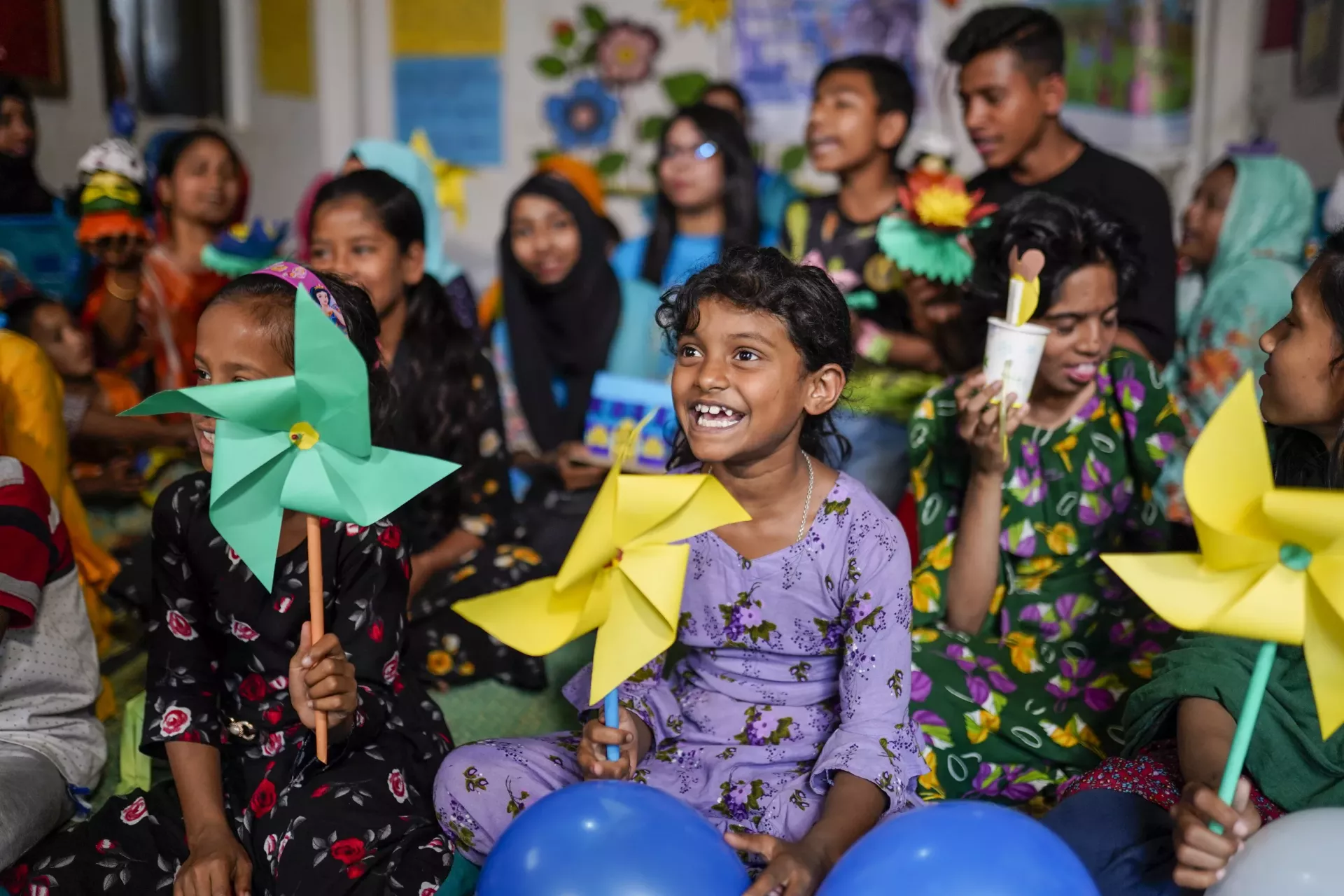
The Evidence of Impact of Child Protection Community Hubs (2022–2025) study, shows remarkable progress achieved for children in Bangladesh: birth registration rose from 47% to 70%, child marriage declined by up to 15 percentage points, violent discipline dropped by 25 points, and trust in social workers surged from 5% to 65%. Girls’ participation in sports, once taboo, grew six-fold. More than service points, the hubs are reshaping harmful social norms, making schools, families, and communities safer for children.
Designed as a sustainable and scalable model, CPCHs operate largely rent-free with strong community ownership, often running without external funds. At the same time, government leadership has grown, with the Ministry of Women and Children Affairs committing budgetary allocation to expand and sustain hubs nationwide, supported by the Ministry of Social Welfare and Ministry of Youth and Sports. Measuring impact is at the core of this study: rigorous surveys confirm that CPCHs are not just delivering integrated services but driving systemic, measurable change in child protection, proving that community-led solutions, backed by government investment, can deliver transformation at scale.