UNICEF launches Chain of Hope to turn commitments into action for every child in Bangladesh
Launched on the eve of World Children's Day, the campaign will drive concrete action on five urgent priorities for children, with progress assessed by December 2027.
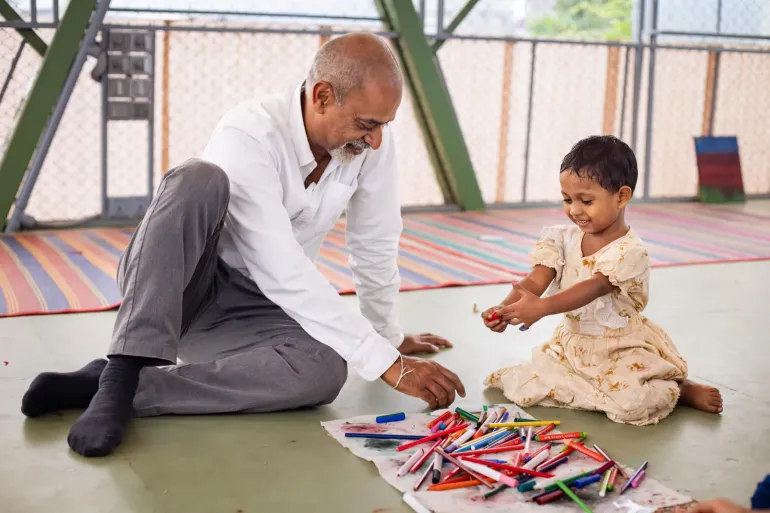
DHAKA, 20 November 2026 – UNICEF yesterday launched the Chain of Hope, a national campaign to turn political commitments into concrete action for Bangladesh's 60 million children, during a visit to the country by Sanjay Wijesekera, Regional Director for Asia and the Pacific.
Launched on the eve of World Children's Day, the Chain of Hope is anchored in the Government of Bangladesh's Five-Year Strategic Framework for Reform and Development (July 2026–June 2031), supporting the translation of national commitments into concrete action and measurable results for children. Building on the momentum of the Child Rights Manifesto, endorsed by 12 political parties in December 2025, the campaign will mobilize parliamentarians, partners, communities, young people and the private sector around five priorities: advancing adolescent girls' rights, ending child labour, ensuring birth registration for every child, protecting children from climate change and tackling lead poisoning.
The Chain of Hope will advocate for concrete policy reforms and stronger services for children, including closing legal loopholes that permit child marriage, integrating birth registration into public services to reach the four in ten children under five whose births remain unregistered, making schools and health facilities more climate resilient, and a strategy to end child labour. The campaign will track progress against its milestones, culminating in a report by the end of December 2027.
The campaign's name draws on a powerful image: Bangladesh's 60 million children holding hands, symbolically forming a chain of hope around the world, united by their rights and aspirations.
“Every girl and every boy in Bangladesh deserves to grow up healthy, safe and protected, with the opportunity to learn and reach their full potential,” said Wijesekera. “Yet too many children are still denied these rights. Through the Chain of Hope, we want to turn commitments into real changes in children's lives, backed by policies, resources and accountability. Because every child deserves more than promises. Every child deserves action.”
The urgency is reflected in the Bangladesh Multiple Indicator Cluster Survey (MICS 2025), which found that 47.2 per cent of women aged 20–24 were married before 18, 9.2 per cent of children aged 5–17 are involved in child labour, and only 59.2 per cent of children under five have their births registered. It also found elevated blood lead levels in 38.4 per cent of children aged 12–59 months.
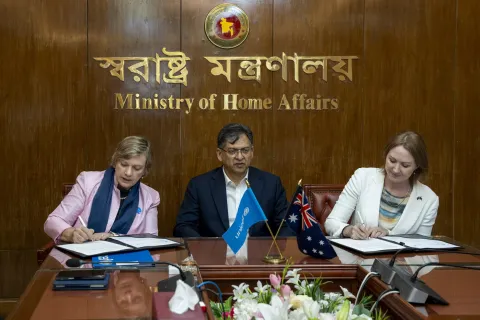
During his five-day visit to Bangladesh, Wijesekera met with Hafiz Uddin Ahmad, Speaker of the National Parliament; Rashed Al Mahmud Titumir, Adviser to the Prime Minister on Finance and Planning; and Salahuddin Noman Chowdhury, Foreign Secretary, to discuss national priorities for children and opportunities to translate commitments into action.
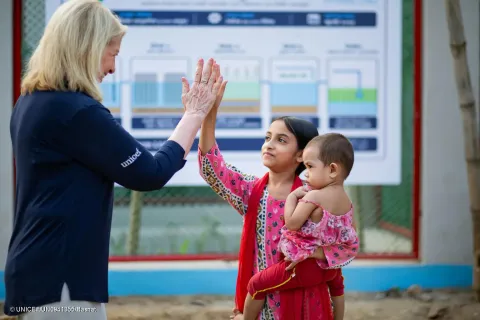
In Korail, Dhaka, he visited a UNICEF-supported Child Protection Community Hub, an Aalo Clinic and a wastewater treatment facility, meeting young peer leaders helping protect children in their communities. He also engaged with young climate activists, child journalists and members of UNICEF's Young People's Advisory Group, highlighting the importance of children's voices in shaping decisions affecting their future.
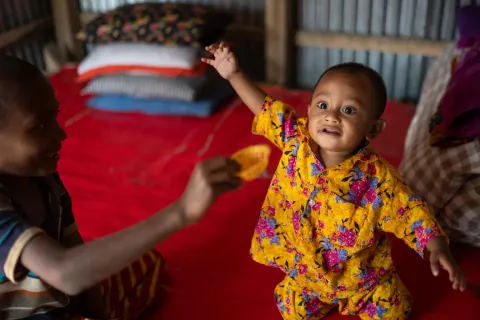
In Cox's Bazar, Wijesekera visited learning, health and nutrition services in Rohingya refugee camps, witnessing how declining humanitarian funding threatens essential services for more than half a million children.
“Throughout my visit, from the communities of Dhaka to Cox’s Bazar, I witnessed both the immense challenges children face and their extraordinary determination to build a better future,” Wijesekera said. “Bangladesh’s commitment to improving children's lives presents a critical opportunity for meaningful change.”
####
Multimedia resources
- Regional Director's Chain of Hope launch video
- Photos from the visit and campaign launch
- Bangladesh MICS 2025
Media contacts
About UNICEF
UNICEF works in some of the world’s toughest places, to reach the world’s most disadvantaged children. Across 190 countries and territories, we work for every child, everywhere, to build a better world for everyone. For more information about UNICEF and its work for children, visit www.unicef.org/bangladesh/