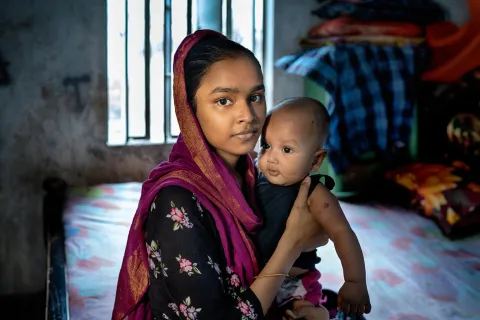
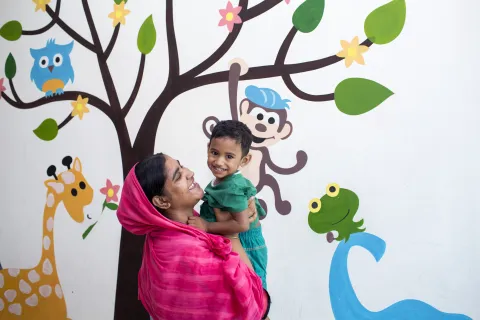
On Mother’s Day, celebrating women in South Asia as champions of breastfeeding
Women in South Asia are breastfeeding longer than women in any other region in the world.
- বাংলা
- English
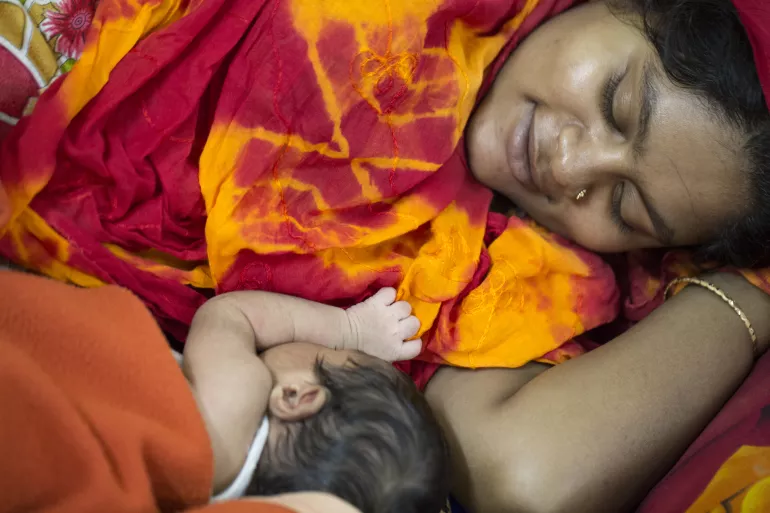
KATHMANDU/DHAKA, 13 May 2018 – Babies in South Asia are more likely to be breastfed than any other region in the world and are breastfed for longer, UNICEF said in a new analysis released today.
Breastmilk saves lives and protects babies against deadly diseases. Children should be breastfed for two years and beyond because it provides an important source of nutrients for healthy growth and can prevent half of deaths during a child’s second year of life. Furthermore, it leads to higher performance on intelligence tests among children and adolescents (3 IQ points on average).
“Breastfeeding is the best gift a mother can give her child, as well as herself,” said Jean Gough, UNICEF’s Regional Director for South Asia. “As we celebrate Mother’s Day, we must give mothers the support they need to start and continue breastfeeding.”
At least 98 per cent of children are breastfed at some point in their young lives in Afghanistan (98%), Bhutan (99%), Nepal (99%) and Sri Lanka (99%), and elsewhere in South Asia the proportion is also high at 94-97%.
While breastfeeding is almost universal in the region, there are still a lot to do to improve the quality of practices. Early initiation breastfeeding within an hour after birth and exclusive breastfeeding among infants less than 6 months old remain sub-optimal.
In Bangladesh, only 51 per cent of new-borns with early initiation breastfeeding within an hour after birth and 55 per cent of infants less than 6 months old are exclusively breastfed. UNICEF supports addressing the gaps in breastfeeding practices. One of current initiative is Mothers@Work programme that support working mothers in the Bangladesh’s garment sector to continue breastfeeding upon returning to work.”
Breastfeeding for longer periods is important for mothers’ health; for each year a mother breastfeeds, her risk of developing breast cancer falls by 6 per cent.
“As breastfeeding for two years and beyond brings immense benefits, we would like to commend mothers in South Asia, for showing the way forward. Nevertheless, we still need to encourage and support them to prolong breastfeeding and breastfeed no matter their financial status,” said Harriet Torlesse, Regional Advisor for nutrition in UNICEF South Asia.
Recent analysis also showed that babies belonging to wealthier families are more likely to miss out on continued breastfeeding. In South Asia, 81 per cent of babies aged 20-23 months from poorer families are breastfed compared to only 57 per cent in richer families.
This trend is seen across the world with 7.6 million babies not being breastfed, and babies in the world’s richest countries are most likely to miss out.
On Mother’s Day, recognized in May in over 128 countries, the global Every Child ALIVE campaign is celebrating mothers and babies and their right to be supported through pregnancy, delivery and birth.
Media contacts
About UNICEF
UNICEF promotes the rights and wellbeing of every child, in everything we do. Together with our partners, we work in 190 countries and territories to translate that commitment into practical action, focusing special effort on reaching the most vulnerable and excluded children, to the benefit of all children, everywhere.
For more information about UNICEF and its work for children, visit www.unicef.org.bd