EDUTEN - The innovative digital platform for learning math
Teacher Nertila Muçka shares her impressions

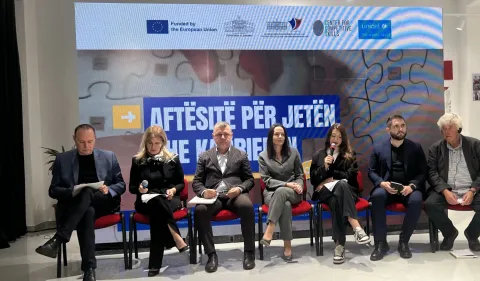
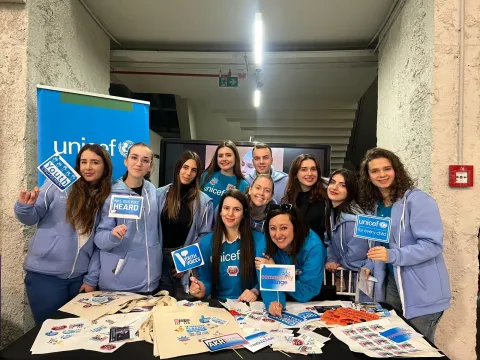
At UNICEF, in partnership with the Ministry of Education, we are excited to announce the launch of the Eduten program, a pioneering initiative that focuses on children, teachers, and the joy of learning mathematics. Created by the University of Turku and proven to have a global impact, Eduten is more than just a digital platform; it has changed how children engage with mathematics in over 50 countries and in 70% of schools in Finland. Eduten combines effective teaching methods with modern technology to make math learning fun, inclusive, and effective.
In Albania, 30 schools are receiving practical training to empower teachers to use the platform and foster confidence, curiosity, and resilience in their classrooms. This initial phase will benefit nearly 2,000 third- and fourth-grade students by helping them improve their math skills and encouraging self-belief.
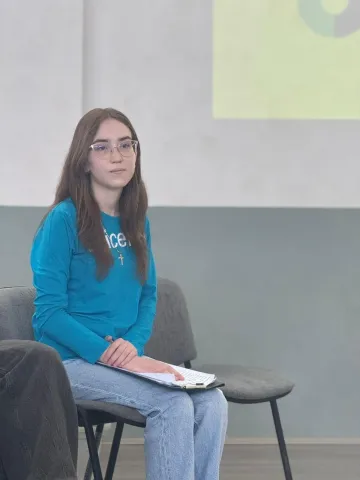
We had the chance to speak with teacher Nertila from Mucka, from Durres, about this unique experience and how it has transformed their classroom. Click the link to read the interview:
What did you think when you first learned about the Edutain Workshop, which uses games to teach math?
When I first learned about the Eduten training session on using games to teach math, I was intrigued and curious, perhaps because I have always been a fan of technology. I also wondered whether it would be achievable in real life.
And as a teacher for many years, I have seen many educational trends come and go – is gamification just a trend? I strongly support making math more fun and interactive in the classroom, especially since many of my students struggle to engage with traditional lessons.
What motivated you to attend this training session, and how did you find the structure? Was it engaging?
My reasons for attending were to increase student engagement and persistence in math. I realized that students often pay little attention during lectures or when working on worksheets, so I wanted equipment that would make learning more engaging. The session was well organized: theoretical background, practical examples, and finally, practical procedures were designed so we could create our own games. The material was broad, covering games, puzzles, board games, and digital apps focused on specific math skills. It was super-tedious—the facilitators were playing games with us to teach concepts, which kept it interactive and fun. What resonated with me most were the practical examples from some of the other teachers, and the whole-group discussion definitely reinforced some of the concepts.
How will you apply the strategies learned in the training to your classroom? What challenges do you foresee in trying out these new approaches?
I will start using these techniques by introducing short games at the beginning of lessons as hooks for students, as reviews, or even as formative assessments. For example, I could modify a basic game to practice multiplication, or a card game to work on fractions. The challenges lie in the infrastructure. We are promised that children will have more labs and secure internet access at schools. Other issues that may arise include time constraints, fitting games into a heavy curriculum, and ensuring all students participate equally, especially those who may be intimidated by competition.
We also need to ensure games align with learning goals so they are not seen as distractions. I'm confident that integrating games will change students' entire approach to math, turning it from a task into an exciting challenge. I expect them to be more motivated, more collaborative, and more willing to take risks, which I believe will ultimately enhance their learning.

Which new skills and understandings from the training are most applicable? How do you think this training will affect your teaching in the future?
The best thing I learned is that it works in any curriculum. Eduten’s learning analytics provide real-time insights into students’ learning. Teachers can view students' progress either individually or as a group.
I liked the approach to creating or modifying simple, everyday games that reinforce specific math concepts. I also learned how to balance fun and education so we don't end up with a game that is overly cheerful. This information is priceless because it helps me be more creative and focused on the students in my classroom. This training encouraged me to be more dynamic and student-centered in my teaching. I plan to add a few more play-based elements, including potentially co-creating games with students, which should make the lessons a bit more inclusive and flexible across different learning speeds.
It’s inspiring to connect with other educators and learn new ideas.
What advice would you give to other teachers who may be hesitant to adapt game-based learning?
To a fellow teacher who is nervous about game-based learning, my advice is to simply dive in and start small - play one game a week and reflect on how it goes.
But as we learned in this workshop, games are not meant to replace core teaching, but to improve it. Do not worry if it does not feel easy; our students will guide us, and the smiles on their faces will boost our confidence.