

Afghan children find normality, opportunity and peace in Albania
After a long and arduous journey from their home in Afghanistan, he and his family have settled in Albania.
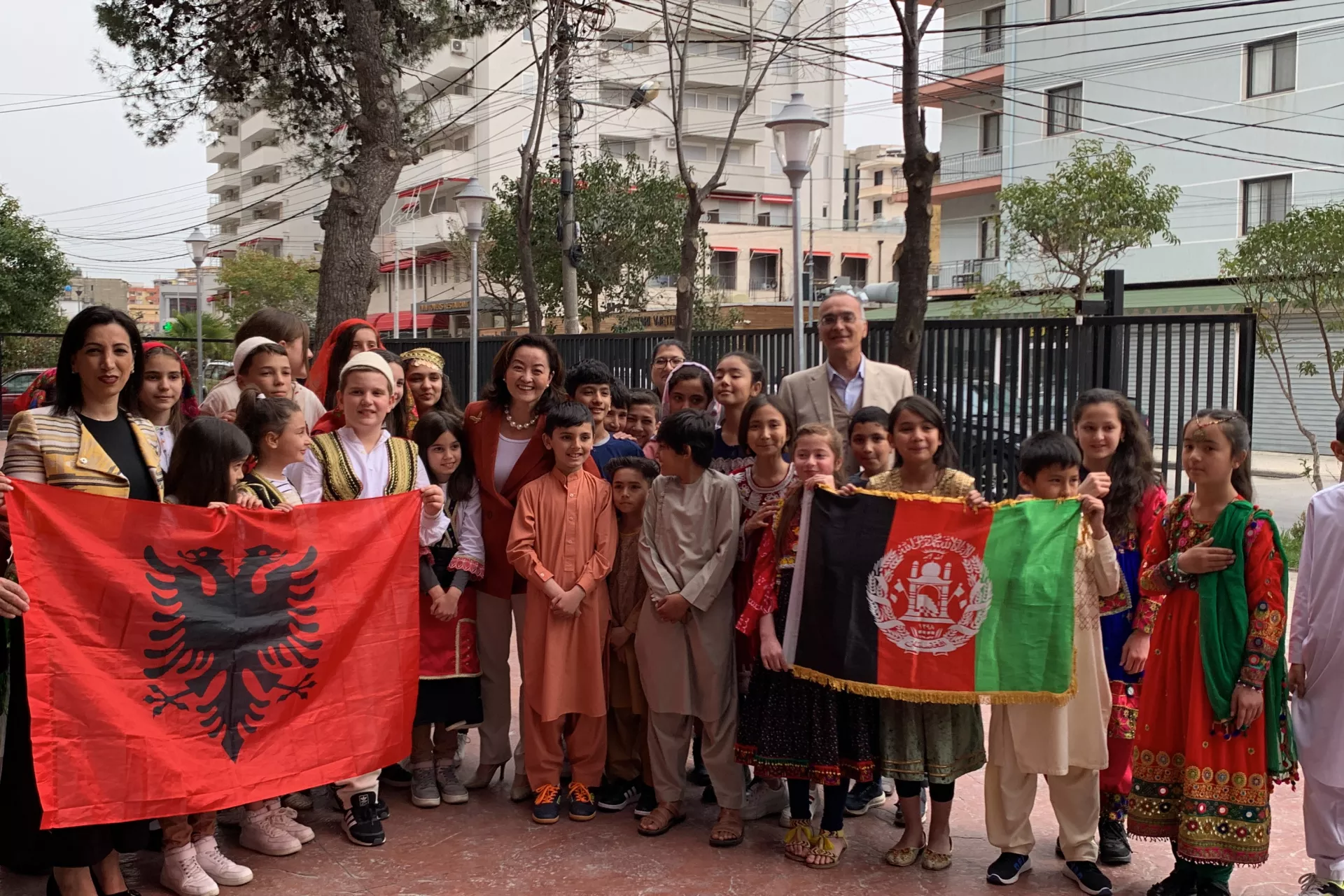
For most children around the world, flying a kite is an innocent, joyful activity. In Afghanistan, after the Taliban took over, it would be a supreme act of daring for any child to even attempt it. Luckily, Myrteza, 10, will no longer have to fear punishment simply for performing this most ubiquitous of childhood pastimes.
After a long and arduous journey from their home in Afghanistan, he and his family have settled in Albania.
“It’s so beautiful,” said a smiling Myrteza, as he and his friends flew their kites on the beach in Shëngjin, in the north-western part of Albania.
Albania was among the first European countries to offer temporary shelter to at-risk Afghans, despite the considerable economic challenges. Since September 2021, 4.000 Afghan families have taken shelter in Shëngjin. Forced to flee and leave everything behind, many arrived with only the bare essentials, in urgent need of humanitarian assistance – and UNICEF was right there to support them with funds provided by USAID Albania.
Dr. Etleva is a local doctor working at the UNICEF-supported health center in Shëngjin – she treats many Afghan families who have recently arrived to the area.
“Many children suffer from acute respiratory infections or chronic diseases,” she said.
The local staff, assisted by Afghan translators, provides health care to children and their mothers sheltering temporarily at the Shëngjin hotels. The health workers also provide nutrition support and vaccination services and distribute family hygiene kits.
The ongoing conflict and the COVID-19 pandemic had a profound effect on children’s education. Many boys and girls were left with no choice but to leave school. To meet their urgent needs, UNICEF immediately mobilized its partners and worked with the government and local authorities to ensure that all children have a safe space to learn and interact.
Two early childhood development centers have been set up in Albania, providing services to at least 890 children 3 to 6 years old. They also offer parenting courses on positive parenting, child rights, and child development stages for children’s parents.
We are able to provide children arriving from Afghanistan with quality early childhood education services that are essential to support their healing and provide a solid foundation for a brighter future.
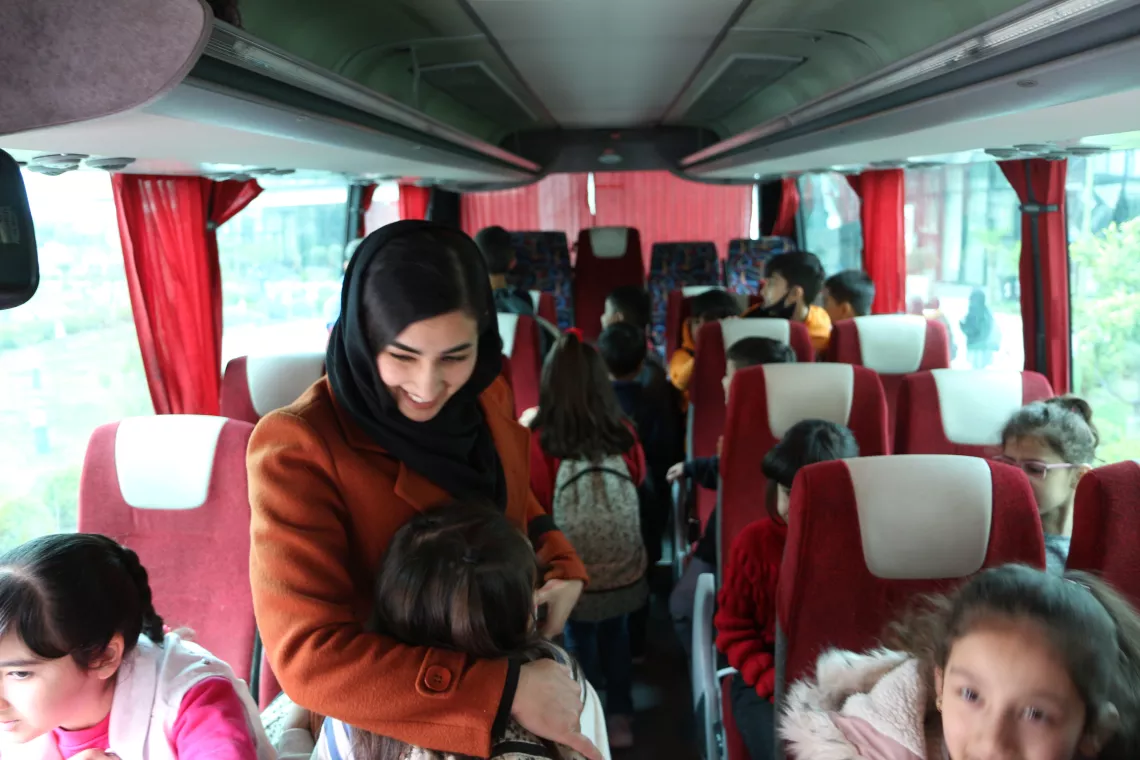
Every day, a school bus provided by UNICEF drives 290 children to the local school. For many Afghan children, going to school is the best time of their day. For some months now, the children have been excitedly lining up half an hour before the school bus arrives. As we joined the children on the bus, we were moved to see each child hugging their teacher as they climbed aboard. It was a moment full of gratitude. They sang and laughed... it seemed as if they were going on a great adventure.
At the school, we met with Pariguli, the Afghan school coordinator.
“For many children, completing primary school remains a dream,” she said. “The education system in my country has been devasted for many decades. These children desperately needed to go to school, learn new skills, and build a future for themselves. And UNICEF has supported us on every front…with a school, teacher training and learning materials.” Adding with a smile...
What I really enjoy is that we are building bridges for Afghan children, parents and staff to integrate and exchange ideas with the Albanian community…I love this place.
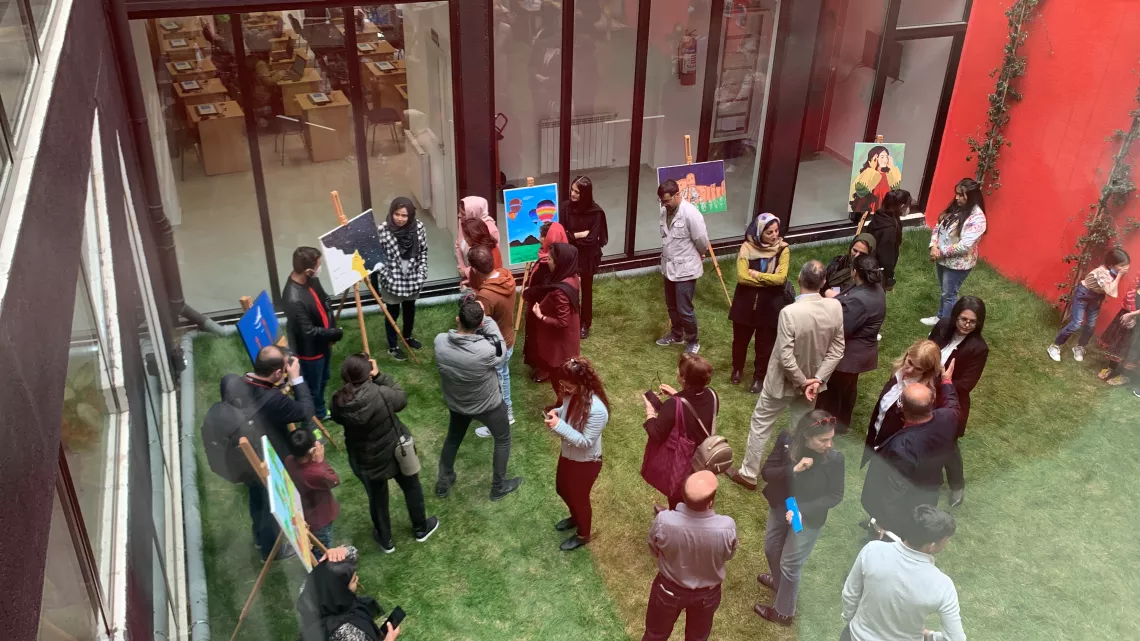
A large number of children from Afghanistan suffer from symptoms such as depression and anxiety. One teacher showed us some of the artwork prepared by children – the trauma they’d experienced was made all too clear through their chilling depictions of explosions and gun violence.
“In the past, teachers didn’t work much on children’s emotions and resilience, and we were not doing sports as well,” said Amullah, an Afghan teacher who teaches social-emotional learning. “I want children to feel their emotions better and show empathy for others, as this helps them build a sense of security.”
UNICEF, with the financial support of USAID, is helping with extra-curricular activities to socialize with Albanian children and conducting joint activities such as sports, competitions, cooking fairs, and computer literacy.
“We will work every day to help children fulfill their dreams, until they soar as high as any kite,” said Mirlinda Bushati, Education Specialist at UNICEF, Albania.
***
"Securing child rights in times of irregularity" is funded by USAID and implemented by UNICEF, in partnership with the Albanian Government.