UNICEF and World Bank Strengthen Healthcare Waste Management in Afghanistan
The Health Emergency Response project is equipping hospitals to ensure safer waste disposal and infection prevention across 24 provinces.

In many health facilities, including those in Geeti District hospital and Agam District Hospital, there used to be a dump yard; an open space where discarded syringes, blood-stained dressings, and chemical containers lay exposed. “We used to collect trash with our bare hands,” recalls Mohammad, a cleaner at one of the supported facilities. “We didn’t have gloves or masks. It felt dangerous every day.” Like many waste handlers at health facilities across Afghanistan, Mohammad faced daily risks of needle-stick injuries, infections, and exposure to harmful chemicals.

A baseline assessment conducted by the World Bank-funded Health Emergency Response (HER) project revealed alarming findings: only 40 per cent of facilities had proper waste segregation and disposal systems, and just 17 per cent of staff had been trained in safe practices. In many clinics, hazardous waste was burned in old, inefficient incinerators or dumped in open pits, contaminating the air and soil.
Recognizing the urgency of the situation, UNICEF launched a targeted Healthcare Waste Management intervention under the HER project. Across 24 provinces, this initiative continues to change habits and attitudes while also providing equipment and training to improve healthcare waste management.
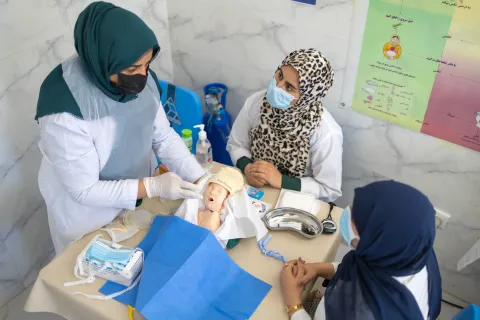
Since the launch of this initiative, over 1,000 healthcare workers, from doctors to cleaners, received hands-on training in proper waste segregation, safe handling, and protective measures. Facilities were equipped with colour-coded bins, puncture-proof sharps containers, waste transport trolleys, and personal protective equipment (PPE). Old, unsafe waste sites were replaced or rehabilitated, and new systems for monitoring and mentoring were put in place.
Building on these efforts, sampled health facilities are already showing significant improvements compared with the 2023 baseline assessment conducted by UNICEF. Third-party monitoring data from 2025 indicates that proper waste segregation at health facility level has increased from 61 per cent to 100 per cent, staff knowledge and awareness from 17 per cent to 44 per cent, safe sharps handling from 23 per cent to 67 per cent, and disinfection and cleanliness practices from 66 per cent to 82 per cent.
From unsafe practices to a model of best practice
In Daikundi province’s remote Geeti District Hospital, the change has been dramatic. Before the project, hazardous sharps were discarded in open areas, and the hospital’s ageing incinerator released harmful smoke into nearby homes. Staff lacked training, and injuries among waste handlers were common.
With support from UNICEF and the HER project, implemented by MOVE, the hospital set up a waste management committee, trained all staff, relocated its incinerator to a safer location, and introduced strict waste segregation procedures. Waste is now sorted at the source, infectious materials are incinerated daily, and sharps are stored securely until disposal.
For the hospital director, Dr. Sayed, the transformation is about more than just cleanliness, “HER Project didn’t just bring equipment,” he says, “it changed attitudes and built ownership. We are now a model for others.”
The difference is visible to the community, too. “We used to see waste scattered near the facility,” says Aman Shah, a community elder from the nearby village. “Now, it’s well organized and doesn’t harm the environment or our children.”


Community engagement bringing pride and ownership
In Paktika province, challenges to healthcare delivery run deep: insecurity, harsh winters, floods, earthquakes, and mountainous terrain make access difficult. Inside many facilities, poor hygiene and weak infection prevention had eroded community trust.
In April 2025, UNICEF’s local partner, BARAN, tried a different approach to bring back the community’s trust: a joint ‘Volunteer Cleaning Campaign’ involving health staff and community members. Once a week, health workers and community members rolled up their sleeves together to clean clinics, courtyards, and surrounding areas. The initiative was implemented in all 54 health facilities in the province.
“Seeing health workers and community members clean side by side has changed how we view our clinics,” says the manager of the provincial health management information system, Mr. Durani. “It shows they care, and now, so do we.”
Weekly messages sent through facility WhatsApp groups reinforced the idea that cleanliness is a sign of respect and responsibility. Over time, these campaigns became part of the routine, and communities noticed the change.
“This campaign has brought teamwork, pride, and responsibility into our daily work and our facilities are now visibly cleaner and safer,” says Eng. Yusufai, the provincial environmental safety focal point and community health worker trainer with UNICEF’s implementing partner.
Long-term impact
Launched by UNICEF under the HER project, the impact of these initiatives goes beyond appearance. Proper waste management and routine cleaning reduce the risk of infections for patients, protect healthcare workers from dangerous injuries, and create an environment where people feel safe seeking care. It is not just about disposing of waste, it is about restoring dignity, preventing harm, and rebuilding trust in Afghanistan’s health system.