Kareema the shoeless midwife
Armed with passion, training and supplies, Kareema goes the extra mile to help mothers and babies survive pregnancy and childbirth in western Afghanistan

Kareema is never off duty. Sometimes they call her in the middle of the night to help another midwife manage a complicated delivery. She runs from her house, which is just 200 metres from the clinic, sometimes without even taking the time to put on her shoes.
“Every second counts,” says Kareema.
Shekiban Clinic in western Herat province is always busy, serving a population of more than 18,000 in the surrounding villages. About 300 of them seek health care here every day.
Kareema delivers up to 10 babies every week and attends to 20 pregnant women in the antenatal care unit every day. She alternates between day and night shifts, swapping with another midwife at the clinic.
Because of her training, sharp instinct, and passion, Kareema is always ready to handle complex deliveries.
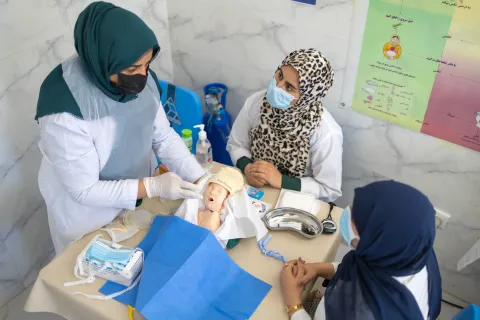
“I have done several trainings on newborn care, managing post-delivery bleeding, as well as handling emergency deliveries. These trainings help to refresh my knowledge and skills in and out of the delivery room,” explains Kareema.

Little Kareemas everywhere
As a show of respect and gratitude, some parents name their children after the midwife or doctor who helped bring their baby into the world.
Although Kareema has lost track of how many babies she has delivered in the 13 years she has been a midwife, there are little Kareemas all around her - in her neighborhood and in surrounding villages. They remind her how important her work is.

It is her mother’s experience that motivated Kareema to become a midwife.
“My birth was a difficult one. My mother endured a painful labour at home for 48 hours with just our neighbour helping her. No doctor, no midwife,” explains Kareema.
Today, about one-third of births in Afghanistan are still not attended by skilled health workers. Women give birth at home, or on the way to hospitals far from home, without a trained professional.

A partnership to save lives
Quality, professional medical care throughout pregnancy and during delivery gives mother and baby a greater chance of survival.
With support from the Asian Development Bank, UNICEF provides training, equipment and mentoring support for health workers like Kareema to manage pregnancy and childbirth related conditions. Portable ultrasounds, baby incubators, medicines, baby warmers and syringe pumps and other supplies ensure that hospitals and delivery rooms are equipped to handle complications.
Doctors, nurses and midwives are trained to manage birth complications related to pre-term births, and issues like heavy bleeding, newborn illnesses, and preventing infections which may lead to sepsis.

For Kareema, every day she successfully delivers a baby is win.
“After one delivery the baby was quiet, there was no sign of life in the first minute. I managed to revive him, and he finally cried! That was when the relieved mother kissed my hands.”