Immediate action for Afghan children through UNICEF's flexible funding
UNICEF Global Thematic Humanitarian Funding supports immediate WASH services for Afghan returnees

Access to sanitation and hygiene at Islam-Qala reception center is essential for the dignity and safety of women and children returning to Afghanistan, and thanks to Global Thematic Humanitarian Funding (GHTF), UNICEF was able to respond immediately. GHTF is, after the Core Resources (RR), our most flexible form of funding as it allows for rapid and strategic responses by UNICEF to humanitarian crises. GHTF makes it possible for UNICEF to deliver assistance to the most vulnerable children when and where itis needed and in a timely and effective manner. Women, children, and families arrive at the reception center in Islam-Qala on the border between Afghanistan and Iran, tired, hot, disoriented, and most of all, scared. They have been forced to return to Afghanistan from Iran to a country that is unfamiliar to them, unsure of where to go and how to get there. They carry with them everything they own, in trolleys, in suitcases, and quite literally on their backs. UNICEF and partners are on-site to provide them with whatever respite we can, and one of the most critical is access to safe and clean drinking water as well as comprehensive sanitation services. It is hot and windy at the Islam-Qala reception center where over 1.2 million people, half of whom are children, have returned from Iran this year alone, with arrivals averaging around11,000 people every day. In July, a total of 25,000 people were recorded to arrive in a single day. Some move through quickly, others sometimes stay up to four days at the reception center. Access to toilets, showers, and clean drinking water are critical to support them during their time there, and UNICEF, by utilizing the Global Humanitarian Thematic Funding(GHTF), provided by Sweden, German Foreign Ministry, The Netherlands and other private and public partners has been able to scale up our response and provide additional services to returnees.

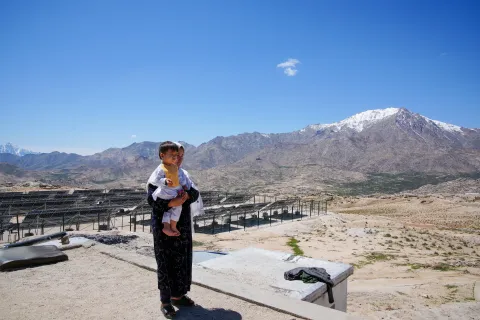
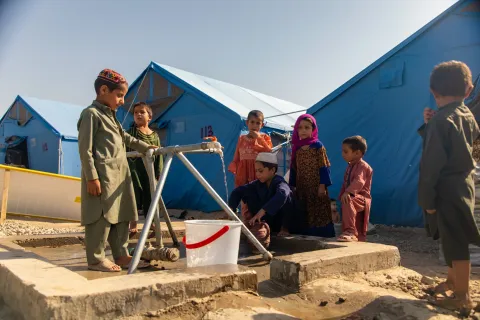
To meet the immediate needs of the returnees as the numbers began to rise in June, UNICEF established a system of bringing clean drinking water to the reception center through water trucks, providing safe drinking water to over 200,000 returnees at the end of June and the beginning of July. However, water trucking is not a sustainable approach given the volumes of people arriving at the reception center and therefore UNICEF lead the drilling of a new borehole with a solar pump and solar system, installed 24 water reservoirs with accessible drinking taps, and continues work on a 20-cubic-meter elevated water tank to meet the increasing needs of families.

These water and sanitation services are just one of the many provided by UNICEF, UN agencies, partners and NGOs, coordinating with local authorities to ensure the safety and wellbeing of returnees, particularly women and children. Without access to GHTF, UNICEF would not have been able to respond so quickly and setup the critical sanitation and hygiene services to meet such a volume of returnees. A good example of how essential this type of funding is to UNICEF.