Guide: Understanding adolescents in humanitarian situations
The guidance and approaches in the Adolescent Kit revolve around a number of key understandings about adolescents in humanitarian situations.

The guidance and approaches in the Adolescent Kit revolve around a number of key understandings about adolescents in humanitarian situations. These include a recognition that while the experiences of adolescents are extremely diverse, during times of crisis, adolescents may share certain challenges and opportunities.
Adolescence is a critical time. Adolescence is a time of physical, cognitive, behavioural and psychosocial change, usually marked by increased independence, autonomy and exploration, as adolescent girls and boys define their identities and learn how to become adults.
Adolescents may disappear or be forgotten. Adolescents may disappear during times of crisis, as a result of trafficking, recruitment into fighting forces, child marriage, or to seek livelihood opportunities elsewhere. Other adolescents may seem to disappear if they are counted as adults in situation analyses, or confined to their homes due to social norms, safety concerns, or social stigma (especially girls).
Adolescents in humanitarian situations are more likely to experience violence, abuse and neglect and may be at risk of recruitment into fighting forces, exploitative labour and child marriage. They may lose access to education, health and livelihood opportunities and endure separation from their families or caregivers. Adolescents with disabilities are particularly vulnerable to violence, abuse and neglect in humanitarian contexts.
Understanding adolescents in humanitarian context requires understanding the different experiences of adolescent girls and boys, and the different risks and opportunities they face. In all contexts, and especially in developing and fragile countries, girls’ and boys’ developmental paths begin to diverge as they enter the second decade of life. As adolescent boys and girls begin to take on the responsibilities and identities of adult men and women, gendered roles are consolidated. To a great extent, as most boys enter their teen years, they experience increased freedom and independence, with opportunities to study, play, and interact with their peers outside the home, and away from adult supervision. In contrast, girls in many societies face increased restrictions and prohibitions as they reach adolescence, while simultaneously taking on significant tasks and responsibilities, such as household chores and caring for younger or older family members. In humanitarian contexts, adolescent girls and boys take on the roles of adult women and men, at an even earlier age and with even less support and protection from the adults who in stable contexts might guide them.
Adolescent girls may be more likely to be forced into child marriage and pregnancy, and/or take on increased responsibilities for caring for households and other family members. Boys, as well as girls, may take on risky income-generating activities to provide for themselves and their families. All of these circumstances limit adolescent girls’ and boys’ access to programmes and essential services including schooling and health care, and put them in situations that they are unprepared for developmentally.
Discrimination and violence against adolescent girls, as well as adult women and younger girls, is exacerbated in humanitarian contexts. Conversely, the impacts of war on girls and women are compounded by pre-existing gender inequalities and discrimination. All forms of violence against women and girls increase during armed conflict. This includes sexual and gender-based violence, with adolescent girls facing the risk of rape and sexual exploitation at the hands of fighting forces, community members and humanitarian workers. During and after war, girls and women are often even less likely to have access to even the most fundamental of their rights, including the right to health care, education, food, shelter and even a nationality.
Yet humanitarian situations may also offer opportunities transform gender roles, including those that can be harmful or restricting for both adolescent girls and boys.
Adolescents face risks to their health and their lives. Conflict and natural disasters put adolescents at a higher risk of injuries or death from violence or accidents. Similarly, malnutrition may limit their physical growth, and their cognitive development may be disrupted as a result of experiences of protracted violence, anxiety or isolation. Injuries and malnutrition can result in permanent disabilities with adolescents then facing the exclusion, discrimination and vulnerability that many adolescents with disabilities experience.
Adolescents’ sexual and reproductive health is vulnerable. Inadequate access to contraception, child marriage, and limited awareness about safe sex mean that adolescents are often vulnerable to sexually transmitted diseases (including HIV and AIDS), and early pregnancies. Due to erroneous beliefs that adolescents with disabilities do not (or should not) engage in sexual relations, adolescents with disabilities are particularly excluded or denied access to sexual and reproductive health information and services.
Adolescents may become isolated during humanitarian situations as family and work responsibilities increase, and they spend less time in school or other places where they can interact with friends. Girls in particular may be kept indoors by family members concerned for their safety and/or damage to their honour, and may have to take on the role of care provider to injured families members or those that have acquired a disability.
Adolescents with disabilities experience higher risk and vulnerability in humanitarian situations. In disasters, the mortality rate for all persons with disabilities is significantly higher than the rest of the population (e.g. in the earthquake and tsunami in in Japan in 2011, the mortality rate for persons with disabilities was twice that of those without disabilities).4 Adolescents with disabilities are also often excluded from accessing support in humanitarian situations.
Most adolescents can recover their psychosocial health and overcome difficult experiences. Adolescents have deeply upsetting emotional experiences in humanitarian situations, including loss, grief, fear, horror, and despair. Yet the vast majority of those who survive crises are able to ‘bounce back’ and return to a normal state of psychological functioning and wellbeing, especially once they are able to rebuild a normal life.
There may be tensions between adolescents and adults in humanitarian situations. Adults may be concerned about the ways in which adolescents are challenging traditional roles, or see them as troublemakers. In some cultures there may also be limited acceptance of young people’s right to express their views or participate in decisions.
Adolescents in the world today
Adolescents make up approximately 1.2 billion of the world’s population.
Defined by the UN as all human beings ages 10-19, adolescents are an inherently diverse group with their own unique interests and needs. Around the world, as they grow up they play a range of roles within all sorts of circumstances and face different challenges and difficulties. Some are cared for by families, go to school and participate with friends in sports, music, youth groups and other activities. Others grow up apart from their family, become parents early, miss out on education and participate in harmful forms of child labour.
Whatever background, age group, culture, religion or abilities adolescents come from, any intervention to support them must be rooted in an understanding of their particular needs, challenges, opportunities and interests.
Adolescents in humanitarian contexts often have the same interests and concerns as those living in stable contexts. They are interested in friendships, romantic relationships, sexuality, health, popular media, and the world around them.
Humanitarian crises can provide adolescents with positive opportunities. While humanitarian crises can be extremely difficult and challenging situations, they can also present adolescents with opportunities to develop new skills, take on different roles and to learn about other cultures and people. They may be exposed to different traditions and ways of doing things, acquire new languages, and learn constructive ways to contribute to their families.
All adolescents have a valuable role to play in humanitarian situations. Adolescents often contribute great energy, enthusiasm and creativity to improving their own lives as well as their communities during times of crisis. They can use their unique skills and talents to help them in their transition to adulthood and can contribute to humanitarian response efforts in a range of ways – from participating in emergency assessments, to caring for separated children and forming clubs to protect and support other youth.
Humanitarian crises can provide adolescents with opportunities to make positive change. In humanitarian crises, adolescents can help to transform traditional norms, including discriminatory beliefs and practices around gender. They can take active roles as peacemakers in their communities, and help to disrupt cycles of violence, conflict and discrimination that pass from one generation to the next. As they take on new roles and responsibilities, adolescents can change the way that adults see them – and help to transform attitudes toward young people. They can also help to create welcoming, inclusive and accessible environments for adolescents with disabilities who may be excluded from formal education in nonemergency contexts.
Supporting adolescent girls and boys through the Adolescent Kit
The activities, guidance and tools in the Adolescent Kit are designed around the key understandings of adolescents in humanitarian situations described above. They aim to address the challenges and opportunities that adolescent girls and boys face by:
- Supporting adolescents to develop key competencies that can help them to cope with stressful circumstances, build healthy relationships, learn new skills and engage positively with their communities;
- Creating safe, welcoming, inclusive and accessible spaces for adolescents to work, learn, make friends, have fun, and to take a break from stressful circumstances;
- Reaching out to all adolescents – especially the most vulnerable adolescent girls and boys, and supporting everyone to participate equally in and benefit equally from activities;
- Designing programmes that address the interests, circumstances, abilities and priorities of different groups of adolescents, taking into account gender, age, and other aspects of their identities and circumstances;
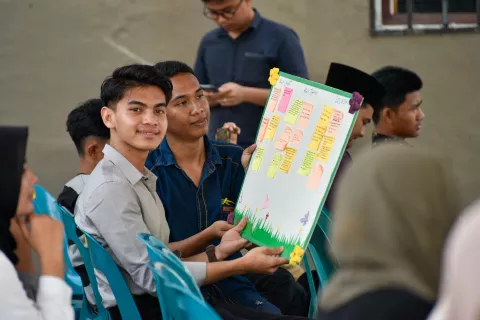
- Working with adolescents in a participatory way that allows them to explore activities and topics that interest them, to learn through doing and to take the lead;
- Giving adolescents space to express themselves through art, drawing, singing, dancing, writing, storytelling, sports and drama;
- Providing adolescents with opportunities to innovate – experiment, solve problems, and explore new ideas;
- Supporting adolescents to build or strengthen positive relationships in their lives, particularly with family and friends;
- Providing adolescents with opportunities to contribute to their communities and take positive actions for themselves and others;
- Connecting adolescents to useful information, programmes and support to prevent and respond to risks to their health, safety, protection and wellbeing.
Additional notes on girls, boys and adolescents with disabilities in humanitarian contexts
- Are at great risk of violence and other harm to their physical safety due to separation from families who might protect them, living in insecure shelters, and as community and social norms break down. Sexual violence, including rape and forced impregnation, are inherent to the violence of war and armed conflict.
- May be fed last and may be the first to go hungry in the face of food insecurity, and are more likely to be malnourished, as some families prioritize the nutrition ‘investment’ in other family members, or even livestock.
- Suffer from inadequate sanitary conditions and supplies, especially during menstruation and lactation, as well as from a lack of sexual, reproductive and maternal health care services, which can mean a death sentence for many women during childbirth or when seeking to terminate a pregnancy.
- May be even more likely than girls in other contexts to be forced to marry as children. Girls’ (forced) marriage may reduce the financial burden on their parents while providing them with more income (a bride price). Also, in some contexts marriage may be seen as ‘protective’ for girls in the unsafe circumstances of an emergency, connecting them to a family structure and ensuring their ‘honour,’ and their families’, in a context in which they are at risk of sexual violence.
- Often become involved in unsafe livelihoods, including transactional sex, to provide for themselves and their families.
- Take on an increased disproportionate share of the burden of household responsibilities – As a result, they are isolated within their homes, leaving them vulnerable to violence, and without access to social networks and formal and informal learning opportunities that are essential for their development and wellbeing.
- Disappear – literally, for those become victims of trafficking or abduction – and figuratively, for those who become confined to their homes to carry out chores, care for others, and in many cases becoming wives and mothers.
- Are at risk of participating in risky income generating activities, for their own survival, and to respond to an expectation that as young men they should provide for their families.
- Are often recruited into militias and fighting groups – Some adolescent boys may become involved in fighting forces to earn income, or to fulfill the role of an adult in contexts in which men are expected to perform military service.
- May be separated from their families during displacement, or to pursue income-generating opportunities remotely.
- Are at risk of sexual violence, including rape.
- Are often left idle and bored in emergencies, lacking opportunities to continue formal education, learn and develop skills through informal channels and connections with elders, or to take on roles and responsibilities that allow them to contribute to their communities and societies at a moment of great need.
- See the Technical Note on Adolescents and Gender Equality for information on how the Adolescent Kit can be used to support interventions that uphold and promote principles of gender equality.
- Are more likely to be left behind, abandoned or neglected.
- Are exposed to a higher risk of violence and/or abuse than their peers, especially when separated from family and careers.
- May lose essential medicines and assistive devices (such as glasses, wheelchairs, crutches and hearing aids) reducing their independence and increasing their reliance on others.
- Have increased vulnerability when the networks that they rely on for assistance and support (e.g. family, friends, teachers and social services) are disrupted or break down.
In addition to enhanced vulnerability in humanitarian contexts, adolescents with disabilities also face significant barriers to accessing humanitarian services. Adolescents with disabilities…
- Are often considered a lower priority and experience discrimination in accessing humanitarian services.
- May not be able to access humanitarian aid as services or information about the services are not accessible.
- May be excluded from humanitarian responses and services as humanitarian actors at all levels lack awareness and capacity to design and implement inclusive responses, ensuring the participation of adolescents with disabilities.
- May not be counted in needs assessments and data collection, rendering them invisible within both humanitarian preparedness and response.
- May be excluded due to policies that are not inclusive and do not consider the impact of humanitarian contexts on children, adolescents and adults with disabilities.
See the Technical Note on Adolescents and Disability for more information.
Highlights
The guidance and approaches in the Adolescent Kit revolve around a number of key understandings about adolescents in humanitarian situations. These include a recognition that while the experiences of adolescents are extremely diverse, during times of crisis, adolescents may share certain challenges and opportunities.