Guide: Prepare for your intervention to transition or end
It is important to have plans in place for ending or handing over your intervention with the Adolescent Kit.

It is important to have plans in place for ending or handing over your intervention with the Adolescent Kit. As you come to the end of your activities, take time to prepare adolescents and the community for the next steps, and to celebrate your achievements together.
1. Plan your exit strategy from the start
Make sure that you include the expected duration and timeframe of your intervention with the Adolescent Kit within your initial plans (i.e. in your project document). The expected duration should take into account the humanitarian situation, programme context, and funds available for activities. As part of your planning, you should also develop a clear exit strategy that outlines options for continuing, transitioning or ending your activities with adolescents once your expected time is up.
2. Decide the best way to move forward
Before your intervention with the Adolescent Kit is scheduled to close, try to involve all of your stakeholders – adolescents, facilitators, steering committee member and others – in decisions about what to do as you come to the end of your activities.
The best way forward will depend on many different factors, including the resources available, interest of adolescents and the community, success of your work to date and the humanitarian context.
Possible options include:
- Another programme, institution or partner organisation takes over (and funds) the intervention so that adolescents can continue their work together.
- Some or all of the adolescent groups (or circles) continue to work independently on their activities and projects.
- A group of caregivers, steering committee members, adolescents or other community members assumes responsibility for continuing some or all aspects of the intervention.
- The intervention closes. For example, humanitarian conditions (increased security, further displacement of communities, or the end of a conflict) may mean that adolescents in your community may be moving on elsewhere or returning to their homes. Alternatively, there may not be community support or interest in continuing your intervention with the Adolescent Kit.
Refer to Deciding next steps tool.
When interventions are due to close…
Encourage adolescents! Emphasize that their energy, motivation and commitment are the only real requirements for continuing their work together.
3. Prepare adolescents and other stakeholders for the next steps
However you decide to move forward, it is important to give adolescents and other stakeholders (particularly facilitators) as much advance warning as possible - and to prepare them for the next phase.
If the intervention will continue as part of a different entry programme or with a new partner organisation, explain to adolescents and facilitators exactly when, where and how the transition will take place – and reassure them that their needs will continue to be supported. Give them plenty of time to prepare, voice their concerns and to understand how the transition will affect them, so that there aren’t any big surprises when the intervention changes hands.
If your intervention is due to close:
- Explain why, and reassure adolescents that it doesn’t reflect any failure on their part – or a lack of concern for them from facilitators, volunteers or others.
- Discuss adolescents’ hopes and concerns, and support them to use their skills and resources to manage the transition, and to find alternatives for continuing to work and have fun together.
- Support adolescents, facilitators and/or interested community members to take over the intervention (if they want to), and spend time preparing them to run activities, manage supplies and coordinate sessions.
4. Reflect on your progress
Reaching the end of your intervention with the Adolescent Kit provides you with an opportunity to reflect on your progress and to identify what has and hasn’t worked. This means going back to the goals that you set for your intervention and checking to see whether you have fulfilled them or not. It also means working with adolescents to assess whether they have reached the goals they have set for themselves regarding the competencies – knowledge, attitudes and skills – that they hoped to gain through your work together. Refer to Measuring progress toward competency goals tool.
Work with adolescents, stakeholders and others to carry out a final evaluation of your work together. Use their feedback to try to determine whether your intervention with the Adolescent Kit has resulted in any positive changes to participants’ lives, and to shape other programmes and interventions for adolescents in the future.
5. Mark the occasion
Whether your intervention with the Adolescent Kit is closing, changing hands or evolving within a new form, make sure that you take time to celebrate adolescents’ achievements and to mark the end of your work together. This can help to end things on a high note and provide a sense of closure to everyone involved.
- Hold a ceremony or celebration for adolescents, facilitators and community stakeholders.
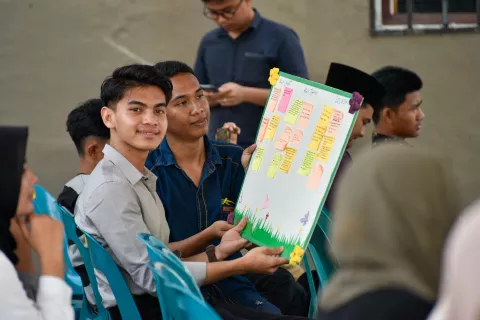
- Encourage adolescents to present their work through a final art exhibition, music performance or sports event and invite the community to participate.
- Ask adolescents how they would like to mark the occasion! They may have creative ideas for commemorating their time together.
Monitor and adapt
Ending interventions and programmes is all part of the process. Remember that things change fast in humanitarian situations, and that you may end up closing your intervention down early, extending it for much longer than you expected or handing it over to other programmes or partner organisations to continue in a different way. The important thing is that you plan your exit strategy carefully and involve adolescents and community stakeholders at each step along the way.
Highlights
It is important to have plans in place for ending or handing over your intervention with the Adolescent Kit. As you come to the end of your activities, take time to prepare adolescents and the community for the next steps, and to celebrate your achievements together.