Guide: Adolescents and gender equality
The Adolescent Kit supports gender equality through guidance, approaches and activities that address the unique needs of adolescent girls and boys and that promote inclusion.

Gender refers to the socially constructed roles of adolescent girls and boys, as well as the relationships among them. It defines what behaviours, attitudes and actions a given society considers appropriate for adolescent girls and boys, including what they are expected to do, how they are supposed to behave and how they relate to each other. Gender determines who does what, who has what, who decides and who has power.
Gender roles and inequality
In both humanitarian and more stable situations, adolescent girls and boys are socialised into
different gender roles. They are expected to do different types of work, to behave in different ways and to take on different responsibilities. This rigid definition of their roles can limit adolescent girls’ and boys’ ability to reach their full potential and to realise their rights as defined in the Convention on the Rights of the Child (CRC).
A gender-sensitive approach to the Supply Kit
Adolescent girls and female facilitators who piloted the Supply Kit for UNICEF in Indonesia requested a ‘backpack-style’ carrier for their supplies, rather than a cross-body carrier, in order to better adhere to cultural considerations around modest dress for girls and women.
Gender roles and norms vary in different cultures, and they change over time. In many societies, girls’ lives become more restricted to the domestic sphere as they enter adolescence, while boys’ worlds start to expand. In many cases, gender norms favour boys and men, providing them with more power, freedom, rights, and a stronger voice in decision making; while negative attitudes, stereotyping and prejudices mean that girls and women are often expected to defer to males and may experience life-long discrimination and even gender-based violence.
Gender equality
Gender equality means that adolescent girls and boy enjoy the same rights, resources, opportunities and protections. This does not mean that adolescent girls and boys should be treated exactly the same, but rather that their unique needs, circumstances and experiences should be taken into account so that they can enjoy the same opportunities.
Gender equality means that adolescents should not be discriminated against simply because they are male or female. This is particularly important in humanitarian situations, where gender roles and inequality are often exacerbated. Adolescent girls and boys in humanitarian situations may face very different challenges, risks and opportunities, which can influence their ability to participate in and benefit from humanitarian interventions.
Supporting gender equality through the Adolescent Kit
The Adolescent Kit takes a gender-sensitive regardless of their gender, and takes into account
the unique needs of adolescent girls and boys. This approach involves working with adolescent girls and boys to design and run interventions that are relevant to their particular circumstances, interests and needs, and creating an environment where everyone is able to participate on an equal footing.
The Adolescent Kit includes guidance and tools on how to:
- Collect gender-disaggregated information about adolescent girls and boys, including the different challenges they face, how they spend their time, their family situations, roles and responsibilities, interests and priorities;
- Reach out to vulnerable girls and boys, find ways to overcome barriers that may prevent their participation in activities, and keep them involved through inclusive ways of working – for example, girls may need permission from their parents to attend activities, and boys may not have much time available if they are involved with fighting forces or are working to support their households;
- Create interesting, welcoming spaces that both adolescent girls and boys can access safely, and schedule activities on days and times that suit the adolescents’ schedules;
- Group adolescents in a way that makes girls and boys feel comfortable and safe – for example, when discussing sensitive issues, it may be appropriate to create separate groups for girls and boys where they may feel more at ease interacting;
- Build a gender-sensitive team of facilitators that includes a mix of men and women who can work with adolescent girls and boys in participatory and inclusive ways so that everyone’s voice is heard, and who are aware of the different needs, challenges and priorities of adolescent girls and boys;
- Connect adolescent girls and boys to services, programmes and information that they can benefit from, and take steps when their health, safety or well-being is at risk – this involves awareness of the different issues, protection risks, concerns and services that may be particularly relevant to adolescent girls and boys (such as sexual reproductive health services for girls);
- Include both men and women as mentors, role models and resources to help empower and support adolescent girls and boys; and
- Involve adolescent girls and boys in designing, monitoring and evaluating their work together, and in selecting and adapting activities to meet their particular needs, interests and circumstances – this includes empowering adolescents to take on take on new tasks, responsibilities and leadership opportunities regardless of their gender.
Most importantly, the tools, activities and guidance in the Adolescent Kit advocate an inclusive approach that involves letting adolescent girls and boys take the lead in designing and managing their work together. This means that from the start, both adolescent girls and boys should be consulted about where, when, and how their work together should be organised, so that they can participate equally and safely, and about what types of activities meet their particular interests, concerns and needs.
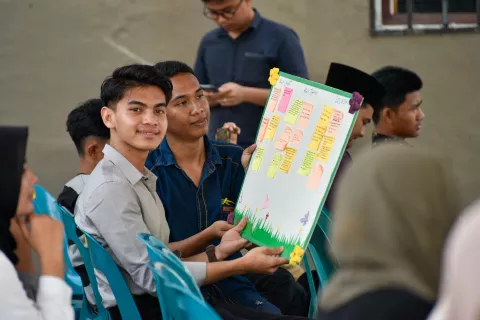
The Adolescent Kit also presents opportunities to transform limiting attitudes about gender through activities that support adolescents to reflect on their identities as girls and boys, and to examine the ways in which being male or female shapes their lives, experiences and opportunities. These opportunities can open up space for adolescent girls and boys to connect, learn about each other, overcome stereotypes and prejudices, and develop competencies – knowledge, skills and attitudes – that are relevant to their particular circumstances.
Ultimately, supporting gender equality with the Adolescent Kit is about understanding adolescent girls’ and boys’ different needs, circumstances and constraints – and adapting interventions so that even the most vulnerable girls and boys can access and benefit from them. Supporting gender equality involves working with adolescents to identify and overcome the particular barriers they may face to participating equally, and making sure that girls and boys can enjoy the same opportunities and benefits as they work together in their Adolescent Circles.
Highlights
Gender refers to the socially constructed roles of adolescent girls and boys, as well as the relationships among them. It defines what behaviours, attitudes and actions a given society considers appropriate for adolescent girls and boys, including what they are expected to do, how they are supposed to behave and how they relate to each other. Gender determines who does what, who has what, who decides and who has power.