Flash floods in Nepal leave more than 17,000 children in need of urgent humanitarian assistance
UNICEF appeals for US$17.2 million to deliver emergency response and early recovery
KATHMANDU, 27 August 2026 – At least 17,000 children have been impacted by the devastating flash floods that tore through Nepal's Rasuwa, Nuwakot and Dhading districts on 26 August. So far, an estimated 332 people have died – including at least 14 children - and-hundreds are still missing. The numbers are expected to rise as search operations continue.
“Children across Rasuwa and Dhading saw their lives being literally washed away in front of their eyes in a very short span of time, with homes, classrooms, and medical facilities damaged. Too many lost their lives and loved ones,” said Alice Akunga, UNICEF Representative to Nepal. “With the death toll still rising, we know this tragedy is far from over. Children who have survived the floods now face heightened risks of disease, malnutrition, violence and exploitation. UNICEF is on the ground and scaling up support, but we urgently need more resources to reach every child in need.”
The flash floods have swept away or cut off entire communities, with roads, bridges, hydropower facilities, water systems and telecommunications networks badly damaged, leaving affected areas largely inaccessible and hampering the delivery of life-saving aid. At least four health facilities have been severely damaged, preventing children and families from accessing healthcare when they need it most.
In addition, 18 schools have been completely destroyed and a further 20 have sustained damage, depriving children of safe spaces to learn, play and recover. Dozens of schools are located close to riverbanks in the affected areas and remain at risk. An estimated 10,000 school-age children now require urgent support to continue their education, including access to temporary learning centres, replacement learning materials, and psychosocial support for both children and teachers.
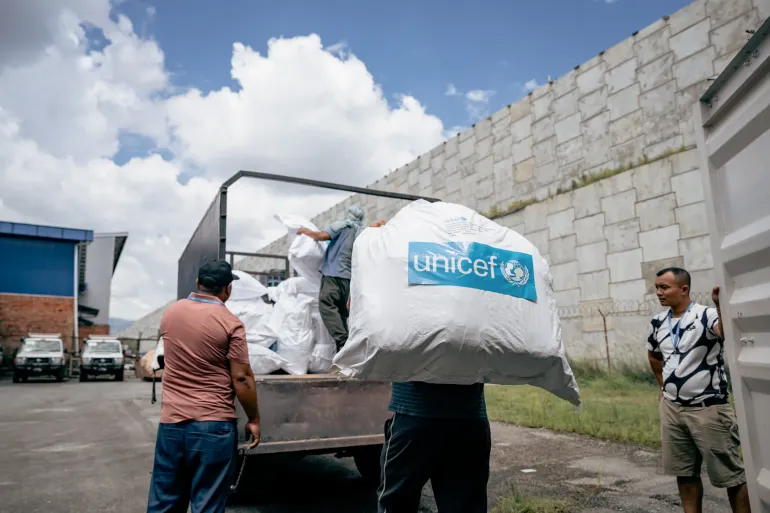
Working closely with the Government of Nepal and humanitarian partners, UNICEF is scaling up life-saving support across health, nutrition, water, sanitation and hygiene (WASH), education, child protection and social protection. In the coming days, pre-positioned supplies will be dispatched to the hardest-hit communities, including medical tents, bed nets and newborn kits, and therapeutic food for children with acute malnutrition. Emergency hygiene kits for thousands of households are already reaching those in need.
Meanwhile, mental health and psychosocial support teams have been mobilized, and UNICEF is working to identify, register and reunite children missing or separated from their families. UNICEF is also working with the Government of Nepal to deliver emergency cash assistance to affected households to help families meet urgent basic needs and avoid resorting to harmful coping strategies.
UNICEF is appealing for US$17.2 million to sustain its emergency response and support early recovery until the full extent of needs are assessed. Without urgent and flexible funding, UNICEF's ability to deliver essential health, nutrition, WASH, education, child protection and social protection services to children — including children with disabilities — and women will be severely constrained.
Media contacts
Additional resources

About UNICEF
UNICEF, the United Nations agency for children, works to protect the rights of every child, everywhere, especially the most disadvantaged children and in the toughest places to reach. Across more than 190 countries and territories, we do whatever it takes to help children survive, thrive, and fulfil their potential.
Follow UNICEF on X, Facebook, Instagram and YouTube