Technology and Parenting: Why Zimbabwe Is Leading Africa’s Digital Childcare Revolution
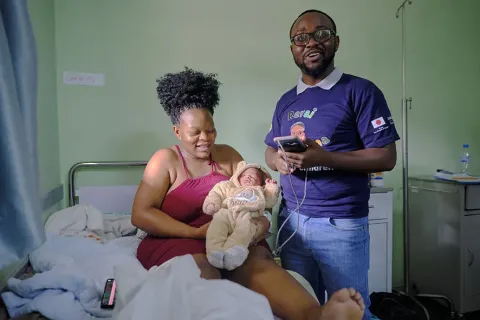
Fujino scrolls through the app on his phone: colourful screens filled with practical guidance on pregnancy, nutrition, immunisation, early learning and child development.

On the eve of the official launch of Rerai Umntwana in Glen View, Harare, Taichiro Fujino is speaking not about software, but about fathers.
“Father’s engagement is difficult everywhere,” he says with a gentle smile. “But we are working for UNICEF. We must become better fathers too.”
It is a light moment, yet it captures the spirit behind Zimbabwe’s newest digital innovation: technology designed not to impress, but to support families in raising healthy children.
Fujino is a Technology for Development Officer with UNICEF’s Digital Centre of Excellence under the Digital Impact Division. From his global role supporting countries to harness digital tools for children, Zimbabwe now occupies a special place — it is the first African country to launch a localised version of UNICEF’s global parenting platform.
That platform is known internationally as Bebbo.
In Zimbabwe, it has been reborn as Rerai Umntwana — Nurture the Child.
Parenting support in the palm of a hand
Fujino scrolls through the app on his phone: colourful screens filled with practical guidance on pregnancy, nutrition, immunisation, early learning and child development. Parents can record their child’s height and weight, track milestones and receive age-appropriate advice designed by health and development experts.
“This is not just an app,” he explains. “It is a digital parenting platform. When something happens with your child, caregivers can immediately understand what action to take.”
The Zimbabwe version is distinct. Its interface is green — a deliberate design choice reflecting one of the prominent colours of the Zimbabwean flag. The intention was to ensure that the app feels local, familiar and owned by the communities it serves.
“We did not want a foreign app,” Fujino explains. “We wanted something Zimbabwean parents feel belongs to them.”
The application works offline once downloaded — a critical feature in low-connectivity settings — and is available in English, Shona and Ndebele. For families navigating an overwhelming flood of online advice, Rerai Umntwana offers something rare: trusted information grounded in evidence.
In a country where nearly one in four children under five experiences stunting, access to reliable guidance can shape a child’s entire future.
“At the same time,” Fujino adds, “mobile phone access is growing very fast. So we saw an opportunity. If parents already have phones, we can deliver support directly into their hands.”

A caregiver’s perspective
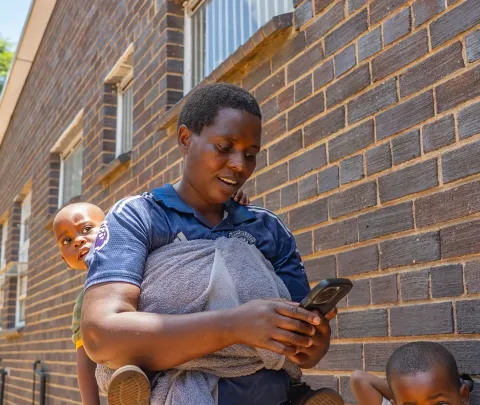
For Tendai Muronda, a caregiver from Hurungwe, that opportunity feels deeply personal.
Raising young children in a rural setting often means balancing advice from clinics, relatives and social media — not all of it consistent. Tendai says access to a trusted source of information removes anxiety from everyday parenting decisions.
“As a parent, you always worry if you are doing the right thing,” Tendai explains. “Sometimes you hear many different opinions. Having one place where you can check information from experts gives confidence. It means I can make decisions for my children without fear.”
For caregivers like Tendai, Rerai Umntwana is more than convenience. It is reassurance. It is the quiet knowledge that guidance is available at any hour — during illness, uncertainty or moments of doubt — without needing to travel long distances.
“When parents feel supported,” Tendai says softly, “children grow better.”
Why Zimbabwe came first
Bebbo is already used in more than fifteen countries across Eastern Europe, Central Asia and Asia. Zimbabwe marks a turning point.
“This is the first African country to implement it,” Fujino says with pride. “It is an important milestone. Africa is moving quickly in digital adoption. Zimbabwe shows what is possible.”
Rather than importing the global application unchanged, UNICEF worked with the Ministry of Health and Child Care and the United Nations International Computing Centre to redesign it for Zimbabwean families. Every detail — from language options to visual identity — reflects local realities. The funding was generously provided by the Government of Japan

Digital innovation with a human purpose
Behind Rerai Umntwana lies a broader shift within UNICEF itself. Fujino is part of a global effort to strengthen how country offices use digital innovation to reach children.
“Everyone understands digital is important,” he says. “But using digital is not easy. Many health or nutrition specialists are not digital experts. That is why we created a support system.”
Through UNICEF’s Team One model, digital advisors embedded in country offices — including Zimbabwe — connect with global specialists to bring the right expertise where it is needed. The objective is not technology for its own sake, but technology that strengthens national systems and supports families.
Future updates to the application will introduce artificial intelligence tools allowing caregivers to ask questions in natural language and receive immediate, evidence-based responses. UNICEF is also exploring video-based content to make parenting guidance more accessible, particularly for fathers who may engage more easily through visual storytelling.
“Parenting should not depend on rumours or chance,” Fujino says. “It should depend on knowledge.”

A quiet revolution for families
For Zimbabwean caregivers, Rerai Umntwana represents more than a digital tool. It is a bridge between clinics, communities and homes — reinforcing the messages health workers share and placing trusted guidance directly into daily family life.
Technology, in this case, does not replace human care. It strengthens it.
When parents feel supported, children are safer, healthier and better prepared to learn. The ripple effect reaches far beyond a single household.
“We are filling a gap,” Fujino reflects. “And when parents are supported, children grow stronger. That is the real impact of digital.”
Zimbabwe’s leadership in launching Rerai Umntwana signals more than a technological milestone. It signals a commitment to ensuring that every child — regardless of geography, income or background — has the best possible start in life.
And on the eve of its launch in Glen View, that future is already in the hands of families — ready to be opened, explored and trusted.