Ravaged by El Nino, a community galvanizes to ensure success of water scheme
"This is about is our life.” Under threat from cholera, malnutrition and girls’ abuse due to water scarcity, a Zimbabwean rural community takes centre stage to drive CERF-supported piped water project

Bikita, Zimbabwe - Gathered under a tree to escape the scorching heat, a 72-year-old woman chairs a community meeting to discuss the implementation a solarised piped water scheme. Among the participants are fellow older residents, a local traditional leader, a Village Health Worker and young breastfeeding mothers. Nyaradzai, a 16 year-old, and several adolescents are also in attendance to make their voices heard.
Water problems that are increasing risks of cholera and other diarrhoeal diseases, malnutrition, gender-based violence, abuse of adolescent girls and access to quality education are galvanizing a community in Masvingo Province’s Bikita District to drive an initiative for safe and reliable water in the drought-prone area.
Their quest has been given a huge boost following a timely technical and financial intervention by the Government of Zimbabwe in partnership with UNICEF and partners to establish a solar-powered piped water project with support from the United Nations Central Emergency Response Fund (CERF).
In Bikita’s Tochiona village, where people face water scarcity-induced multiple threats ranging from cholera to food insecurity and social vices such as violence and gender-based abuse, the funding of CERF is providing hope for the restoration of livelihoods.
“The water situation has become like an albatross on our necks. The young and the old, everyone is affected, every facet of life is under threat. The outbreak of cholera left us even more vulnerable,” said Antonia Mtetwa, the chairperson of the village water point committee that is spearheading community efforts to ensure success of the piped water scheme. She was speaking at the site of the planned scheme.
Zimbabwe has recorded more than 30,000 cholera cases (April 2024), including more than 700 deaths, since the outbreak was detected in February last year, with Masvingo being one of the worst affected Provinces.
The El Nino effect
Many districts in the Province such as Bikita are traditionally dry, and water is a perennial challenge. The El Nino weather phenomenon, which resulted in lower rainfall patterns in Zimbabwe, has compounded the situation. It is worsening the risk of cholera amid an unfolding humanitarian crisis marked by outbreaks of polio and measles as well as longstanding issues like malnutrition.
In Bikita District, many hand pumped boreholes have dried up. This has put added pressure on the few remaining functional bush pumps like the one in Tochiona village.
“Some people are coming from beyond the mountain to fetch water here. Long queues form as some people even come with cars to fill drums during church gatherings. It ends up being crowded and violent. Children, women and the elderly are elbowed out,” decried Mtetwa.
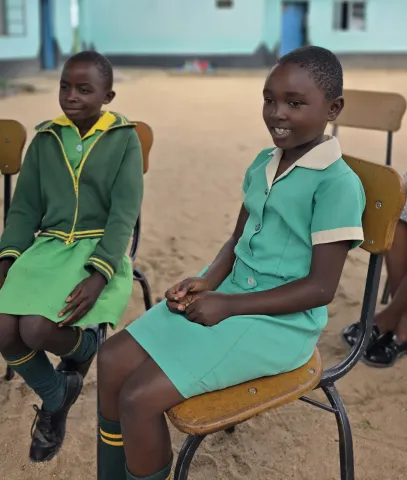
Young people face some of the harshest impacts of the water scarcity, often risking their health, abuse and education, she said.
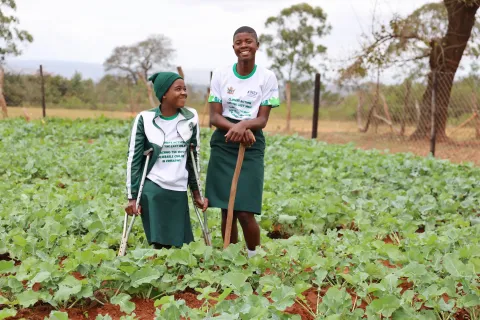
It is a nightmare that adolescent girls like Nyaradzai, who, because of patriarchy, are tasked with fetching water – wherever and whenever it can be found. Nyaradzai and other girls walks up to six kilometres to the borehole, where they spend hours to fill their containers.

“Walking back home late is always a risk. Also, some men old enough to be our fathers ask for sexual favours to help fill our containers and others take advantage of the commotion to touch us,” lamented the Form Three pupil.
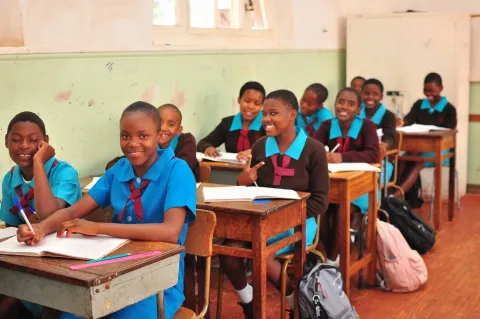
She is also pinning hopes on the piped water scheme to put the education of children back on track.
“We come here at 3pm after school and return home sometimes as late as 10 pm. Look at them; will they have time and energy to study or do their homework?” she said, pointing to a group of adolescent boys sitting in a wheelbarrow awaiting their turn to fill buckets of water.
Younger ones are in danger of growing up malnourished, as lack of water means parents cannot grow food or get income to diversify diets.
Almost one in four children, over half a million, are stunted because they endure prolonged periods without recommended nutrition, affecting their ability to grow and develop to their full potential. A people centred response
To prevent loss of lives from the multi-pronged humanitarian crisis in the southern African country, the Government, UNICEF and partners with funding from CERF seek to provide access to safe water and hygiene to more than 77,000 people in five districts in Masvingo, Manicaland, and Matabeleland South Provinces – some of the areas hardest-hit by El Nino induced drought.
Centred on inclusive participation, the young and old in beneficiary communities are actively involved in the planning, implementation, monitoring and long-term sustainability of the interventions.
On a recent day in Bikita District’s Tochiona village, robust discussions characterised a community meeting on the piped water scheme.

First, Village Health Worker (VHW) Grace Mavange addressed people on cholera prevention strategies, the importance of early treatment, sanitation and hygiene measures and children’s health such as breastfeeding and balanced diets.
“The piped water scheme is an answer to our problems, but it is not enough if people are still steeped in old practices. We need people to internalise sanitation, hygiene and nutrition practices. It should be a habit,” she said.
Others highlighted the importance of placing taps that will distribute water throughout the village closer to homes.
“Don’t forget the gardens, we need water there too,” chipped in Onista Zabuya, a mother of two infant children. She highlighted how nutrition gardens are critical to achieving balanced diets and also for income in an area where economic opportunities are few.
A committee was set up to spearhead negotiations with residents who own land where tanks, pipes and other infrastructure would be placed. Another small committee of residents was tasked with coming up with sustainability measures such as security and monetary contributions for small repairs once the scheme is operational.
“It has popular support, everyone is willing to play a part. People come for meetings and we plan together. Right now we are organising to provide labour and locally available construction materials such as stones,” said Joshua Murefu, a local village traditional leader coordinating the community’s participation. This is about is our life so we have to take centre-stage.”