Four-star porridge, nutrition gardens and Care Groups: The El Nino drought survivor’s tool kit
‘Life is hard, but we have Care Groups.’ In Zimbabwe, mothers lean on an ongoing community-led initiative to survive on of the harshest drought in living memory

Matobo – An irrigated nutrition garden, Care Groups and Maworesa, a special diet porridge. For Bekezela Dube, a mother of four who lives in Lingwe village in Zimbabwe’s Matobo district in Matabeleland South province, these are the three intertwined interventions that her family is leaning on to survive a devastating El Nino induced drought.
“This year life is hard because of the drought. We didn’t harvest anything,” said Dube, who relied on farming staple crops such as maize and millet before the drought. “But we have Care Groups,” she added.
Care Groups and nutrition gardens, which are part of a raft of integrated interventions introduced under the European Union-funded Enhanced Resilience for Vulnerable Households in Zimbabwe (ERVHIZ) project, have been essential in fostering healthy communities across Zimbabwe’s drought-prone areas such as Matobo.

Diversifying diets through Maworesa porridge
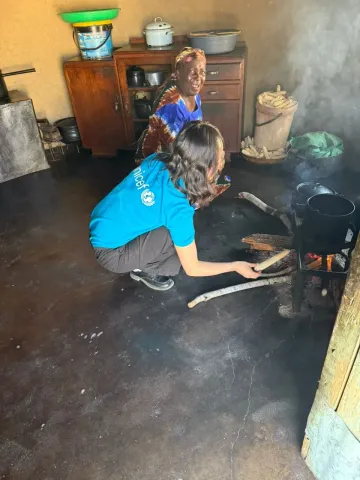
The introduction of Maworesa porridge to the mix has helped families such as Dube’s to pull through what has been the worst drought in living memory. Maworesa, which means “the very best” is a home-grown nutrient dense porridge given especially to young children from 6 months of age. Care Groups, which are run by community members under the direction of a lead mother, are helping drive the life-sustaining intervention.
Ingredients that are usually locally available such as maize meal or millets, peanut butter, milk, fruits, eggs, beans and vegetable leaves are mashed together to produce a yummy four-star porridge.
The thriving nutrition vegetable garden close to Dube’s home ensures that her family doesn’t have to look far or fork out much money for most of the ingredients.
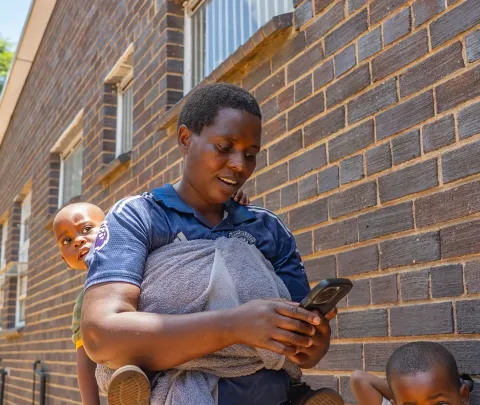
“The Care Groups teach us how to raise our children well. In our Care Group we were taught to cook nutritious porridge in the morning for our children, a six-year-old must eat three times a day,” said Dube, whose youngest child is three years old.
What are Care Groups?
The Care Group strategy involves trained Village Health Workers leading groups of between six and ten community volunteers. Each Care Group is run by a community-based lead mother to deliver a holistic package of counseling and support for health, nutrition, child development, water, sanitation and hygiene. These are linked to other forms of support systems that include social protection, agricultural support and income generation activities.
Using regular meetings, Care Groups, which are designed to promote peer-to-peer messaging to ensure inclusivity, impart information on how best to integrate WASH, agriculture, nutrition and child development. Members cascade the knowledge to people within their surroundings, creating a key multiplier effect across communities where information is usually transmitted via word of mouth.
The Care Groups not only teach mothers like Dube how to prepare healthy meals. They are also essential in ensuring that community members fully utilise interventions such as nutrition gardens by imparting knowledge on producing homegrown crops such as pumpkins, groundnuts, round nuts, green vegetables, sorghum, beans and livestock products – all vital Maworesa porridge ingredients.

Integration and resilience: The ERVHIZ pillars
Such a holistic approach is a central pillar of the ERVHIZ intervention, which integrates water availability with hygiene, sanitation, nutrition and agriculture to build resilience in vulnerable communities.
It was implemented by UNICEF Zimbabwe, the Food and Agriculture Organisation (FAO), various Government of Zimbabwe ministries and agencies and partners such as Welthungerhilfe, Nutrition Action Zimbabwe, Goal Zimbabwe, Christian Care, Sustainable Agriculture Technology and Save the Children.
In the Matabeleland South districts of Insiza, Matobo, Gwanda, Plumtree, Mangwe and Bulilima, people who used to walk tens of kilometres to fetch water, often from unsafe sources such as unprotected wells or rivers, now have access to clean water through solar-powered boreholes that deliver the precious liquid through a network of taps. Nutrition gardens that have been enabled by the availability of water have become life-saving for thousands of children whom UNICEF says are the hardest-hit by the El Nino induced drought.
UNICEF in May, 2024 launched an urgent appeal for US$84.9 million to support emergency response interventions for children and women affected by the El Nino crisis in Zimbabwe. The funding would allow UNICEF to assist 1.34 million people, including 866,000 children, with life-saving interventions to survive the country’s complex humanitarian crisis that has been deteriorating due to the worsening water and food shortages.
“Given the enduring impact of El Niño on Zimbabwe's children and vulnerable demographics, continued support will be crucial in the coming months,” said UNICEF in the appeal document.
Meanwhile, mothers such as Dube are relying on ongoing interventions such as the ERVHIZ project to navigate the crisis and diversify diets through the four-star Maworesa porridge to prevent malnutrition among their children.