Chiredzi Care Groups protecting children’s nutrition in light of El Nino
Care Groups demonstrate resilience in the face of El Nino induced drought.

Deep down in semi-arid Chiredzi, Care Groups fight for children’s nutritional needs through innovation and grit.
After receiving insufficient rains due to the El Nino phenomenon, which has left the community projecting a harvest of around 50 percent of its usual yield, locals have turned to fish farming, community gardens, the establishment of orchards, and nutritious ways of preparing locally available food.
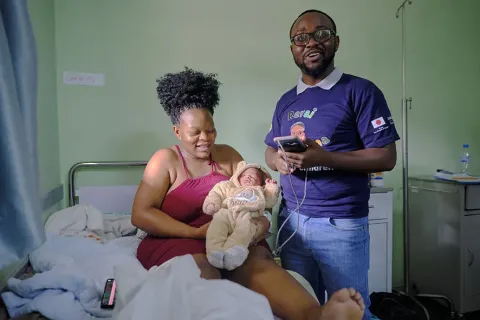
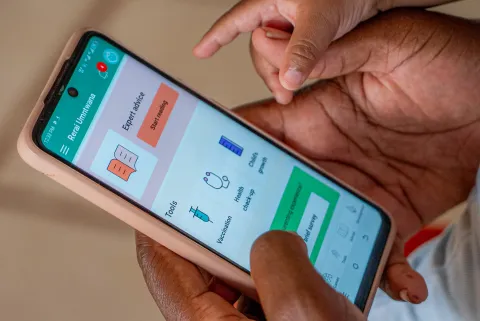
Care Groups are part of a community-based services health information system that aims to prevent children’s malnutrition by providing mothers and other caregivers with information on how to promote provide a nutritious diet to their children.
They also link caregivers with agricultural support and income-generating opportunities, support caregivers in monitoring their child’s nutrition status, and refer children with malnutrition and pregnant mothers to the local health facility. They gather reports on malnutrition cases, pregnancies, and breastfeeding.
The Ministry of Health and Childcare implements the care group model with support from UNICEF and other nutrition partners, with funding from the Central Emergency Response Fund (CERF).
It is estimated that malnourishment malnutrition affects one in every three children in the developing world. For the year 2024, approximately 1.7 million children in Zimbabwe will be food insecure. Hence, UNICEF’s intervention to reduce the impact of El Nino through supporting the scaling up of the availability of Ministry of Health and Childcare Groups.

In Chiredzi, the Care Group model is being scaled up to enhance access to quality diets and services to prevent all forms of malnutrition for children below five years, adolescents, and pregnant and lactating women.
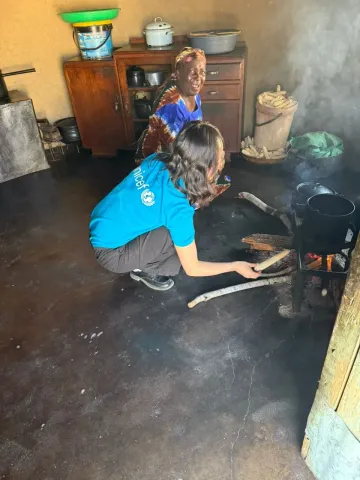
The children in Guluji Village 4 love the Care Group’s signature dish—nutritious porridge made from ground cow peas, yellow maize, and peanuts.
Sometimes, eggs are added to their porridge to make it more nutritious.
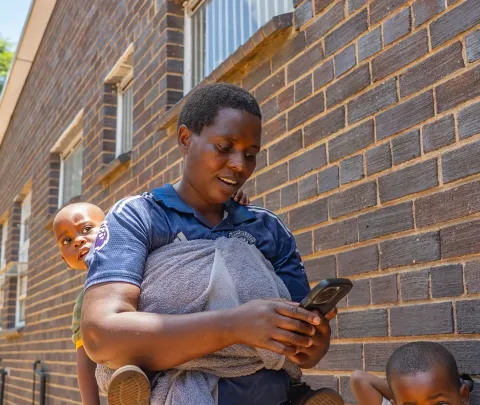
“We are delighted with the overall well-being of the children in this village. From pregnancy, we walk the journey with the mother until her child is five years old to ensure they are well nourished,” said Rose Farai Komndlela, village health worker for Guluji Villages 3 and 4.
With 88 households in Village 4 alone, there are 125 children under five years old, of whom 35 are under two years old, whose health and nutritional needs are being tracked by Farai’s Care Groups
“Our main role is to prevent malnutrition in children. This is why we encourage exclusive breastfeeding for the first six months of life, with the introduction of nutritious first foods to complement breastfeeding at 6 months of age,” Farai explained.
Farai oversees the operations of Thlakhukhani Gare groups A, B and C, whose name can be loosely translated as to ascend, or “simukirai” in Shona. Indeed, the Care Groups are enabling upward progression through knowledge acquisition and the promotion of a healthy and nutritious diet for young children that can enable the best possible start in life for all children.
The Gare groups each have 15 members, and each is managed by one lead mother who reports to the village health worker. The reports are fed into the local health facility’s records.
Since they were established in 2018, the Care Groups have noted a reduction in children’s malnutrition and home deliveries.
Lead mother Auxillia Chitiki said that while her group’s members are all women, the men in the community also understand the importance of their children’s nutrition and are giving them the necessary support.
“The topics we discuss range from breastfeeding to gardening and tree planting, among others. We are actually in the process of setting up our community garden so that we can grow carrots, tomatoes, beans, and maize for the benefit of our young ones. Some households have also set up fish ponds at their homesteads,” said Auxillia.
Chiredzi District Nutritionist Isheunesu Matimbire said that this year, Care Groups will play a crucial role in equipping communities with nutrition knowledge to prevent child malnutrition.

“In light of the El-Nino induced drought and the foreseen increase in the number of malnourished children, Care Groups have been convenient in monitoring the children and preventing malnutrition.
“Affected children are given the ready-to-use therapeutic food (RUTF) as soon as cases are identified. Those on treatment can recover within a month or so, and it is important to ensure that they do not relapse,” said Isheunesu.
RUTF is a life-saving, micronutrient-rich paste specially formulated using peanuts, sugar, milk powder, oil and vitamins to treat severe wasting in children under five years old.
Children under five also receive Vitamin A supplements and multiple micronutrient powders which are provided through Care Groups with support from UNICEF.
The role of the Care Groups is more crucial than ever in a year like this, when households have not been able to produce all the food they need. They seek to support caregivers with the knowledge and the means to ensure their children remain well-fed and healthy to prevent a deterioration into malnutrition, especially wasting, which is a life-threatening form of malnutrition. Children with severe wasting have a risk of death that is nine times higher than children without wasting. The Care Groups are working tirelessly to prevent this risk.