From factories to children:
Strengthening Zambia’s fragile vaccine delivery system to improve children’s lives

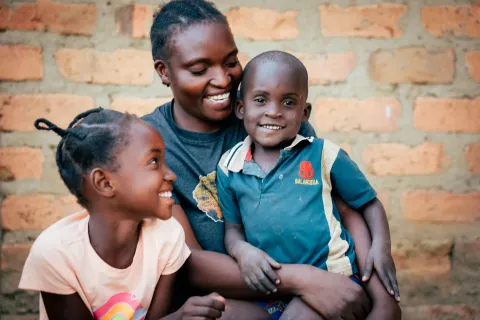
Livingstone, Zambia — In Natebe, a peri-urban settlement on the outskirts of Livingstone, accessing routine vaccination services is not always straightforward. At 33, Esther, a mother of one year and nine months-old Mercy, balances survival and caregiving every day. She burns charcoal to earn a living, weeds maize fields, and cares for her children at the same time. But like many mothers, she understands the importance of vaccines.
“I take my children for vaccination because I know it protects them from disease,” she says. But even the best intentions are not always enough. Her daughter Mercy missed her second dose of measles vaccination. “It was not because I didn’t want to vaccinate her,” Esther explains. “The first time I went for the vaccine, the nurse was not there. The second [time] I could do it, I had to go into town because my other child was sick.”

For families like Esther’s, missing a vaccine is rarely a choice. It is often the result of small barriers that keep adding up: distance to health facilities, competing needs, and limited services at their disposal, to name a few.
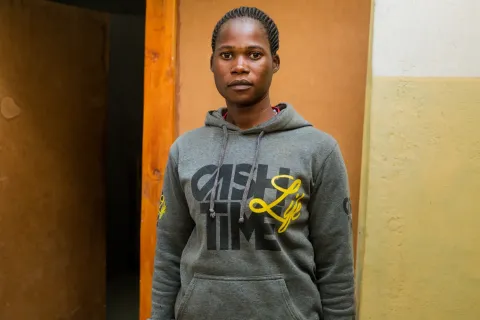
At Natebe Health Post, those barriers are visible every day. Caroline Siakantu, the nurse in charge, has been running the facility largely on her own. She provides and coordinates outpatient care, maternal services, and immunization, both at the clinic and through outreach visits to surrounding remote communities. But Nurse Siakantu’s biggest limitation is not her very packed workload. It is the lack of adequate infrastructure.
“We don’t have reliable supply of electricity or a vaccine fridge,” she says. “If a child comes to be vaccinated, sometimes we have to ask the mother to return another day. Many do not come back, and that is how children start missing their doses.”


Without a functioning cold chain system (which keeps vaccines stored and transported at the required safe temperatures) at the facility, vaccines must instead be collected from another site and used only during scheduled sessions. This means services are not always available when caregivers arrive to vaccinate their children. Outreach services are essential in bridging this gap, with health workers and Polyvalent Community-Based Volunteers (CBVs) travelling to households to vaccinate children closer to home. But outreach work brings with it its own unique challenges as well.

For Livia Hakabwenga, a Polyvalent CBV living in Natebe, reaching families means walking for long hours under the sun every week to reach between 10 to 20 homes in the area. “We go house-to-house to mobilize families and create awareness,” she says. “And during vaccination campaigns, we also go door-to-door giving vaccines. Sometimes we walk very far, without any transport.”
Vaccines are carried in cold boxes with ice packs to keep them at safe temperatures until they reach households in need. Unfortunately, long distances between households compounded with high temperatures can challenge the maintenance of recommended conditions, particularly when CBVs travel on foot.

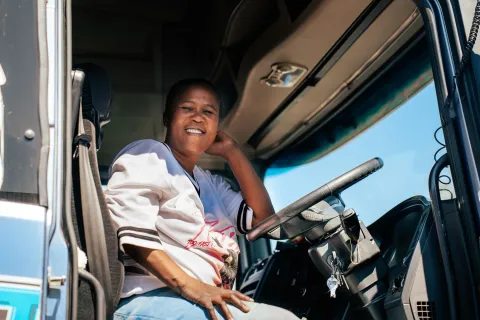
At the Livingstone District Health Office (DHO), cold chain technician, Hambulino Chiiya, monitors the conditions vaccines are kept daily.
“Most vaccines must be kept between 2 and 8 degrees Celsius,” he explains. “Exposure to temperatures outside this range, especially for prolonged periods, can compromise vaccine potency.” From international manufacturers to national storage, districts, health posts, and finally the communities in need, vaccines must remain within this narrow temperature range at every step. In peri-urban areas like Natembe, many vaccine refrigerators rely on solar power, sometimes with limited or no battery backup. “When the sun sets, the power drops, and the fridge may not maintain the right temperature,” says Hambulino.
During the rainy season in Livingstone, entire communities can become inaccessible as flooded streams cut off routes to health facilities, delaying both access to services and the supervision needed for cold chain management at the facility level. Without reliable power at the facility level, vaccines stored there are also at risk of losing their effectiveness, with no possibility of relocating them due to access being constrained by the heavy rains.
Across the immunization system – from caregivers to the clinic, from CBVs to cold chain technicians – these challenges are interconnected and compound one another: A missed visit at the clinic leads to reliance on outreach services. Outreach increases dependence on transport and cold boxes to carry vaccines. Distance and heat threaten vaccine effectiveness. Power gaps affect storage. At every step, the system is under pressure, yet the commitment of those working within it remains unwavering.
These challenges highlight the need for integrated primary health care strengthening, where immunization services are supported by reliable infrastructure, workforce capacity, and community engagement.
“Every time I wake up, there is a child waking up next to me,” Hambulino says, referring to his own child. “I want every child, no matter where they live or how poor their family is, to have the same protection and the same smile.”
The good news is that concrete action is underway to strengthen Zambia’s vaccine delivery chain. With generous support from the Republic of Korea and under the leadership of the Ministry of Health, UNICEF is providing technical support to help close critical system gaps to ensure vaccines are safely delivered to children, even in hard‑to‑reach areas. Planned support will improve the reliability of cold chain systems through solar‑powered equipment with backup solutions, reduce vaccine losses through real‑time temperature monitoring, and expand outreach and last‑mile transport – enabling more health facilities to maintain vaccine potency and reach more children on time.
By reinforcing each link in the system – from storage to service delivery – the investment from the Republic of Korea will improve service availability, reduce missed opportunities for vaccination in 25 districts across Zambia, including Livingstone.
Thanks to the support from the Republic of Korea, children like Mercy will receive life-saving vaccines on time, no matter where they live and despite the hardships their families face – bringing Zambia closer to equitable immunization coverage for every child.
***