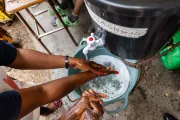
Fighting the Cholera Outbreak in Zambia

UNICEF provides crucial support
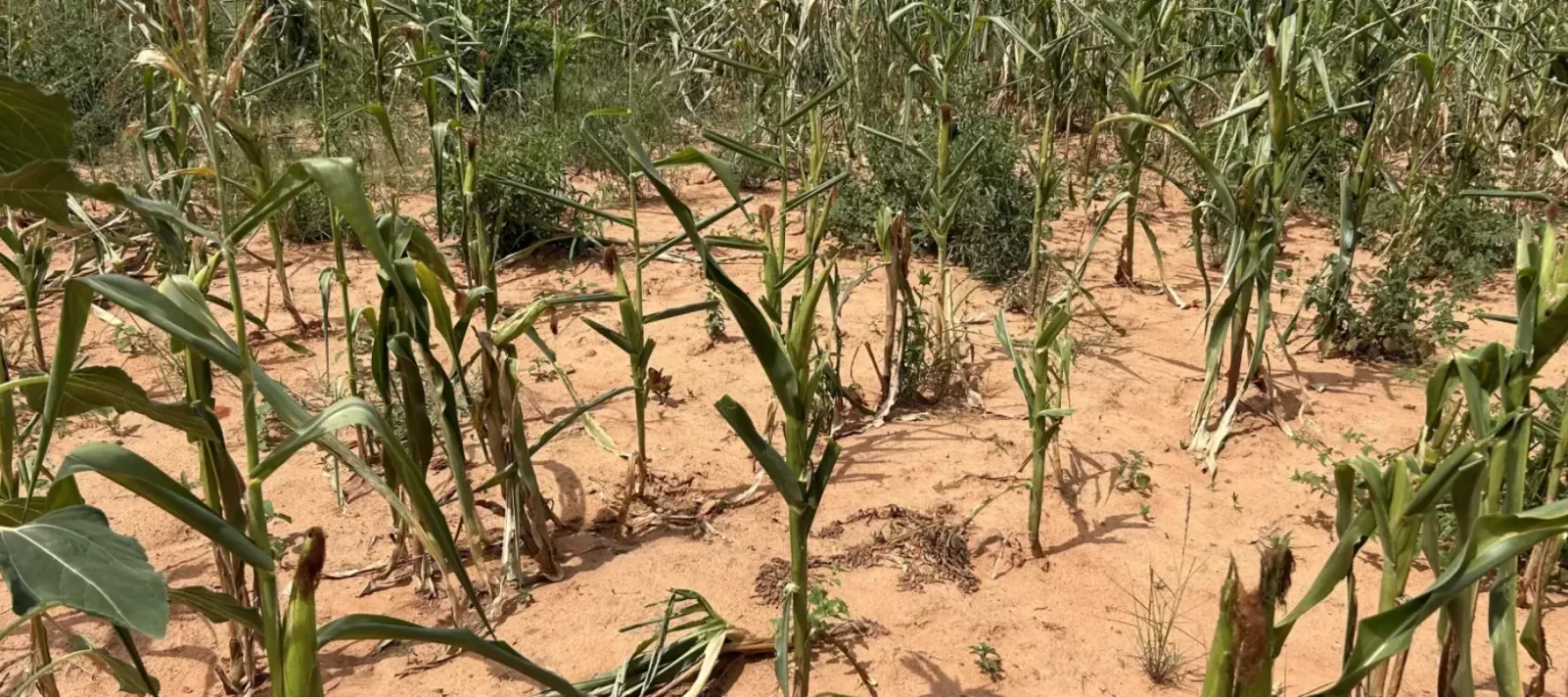
Parched maize field

UNICEF is appealing for US$ 6,487,000 to sustain lifesaving services

A total amount of US$33,582,543 is required for UNICEF’s response to the humanitarian needs, including sustaining the lifesaving services of close to 10 million people affected by drought and Cholera in Zambia. Of these a total amount US$27,095,543 is for the drought response and US$6,487,000 for Cholera response.

Highlights

  • US$2,834,797 has been received from ECHO and CERF to support the Cholera response.
     
  • As of 8th April 2024, the number of cholera cases being recorded has reduced to 38 cases daily, which is at least 84 districts out of 116 have been severely impacted by the drought.
     
  • 9,779,145 people are exposed while 6,552,027 people are adversely affected by the drought in 84 districts.
     
  • Over 3 million children under 18 and 1.2 million children under 5 years are facing prolonged food insecurity and high risk of common childhood illness, vaccine preventable disease outbreaks and malnutrition (SMART Survey, May 2024).
     
  • 380,288 children aged 6 – 59 months out of about 400,000 estimated population of children were screened for wasting during active case finding in the seven subdistricts of Lusaka with support from UNICEF.


  • 132,750 in drought affected areas reached with basic water supply.


  • UNICEF supported the Ministry of Education (MoE) to adapted and developed audio and video messaging for parents on keeping children in school during drought.


  • 23,378 cumulative Cholera cases with 740 deaths as of reporting date.
     
  • Community surveillance for Cholera was initiated with screening of 18,047 under 5 years children and 22,400 above 5 years visited in 7,122 households.
     
  • UNICEF provided logistical support in the importation of 4.1 million doses of the Oral Cholera Vaccine.
     
  • Over 3.3 million people are benefitting from UNICEF supported water chlorination and quality monitoring, and infection prevention and control supplies.


  • 40,839 people including 18,287 children affected have received protection support (family tracing, reunification, reintegration, case management services, etc).

>> See the full Zambia Cholera and Drought Response Flash Update 


Zambia Cholera Response Highlights

Embedded video follows
UNICEF Zambia/2024/Mwenya During the Oral Cholera Vaccination launch in George compound, Lusaka District, Dr. Penelope Campbell, the UNICEF Zambia Country Rep, highlights the crucial steps needed to stop the spread of new infections that threaten the well-being of our community.
Embedded video follows
UNICEF Zambia/2024/Adam From the National Heroes Stadium, UNICEF Zambia shares remarks. Join us in the fight against cholera. Support sanitation efforts, educate on hygiene practices, and provide clean water.
Embedded video follows
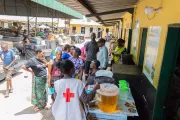
UNICEF Zambia/2024/Adam UNICEF Zambia supports training & deployment of 240 Community-Based Volunteers like superhero Susan through Zambia Red Cross Society HQ & 350 more with Ministry of Health Zambia in a collective action to ensure that no one is left behind when it comes to accessing vital health services in order to respond to the cholera outbreak.
Embedded video follows
UNICEF Zambia/2024/Adam Ministry Of General Education Zambia MGEZ 's School Readiness Assessment is in full swing. Important for the health of our children, UNICEF Zambia is collaborating to ensure safe drinking water and handwashing are available when schools reopen by providing hand soap, water filters, and liquid chlorine. Thank you to UNESCO Zambia for disinfecting our learning spaces! Schools in Zambia reopen on 12th February 2024, with support from the Ministry of Education- Zambia and partners like KfW and CERF. For every child, education!
Embedded video follows
UNICEF Zambia/2024/Phiri Schools in Zambia reopen on 12th February 2023, with support from the Ministry of Education- Zambia and partners. For every child, education
Embedded video follows
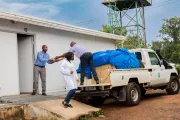
UNICEF Zambia/2024/Adam Thanks to the partnership between UNICEF, UNICEF Supply and Flexport we have brought additional supplies to curb #cholera and help vulnerable communities in #zambia, particularly children. Building alliances to improve lives. 💙
Embedded video follows
UNICEF Zambia/2024/Namusa An instructional video developed by UNICEF Zambia illustrates how to correctly use a chlorine comparator in ensuring that drinking water is chlorinated correctly for schools. The video is available for access through selected Partner/MoE platforms and Teacher WhatsApp groups. In partnership with the KfW Development Bank and Central Emergency Response Fund.
Embedded video follows
UNICEF Zambia/2024/Nalungwe To ensure a safe return home for cholera survivors is paramount to our ongoing prevention initiatives. We are proud to have delivered essential discharge kits, generously supported by German Embassy Lusaka, KfW Development Bank and Bundesministerium für wirtschaftliche Zusammenarbeit und Entwicklung (BMZ), to Chilenje Level-1 Hospital in Lusaka district, Zambia. The kits include essential items such as soap, chlorine, a helpful 3Cs leaflet, ORS sachets, and a bucket for clean drinking water.
Embedded video follows
UNICEF Zambia/2024/Mwenya While cholera cases may be decreasing in Lusaka, we're seeing an increase in active cases in the Copperbelt province. But thanks to the incredible generosity of Gavi, the Vaccine Alliance and the International Coordinating Group for Vaccine Provision, an additional 335,000 oral cholera vaccine doses were received in the country through UNICEF Zambia and UNICEF Supply, ensuring the protection of more communities.
Embedded video follows
UNICEF Zambia/2024/Adams Mary and other Community Welfare Assistance Committee (CWAC) volunteers devote their time to helping the most vulnerable in their communities in collaboration with UNICEF's Child Protection Team. UNICEF and the United Nations CERF equipped them to help those affected by choler
Embedded video follows
UNICEF Zambia/2024/Phiri The UNICEF rapid qualitative assessment in February 2024 found that cholera survivors and families of the deceased faced significant financial and physical barriers. In response, through the Child Protection Team, UNICEF collaborated with the Ministry of Community Development and Social Services, using UNICEF funds through the In-Kind Support Initiative to provide financial assistance to vulnerable households and individuals affected by the cholera outbreak.

Photo Slide


3C'S For Preventing Cholera

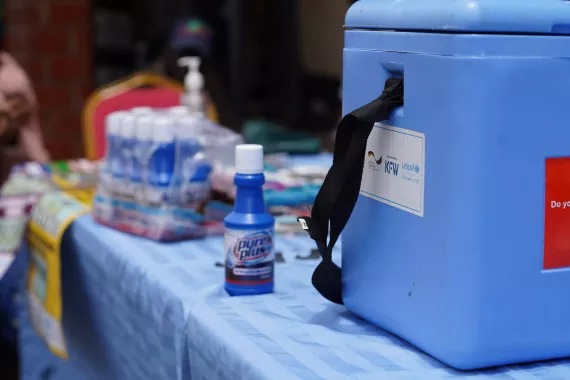
A hand holding a bottle

Clean water
Drink and use clean and safe water.

hands washing with water

Clean hands
Wash your hands often with soap and safe water.

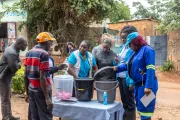
Hand pouring a solution in a container

Early care
Seek care early for you and your loved ones at the earliest signs of diarrhea.


Thank you to our supporting donors, ECHO, KfW Development Bank, United Nations CERF and USAID, for providing lifesaving supplies, strengthening cholera response systems, and ensuring children are protected during emergencies.