Empowering a generation of climate leaders in the lead-up to COP29
The journey of West and Central Africa's children and young people at the center of climate action

We often hear it, “anything done for young people without young people is against them,” and as accurate as this statement is, how do we go about ensuring we are going beyond simply pushing for youth participation and instead setting a precedent in which young people are consistently meaningfully engaged on matters that concern them? Well, here is the story of how children and young people in West and Central Africa are becoming central to climate conversations and action with UNICEF’s support.
Children and young people have told us repeatedly, they want to be heard on issues that directly affect them and they want to be part of the solution. In West and Central Africa, where 16 of the region’s 24 countries are among the 30 countries which pose the highest climate change risk for children, children and young people have emerged as vocal advocates on climate and changemakers in their communities. Our contribution to their present and their future is not just about advocating on their behalf, it is about ensuring they are best equipped to advocate for themselves and are given opportunities to be heard where it matters.
Training young climate leaders
In late June 2024, UNICEF organized a 6-part training for young francophone climate leaders, mainly in West and Central Africa, to strengthen their skills in awareness raising, political negotiation, advocacy, and movement-building, as well as help them develop an action plan for their advocacy objectives. 70 young leaders from close to 20 countries actively participated in the training, shared their experiences, and could relate the training to their work and advocacy on the ground. From Mali to Central African Republic, many of these young leaders have since began putting their plans into action.

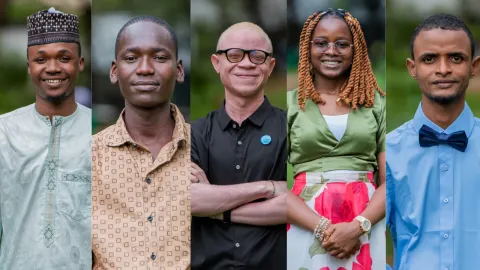
Henock Sonangba, 29, Central African Republic

Prudence Omongo, 23, Congo

Sarah Mbika, 18, Gabon

Ahmed Ag Mohamed, 28, Mali
But experience has taught us that action on the ground must be paired with advocacy at decision-making level, and UNICEF has been intentional in providing the space for children and young people’s voices to be heard. In early October, at the Child Rights forum organized by the African Committee of Experts on the Rights and Welfare of the Child during their 44th ordinary session, children, and young people from West and Central Africa shared their urgent call to climate action to African leaders through a video.
The need for a child-responsive loss and damage fund
Their call-to-action is timely as the region continues to face devastating climate hazards. By mid-September of 2024 alone, severe flooding across West and Central Africa had hit an estimated 4 million people, many of them children, displacing at least 500,000 people and destroying more than 300,000 homes. Earlier this year, extreme heatwaves were recorded in the region and data has revealed that globally, children in West and Central Africa face the highest exposure to extremely hot days and the most significant increases over time. These weather events are a reminder that we must take concrete action now for a livable planet. Children and young people can no longer wait.
Supporting governments to strengthen child-focused climate action
As the world gears up to meet at COP29 in Baku, UNICEF is supporting young people from 10 countries in the region in participating meaningfully at this critical annual gathering. In parallel to the important engagement of young people at COP29, UNICEF aims to deliver child-responsive outcomes by encouraging governments to ensure their NDCs and NAPs are child-responsive and increasing the number of signatories of the Declaration on Children, Youth and Climate Action.
In the region, some countries are already leading by example! In the past week, both the Government of Guinea-Bissau and the Government of Guinea, (both countries ranking 4th in UNICEF's Children Climate Risk Index), signed the Declaration, signaling a growing commitment to centering children and young people’s rights in climate action, and laying a ground of hope for their future.