Young francophone advocates join effort to reach every child with vaccines and help eradicate polio in West and Central Africa
- English
- Français
DAKAR, 16 July 2026 – As nearly one in three zero-dose children globally lives in West and Central Africa, UNICEF is launching “Generation Zero Polio”, a new francophone youth network to help keep vaccination high on political and community agendas across the region. The initiative aims to connect the realities experienced by communities with the decisions, strategies and commitments needed to reach children who remain unvaccinated or insufficiently protected.
“Millions of children in West and Central Africa are still missing out on essential vaccines,” said Gilles Fagninou, UNICEF Regional Director for West and Central Africa. “To accelerate progress, we need to create more spaces for young people to be heard, to contribute to decisions and to bring forward the realities of their communities. Their voices, creativity and ability to mobilise are essential to build trust, guide vaccination efforts and reach children who remain beyond the reach of life-saving services.”
The latest WHO and UNICEF Estimates of National Immunization Coverage (WUENIC) show that 90 per cent of infants worldwide – nearly 116 million – received at least one dose of the diphtheria, tetanus and pertussis (DTP) containing vaccine in 2025, and 85 per cent – 110 million – completed the full three-dose series, both up one percentage point from the previous year but still one point below 2019 levels.
West and Central Africa's own progress falls short of the global pace, with coverage for both indicators holding steady over the past year. Since 2019, the region has vaccinated more children than ever in absolute terms, but rapid growth in the child population has kept coverage rates from rising to match. The pace of progress remains too slow to reach every child and close persistent immunisation gaps.
In 2025, immunization coverage in West and Central Africa remained below the 90 per cent target for all 15 childhood vaccines, underscoring the urgent need to accelerate progress towards Immunization Agenda 2030 goals. Among the 6 million under immunized children in the region, 4 million did not receive a single dose of any vaccine. Coverage for the third dose of the DTP containing vaccine, a key measure of routine immunisation service delivery to children, was unchanged at 71 per cent in 2025, still below pre-pandemic levels.
At the same time, variant polioviruses continue to circulate in areas where too many children remain unvaccinated or under-vaccinated. Since the beginning of the year, 56 polio cases have been reported in the West and Central Africa region, according to the latest data from the Global Polio Eradication Initiative. Cameroon, Central African Republic, Chad, the Democratic Republic of the Congo, Niger and Nigeria remain particularly exposed, due to strained health services, cross-border population movements, insecurity and limited access to some communities.
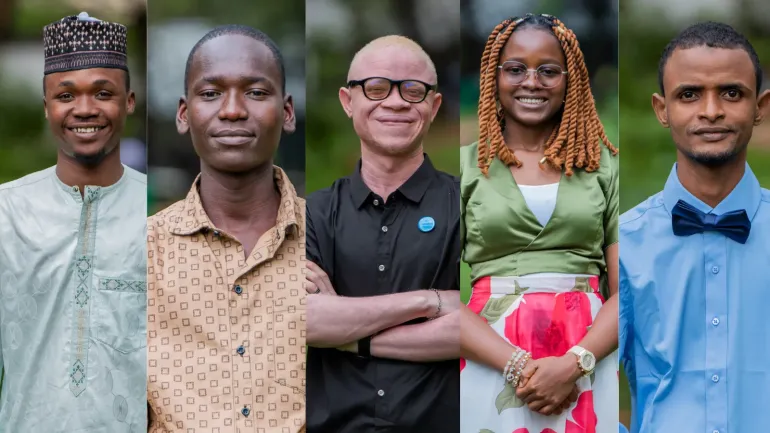
In this context, Generation Zero Polio is designed as a strategic platform to support regional vaccination and polio eradication efforts. The network brings together five young francophone advocates to help strengthen community engagement and advocate for sustained political commitment to reach every child:
- Noella, 21, Cameroon – A member of UNICEF’s Adolescent Girl Advisory Board, Noella advocates for adolescent health, girls’ rights, HPV vaccination and youth participation in health policies.
- Abdoul Nasser, 24, Niger – A young advocate for children’s rights and community health, Abdoul Nasser has supported campaigns on polio, malaria vaccination, hygiene and birth registration, including through digital advocacy.
- Ousmane, 23, Central African Republic – A community mobiliser trained in health, nutrition and vaccination, Ousmane leads youth action to raise awareness on polio and build trust in local languages.
- Emmanuel, 19, Democratic Republic of the Congo – A former Child Reporter, Emmanuel advocates for children’s rights, inclusion and climate action, bringing young people’s voices to national and international platforms.
- Béranger, 20, Chad – A U-Reporter and digital communicator, Béranger uses content creation and factchecking to promote reliable information on vaccination and public health.
“Polio is not a disease of the past. It still exists in some areas and continues to threaten children. Every crisis, every conflict, every rumour can set back years of progress. This is why we must stay mobilized, strengthen trust in vaccines and work together to reach every child,” stressed Béranger, who has supported several vaccination campaigns in Chad.
Members of Generation Zero Polio will help inform communication and advocacy strategies, support national and regional campaigns, and sustain momentum around immunisation efforts. The network will also help strengthen the representation of francophone youth voices from West and Central Africa in regional and global advocacy spaces, including through links with the Global Youth Health Advisory Group.
By investing in their skills and creating links between local action, regional advocacy and global engagement, UNICEF aims to support a new generation of young advocates who can help shape more responsive policies, strengthen accountability, and advance more resilient and equitable immunisation systems.
#####
Access the UNICEF dataset: Overview page, Full datasets, Data visualisation, Regional data visualisation, Country profiles.
Media contacts
About UNICEF
UNICEF promotes the rights and well-being of every child, in everything we do. Together with our partners, we work in 190 countries and territories to translate that commitment into practical action, focusing special effort on reaching the most vulnerable and excluded children, to the benefit of all children, everywhere.
For more information about UNICEF and its work for children in West and Central Africa, visit https://www.unicef.org/wca.
Follow UNICEF West and Central Africa on Twitter, Facebook, Instagram et Youtube