

Equitable and sustainable access to education
Key Result for Children
What’s at stake?
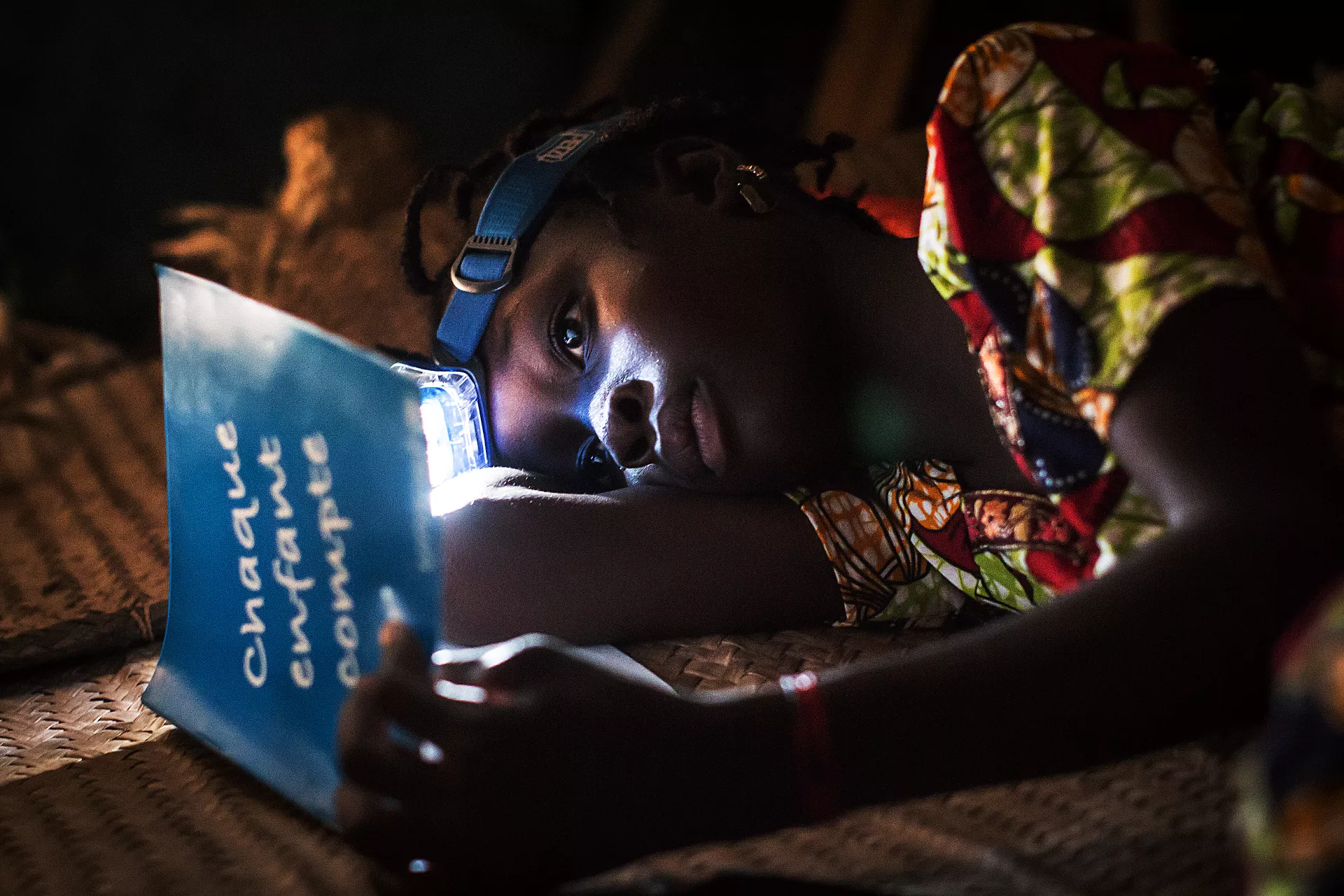
More than 30 per cent of all children worldwide who are not enrolled in school live in West and Central Africa ‒ mainly in Nigeria, DR Congo and the Sahelian countries. The reasons are diverse, but often centre on poverty, rural residence, gender, disability and lack of school facilities.
Many of these 29 million primary school-age children and 12 million of lower-secondary age have never attended school. Others may enter late or drop out without completing primary education. Some nine million of these children were caught in humanitarian emergencies in 2018.
Rapid population growth in West and Central Africa calls for significantly increased access to education for all children. Only when this takes place can education perform its vital role of supporting socio-economic development, building resilience and ensuring that children can play an active role in their societies.
Our goal
Change strategies
In West and Central Africa, UNICEF will carry out these integrated strategies to accelerate progress toward change.
- Strengthening national and local data management systems to ensure that countries can accurately measure school attendance and identify excluded children.
- Promoting a holistic vision of education that includes alternative education opportunities, technical and vocational education and training and inclusive education in policy and legislation governing the education sector.
- Developing innovative, cost-effective interventions to address school exclusion that involve actors beyond the field of education, such as child protection, social policy and communication.
- In humanitarian settings, promoting innovations and scaling up education interventions capable of reaching larger numbers of crisis-affected children, such as radio programmes.
- Ensuring that out-of-school children are at the centre of national education policy dialogue by playing an active role in working groups overseeing or supporting education systems in the region; and participating in regional and global partnerships to bring innovations to the attention of education leaders.