Nearly 6 million children affected as floods and landslides devastate Southeast Asia in the wake of Typhoon Yagi
Children in Viet Nam, Myanmar, Laos, and Thailand at risk of being cut off from education, clean water, and essential services as floods and landslides damage homes and infrastructure

- English
- Tiếng Việt
BANGKOK, 18 September 2024 – Floods and landslides triggered by Typhoon Yagi have ravaged Viet Nam, Myanmar, Laos, and Thailand, affecting nearly 6 million children and compromising their access to clean water, education, healthcare, food, and shelter—pushing already marginalized communities deeper into crisis.
“The most vulnerable children and families are facing the most devastating consequences of the destruction left behind by Typhoon Yagi,” said June Kunugi, UNICEF Regional Director for East Asia and Pacific. “The immediate priority must be to restore the essential services that children and families so critically depend on, including clean water, education, and healthcare. The surge in extreme weather events in Southeast Asia, exacerbated by climate change, is a sad reminder that when disasters hit, vulnerable children often pay the highest price.”
The most powerful storm to hit Asia so far this year, Typhoon Yagi brought torrential rains on top of existing seasonal rainfall, causing rivers to overflow and triggering deadly landslides. In its wake, over 850 schools and more than 550 health centers were damaged, the vast majority in Viet Nam, with assessments in the region still ongoing.
In Viet Nam, the country hardest hit by Typhoon Yagi, approximately 3 million people, including many children, lack access to safe drinking water and sanitation, heightening the risk of disease. Approximately 2 million children have also been left without access to education, psychosocial support, and school feeding programmes.
In Myanmar, the double burden of ongoing conflict and the catastrophic impacts of Typhoon Yagi has intensified the crisis for communities already displaced by conflict, worsening an already dire humanitarian situation. Over 170 deaths and more than 320,000 displacements have been reported, while road networks, telecommunications, and electricity infrastructure suffered major damage across central Myanmar.
In northern Thailand, heavy rains and flooding have severely affected nearly 64,000 children, with some schools reporting complete destruction and teachers resorting to online learning and delivering learning materials to students at their homes.
In Lao PDR, floods have impacted eight provinces, affecting an estimated 60,000 children, damaging vital infrastructure, and threatening the livelihoods of communities already struggling to cope with negative climate impacts.
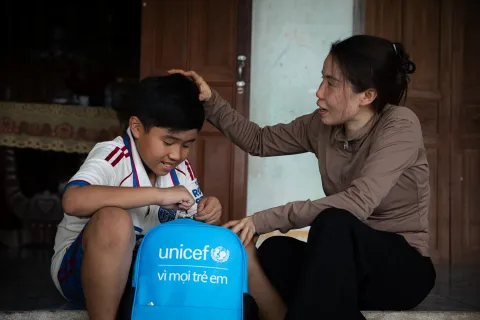
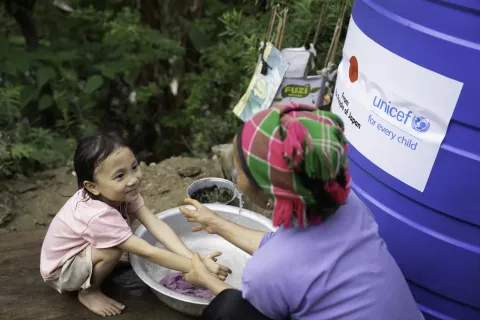
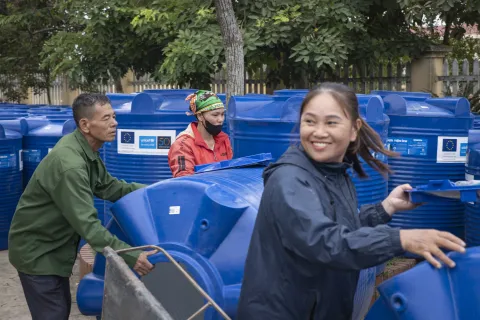
UNICEF, working alongside humanitarian partners, is delivering urgent relief to children and families in flood-affected areas across Southeast Asia. This includes distributing safe drinking water, hygiene materials, nutritional supplements and medical kits, while also providing mental health support and learning and recreational materials to help children regain a sense of normalcy and continue learning and playing in a safe environment. UNICEF is also committed to working with partners to ensure child-focused recovery efforts when floodwaters have receded.
Children in East Asia and the Pacific are exposed to multiple, overlapping climate and environmental hazards, facing these threats six times more often than their grandparents did. The intensifying frequency and compounding effects of climate-related hazards erode children’s coping strategies, deepen inequality, and harm their potential to thrive.
###
Notes for editors:
Multimedia available at this link.
For more information, please contact:
- Chiara Frisone, Communication Specialist, UNICEF East Asia and Pacific, Tel: +66 6269 25897, [email protected]
- Eliane Luthi, Regional Chief of Advocacy and Communication, UNICEF East Asia and Pacific, Tel: +66 654 154 874, [email protected]
About UNICEF
UNICEF works in some of the world's toughest places, to reach the world's most disadvantaged children. Across more than 190 countries and territories, we work for every child, everywhere, to build a better world for everyone.
For more information about UNICEF East Asia and Pacific and its work for children, visit www.unicef.org/eap
Follow UNICEF East Asia & Pacific on Twitter , Facebook, Instagram, and LinkedIn
Media contacts
Additional resources

About UNICEF
UNICEF promotes the rights and well-being of every child, in everything we do. Together with our partners, we work in 190 countries and territories to translate that commitment into practical action, focusing special effort on reaching the most vulnerable and excluded children, to the benefit of all children, everywhere. For more information about UNICEF and its work for children, visit https://www.unicef.org/vietnam
Follow UNICEF on Facebook, Instagram, X, Youtube, LinkedIn and TikTok