Cyberbullying: The Digital World may be Virtual, but the Harm to Children is Real.

- English
- Tiếng Việt
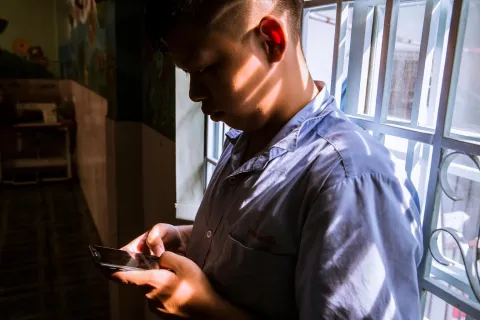
The online world has become a second living space for children, including children in Viet Nam. Alongside its many opportunities, it also presents serious risks that need urgent attention.
While the digital environment offers children opportunities to learn, connect and express themselves, it also exposes them to online bullying, sexual abuse and exploitation, and many other harms.
Speaking with Tuổi Trẻ, Ms. Le Hong Loan, Chief of Child Protection Programme at UNICEF Viet Nam, stressed: "Technology may be virtual, but the harm experienced by children is very real."
We Cannot Afford to Ignore Online Bullying
Q: Children are spending more and more time online. In your view, what are the greatest risks they face?
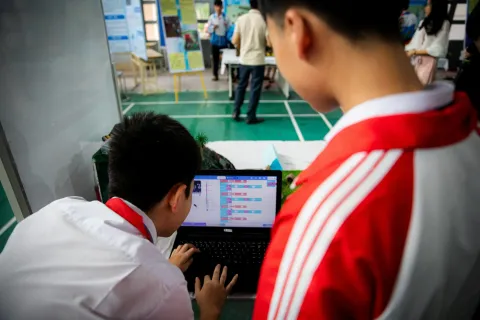
Over the past few decades, childhood in Viet Nam has changed profoundly. Today’s children are generally healthier, better educated and have access to far more opportunities, thanks to progress in healthcare, education and living standards. At the same time, the digital world has become an inseparable part of their daily lives. According to a 2022 survey by UNICEF, INTERPOL and ECPAT, 89 per cent of children aged 12–17 in Viet Nam use the Internet, and among those aged 14–15, the rate is up to 93 per cent.
These figures show that the Internet is no longer merely a supplementary tool—it has become an integral part of children's daily lives.While the Internet provides tremendous opportunities for learning and access to information, it also introduces new and increasingly complex risks. At the same time, the digital divide means that many children in remote areas or from low-income communities still lack internet access and digital learning opportunities, causing them to miss out on educational opportunities and limiting the digital skills they need to stay safe online.
One of the most common risks is cyberbullying. Unlike traditional bullying, which was often limited to schools or neighbourhoods, online abuse can spread instantly and reach far beyond a child’s immediate circle. A single post, image or video can trigger widespread harassment by peers and strangers, leaving deep and lasting psychological scars.
Q: What are the main factors contributing to these risks?
There are many contributing factors. First, technological development is advancing much faster than legal and regulatory frameworks. Technology and cybercrime evolve rapidly, while some laws and regulations have yet to fully align with international standards, making prevention, enforcement and victim protection more difficult.
Technology companies do not always place children's best interests at the centre of their products and services. In some cases, user growth and engagement take precedence over age-appropriate design, data protection, effective age verification and robust systems to detect and remove harmful content.
Parents and teachers also do not always fully recognise online risks. Children gain access to the Internet at increasingly younger ages but often receive insufficient guidance, have limited opportunities for open discussion, and lack clear rules for safe online behaviour. Furthermore, mechanism for early detection, reporting and victim support remain inadequate, meaning many cases are not addressed promptly.
"Children often have limited digital literacy and self-protection skills. At times, they may be both victims and, unintentionally, contributors to harm—for example, by participating in online bullying or sharing personal information unsafely."
Shifting from Response to Prevention
Q: From UNICEF's perspective, what progress has Viet Nam made in this area?
UNICEF recognises that Viet Nam has made sustained efforts to protect and promote children’s rights, both in the physical world and in the digital environment. The country has developed a relatively comprehensive legal and policy framework, and is gradually shifting from a reactive approach towards preventing harm, with children placed at the centre. This direction is well aligned with the principles of the United Nations Convention on the Rights of the Child which Viet Nam ratified 35 years ago.
Viet Nam has also been proactive in recognising the online space as part of children’s living environment. Efforts to strengthen information security, data protection and digital skills education increasingly reflect international good practice.
A significant milestone was Viet Nam hosting the signing ceremony of the United Nations Convention against Cybercrime (the Hanoi Convention) in October 2025. This is the first comprehensive global treaty bringing countries together to combat cybercrime, including strong provisions for child online protection.
Q: What recommendations does UNICEF have to help Viet Nam strengthen child protection online?
One of the biggest challenges is that technological innovation is moving faster than the development of child protection systems, which are still developing in Viet Nam. Online offenders are becoming more sophisticated, while awareness, skills and support mechanisms for children, parents and educators remain uneven. Global experience shows that strong coordination among multiple sectors is essential.
Technology companies and service providers need to prioritise child safety from the design stage, ensuring platforms are age-appropriate and equipped with effective tools to detect, block, remove and report harmful content. They should also provide practical tools to help parents guide and manage children’s online activities. Parents and teachers need better support to understand online risks and to engage children through open dialogue rather than relying solely on restriction or prohibition.
Schools can play a key role by integrating online safety, digital citizenship and respectful online behaviour into the curriculum, while also linking students to support services when risks arise.
It is equally important to strengthen systems for early identification, reporting and victim support, including child-friendly hotlines, digital case management, counselling and psychosocial services.
Equiping Children with Skills is essential
Q: What online dangers should children be particularly aware of?
Adolescents are especially vulnerable to harmful and/or age-inappropriate content, including violence, sexual material, hate speech and dangerous online “challenges”, at a time when their ability to assess risks and protect themselves is still developing.
The growing threat of online ‘grooming’ which may lead to sexual abuse and exploitation is particularly concerning. Perpetrators approach children through social media or online games, build trust through flattery and attention, and gradually manipulate or coerce them into sharing private images. These images are then used to blackmail and control children, often through threats of public exposure.
We are also very concerned about the rapid rise in child sexual abuse material generated using artificial intelligence. A recent UNICEF study across 11 countries found that within just one year, at least 1.2 million children reported that their images had been turned into sexually explicit deepfakes.
The Internet and digital technologies are not inherently harmful. The real issue lies in how society governs, supervises and equips children with the skills they need to navigate the digital world safely.
Empowering Children
Ms. Le Hong Loan believes that, alongside digital literacy and self-protection skills, children must also be empowered to seek help when they encounter problems. When children engage in harmful online behaviour, responses should help children understand their mistakes through education, guidance and behaviour change support rather than punishment.
"We must recognise that the goal is not to keep children away from the digital world, but to ensure they can navigate it safely, confidently and productively”
UNICEF will continue working alongside Viet Nam to strengthen children's digital skills and promote innovative, inclusive education, ensuring that every child is protected and empowered in the digital age," Ms. Loan said.
By Ha Quan
Published in Tuổi Trẻ Newspaper – 1 April 2026
Media contacts
About UNICEF
UNICEF promotes the rights and well-being of every child, in everything we do. Together with our partners, we work in 190 countries and territories to translate that commitment into practical action, focusing special effort on reaching the most vulnerable and excluded children, to the benefit of all children, everywhere. For more information about UNICEF and its work for children, visit https://www.unicef.org/vietnam
Follow UNICEF on Facebook, Instagram, X, Youtube, LinkedIn and TikTok