Photo exhibition: A legacy of partnership for child rights

Featuring key milestones of the long-standing partnership between UNICEF and the Government of Viet Nam for the progress of child rights.

-
UNICEF Viet Nam

In 1990, Viet Nam became the first country in Asia — and the second globally — to ratify the Convention on the Rights of the Child, just one year after it was adopted by the UN General Assembly. By then, UNICEF had already been working alongside the Government of Viet Nam since 1975. In 2025, we celebrate key achievements over the decades and commemorate a partnership dedicated to improving the lives of vulnerable children and advancing child rights in Viet Nam. 

By supporting the national plans of the Government of Viet Nam, UNICEF has helped transform the landscape of child well-being and development – expanding access to healthcare, adequate nutrition, education, clean water and sanitation, and protection. From providing relief and reconstruction support after the war to reducing child mortality and strengthening legal frameworks and child protection systems, this partnership continues to drive meaningful change and build a brighter future for every child.  

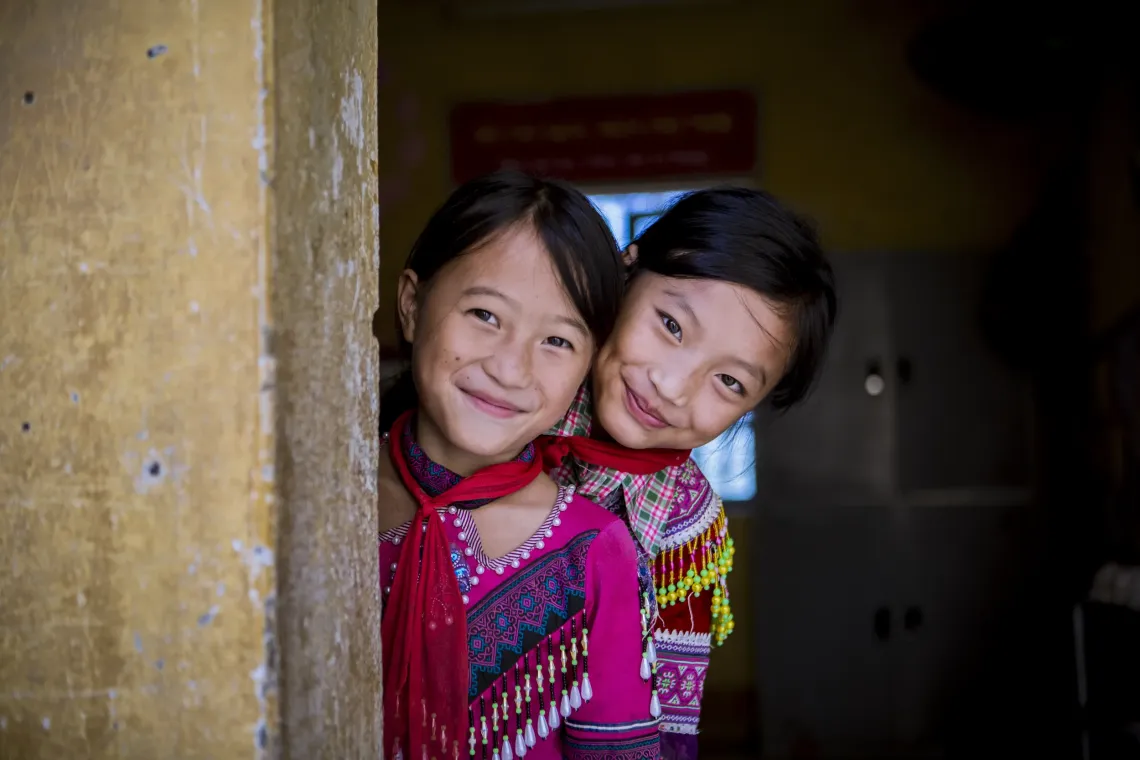
Fifty years on, UNICEF presents the photo exhibition A Legacy of Partnership for Child Rights, featuring key milestones of the long-standing partnership between UNICEF and the Government of Viet Nam for the progress of child rights. Entering the main hall, you will be greeted by a selection of inspiring photos of Vietnamese children – the final stop of the exhibition and the most vivid reflection of UNICEF’s 50-year journey in Viet Nam. 


Photo exhibition A Legacy of Partnership for Child Rights

Please join us and all our partners in celebrating this special milestone  
at the Vietnamese Women’s Museum, 36 Ly Thuong Kiet street, Hanoi, Viet Nam
from 27th  November to 3rd December, 2025.
(FREE ENTRANCE)

The late Dr Francois Remy, first UNICEF Representative in Viet Nam (1975-1977) attending the opening of the Ho Chi Minh mausoleum.
lan Hopwood The late Dr Francois Remy, first UNICEF Representative in Viet Nam (1975-1977) attending the opening of the Ho Chi Minh mausoleum.
Bertram Collin, UNICEF Representative in Viet Nam (left, dressed in grey), with Project Officer Ian Hopwood (middle, with glasses), and other staff in 1977 at the entrance of UNICEF’s first office in Hanoi, opened in 1975 and located at Hotel Hoa Binh. UNICEF was the first United Nations agency to establish a presence in the capital after reunification. UNICEF supported national reconstruction efforts and access to essential services for children across the country.  Bertram Collin, UNICEF Representative in Viet Nam (left, dressed in grey), with Project Officer Ian Hopwood (middle, with glasses), and other staff in 1977 at the entrance of UNICEF’s first office in Hanoi, opened in 1975 and located at Hotel Hoa Binh. UNICEF was the first United Nations agency to establish a presence in the capital after reunification. UNICEF supported national reconstruction efforts and access to essential services for children across the country.
Photo provided by: Ian Hopwood, 1977 Bertram Collin, UNICEF Representative in Viet Nam (left, dressed in grey), with Project Officer Ian Hopwood (middle, with glasses), and other staff in 1977 at the entrance of UNICEF’s first office in Ha Noi, opened in 1975 and located at Hotel Hoa Binh. UNICEF was the first United Nations agency to establish a presence in the capital after reunification. UNICEF supported national reconstruction efforts and access to essential services for children across the country.
UNICEF’s office at Ly Thuong Kiet was inaugurated in 1983 during the visit of UNICEF’s Deputy Executive Director, Margaret Catley-Carlson (middle, in a brown dress). UNICEF Viet Nam Representative Fouad Kronfol is pictured to the left (wearing a black suit), alongside UNICEF staff, family, and friends. UNICEF’s office at Ly Thuong Kiet was inaugurated in 1983 during the visit of UNICEF’s Deputy Executive Director, Margaret Catley-Carlson (middle, in a brown dress). UNICEF Viet Nam Representative Fouad Kronfol is pictured to the left (wearing a black suit), alongside UNICEF staff, family, and friends.
Provided by: Fouad Kronfol, 1983. UNICEF’s office at Ly Thuong Kiet was inaugurated in 1983 during the visit of UNICEF’s Deputy Executive Director, Margaret Catley-Carlson (middle, in a brown dress). UNICEF Viet Nam Representative Fouad Kronfol is pictured to the left (wearing a black suit), alongside UNICEF staff, family, and friends.
Improving family nutrition was a key UNICEF goal during its first decade in Viet Nam. With supplies primarily distributed to day-care centres and hospitals, this shipment of oats from the European Community helped meet urgent nutrition needs. In 1977 and 1978, food shipments made up a significant part of the organization’s support to Viet Nam, including essential items such as butteroil and cereals. Improving family nutrition was a key UNICEF goal during its first decade in Viet Nam. With supplies primarily distributed to day-care centres and hospitals, this shipment of oats from the European Community helped meet urgent nutrition needs. In 1977 and 1978, food shipments made up a significant part of the organization’s support to Viet Nam, including essential items such as butteroil and cereals.
Bernard Gerin, 1977 Improving family nutrition was a key UNICEF goal during its first decade in Viet Nam. With supplies primarily distributed to day-care centres and hospitals, this shipment of oats from the European Community helped meet urgent nutrition needs. In 1977 and 1978, food shipments made up a significant part of the organization’s support to Viet Nam, including essential items such as butteroil and cereals.
To ensure children realize their fundamental right to education, during 1975–1979 UNICEF supported the construction of 3,586 classrooms across Viet Nam and provided essential equipment and furnishings to schools.  To ensure children realize their fundamental right to education, during 1975–1979 UNICEF supported the construction of 3,586 classrooms across Viet Nam and provided essential equipment and furnishings to schools.
Bernard Gerin, 1978 To ensure children realize their fundamental right to education, during 1975–1979 UNICEF supported the construction of 3,586 classrooms across Viet Nam and provided essential equipment and furnishings to schools.
To ensure children realize their fundamental right to education, during 1975–1979 UNICEF supported the construction of 3,586 classrooms across Viet Nam and provided essential equipment and furnishings to schools.  To ensure children realize their fundamental right to education, during 1975–1979 UNICEF supported the construction of 3,586 classrooms across Viet Nam and provided essential equipment and furnishings to schools.
Bernard Gerin, 1978 To ensure children realize their fundamental right to education, during 1975–1979 UNICEF supported the construction of 3,586 classrooms across Viet Nam and provided essential equipment and furnishings to schools.
Prime Minister of Viet Nam Pham Van Dong (centre, front) with a delegation of UNICEF National Committees in Hanoi in January 1982. The committees were key pillars of support underpinning UNICEF’s programme in Viet Nam.  Prime Minister of Viet Nam Pham Van Dong (centre, front) with a delegation of UNICEF National Committees in Hanoi in January 1982. The committees were key pillars of support underpinning UNICEF’s programme in Viet Nam.
Fouad Kronfol, 1982 The first official Agreement of Cooperation between UNICEF and the Socialist Republic of Viet Nam was signed on 12 February 1979. Under this agreement, UNICEF committed to support the government in addressing both urgent and long-term needs of children through the provision of supplies, training, and advisory services. At the time Prime Minister of Viet Nam Pham Van Dong (centre, front) with a delegation of UNICEF National Committees in Ha Noi in January 1982. The committees were key pillars of support underpinning UNICEF’s programme in Viet Nam.
To help ensure children’s right to health, UNICEF played a key role in the Expanded Programme on Immunization (EPI) launched in 1981 through the provision of vaccines (as pictured here in 1998), syringes, cold chain equipment, training for health workers, and raising community awareness. This collaboration contributed to major milestones such as the eradication of polio in 2000 and the elimination of neonatal and maternal tetanus in 2005. To help ensure children’s right to health, UNICEF played a key role in the Expanded Programme on Immunization (EPI) launched in 1981 through the provision of vaccines (as pictured here in 1998), syringes, cold chain equipment, training for health workers, and raising community awareness. This collaboration contributed to major milestones such as the eradication of polio in 2000 and the elimination of neonatal and maternal tetanus in 2005.
UNICEF Viet Nam, 1998 To help ensure children’s right to health, UNICEF played a key role in the Expanded Programme on Immunization (EPI) launched in 1981 through the provision of vaccines (as pictured here in 1998), syringes, cold chain equipment, training for health workers, and raising community awareness. This collaboration contributed to major milestones such as the eradication of polio in 2000 and the elimination of neonatal and maternal tetanus in 2005.
Health workers from a UNICEF-assisted mobile unit bring life-saving vaccines for children to hard-to-reach communities living along the canals of the southern Mekong Delta province of Dong Thap. Health workers from a UNICEF-assisted mobile unit bring life-saving vaccines for children to hard-to-reach communities living along the canals of the southern Mekong Delta province of Dong Thap.
LeMoyne, 1999 Health workers from a UNICEF-assisted mobile unit bring life-saving vaccines for children to hard-to-reach communities living along the canals of the southern Mekong Delta province of Dong Thap.
A key ingredient in the national immunization programme’s eradication of polio in 2000 and of maternal and neonatal tetanus in 2005 was its successful community engagement, as pictured here with child polio eradication messages shared in Da Lat.  A key ingredient in the national immunization programme’s eradication of polio in 2000 and of maternal and neonatal tetanus in 2005 was its successful community engagement, as pictured here with child polio eradication messages shared in Da Lat.
UNICEF, 1995 A key ingredient in the national immunization programme’s eradication of polio in 2000 and of maternal and neonatal tetanus in 2005 was its successful community engagement, as pictured here with child polio eradication messages shared in Da Lat.
In the photo, children collect water from a pump installed with UNICEF’s support at Ly Trong Primary School in Long An Province (now Tay Ninh Province), southern Viet Nam. In the photo, children collect water from a pump installed with UNICEF’s support at Ly Trong Primary School in Long An Province (now Tay Ninh Province), southern Viet Nam.
Christian Fregier, 1993 From 1982 to 1986, the Rural Clean Water Programme, supported by UNICEF and implemented by the National Committee for Drinking Water and Environmental Sanitation, aimed to provide safe water to disadvantaged rural communities, particularly children. In the photo, children collect water from a pump installed with UNICEF’s support at Ly Trong Primary School in Long An Province (now Tay Ninh Province).
In October 1990, Audrey Hepburn came to Viet Nam as a UNICEF Goodwill Ambassador to promote the rural water and sanitation programme. While in Yen Bai, the actress met with ethnic minority children and visited clinics and schools.  In October 1990, Audrey Hepburn came to Viet Nam as a UNICEF Goodwill Ambassador to promote the rural water and sanitation programme. While in Yen Bai, the actress met with ethnic minority children and visited clinics and schools.
UNICEF Viet Nam, 1990 In October 1990, Audrey Hepburn came to Viet Nam as a UNICEF Goodwill Ambassador to promote the rural water and sanitation programme. While in Yen Bai (now Lao Cai province), the actress met with ethnic minority children and visited clinics and schools.
Mme Nguyen Thi Binh, Minister of Education (centre), with Nguyen Le Van (with the camera), documenting UNICEF projects in 1987. UNICEF supported the upgrading of teacher training colleges and primary-level teacher training schools. It also helped to establish workshops to produce educational equipment. Mme Nguyen Thi Binh, Minister of Education (centre), with Nguyen Le Van (with the camera), documenting UNICEF projects in 1987. UNICEF supported the upgrading of teacher training colleges and primary-level teacher training schools. It also helped to establish workshops to produce educational equipment.
Jacques Danois, 1987 Mme Nguyen Thi Binh, Minister of Education (centre), with Nguyen Le Van (with the camera), documenting UNICEF projects in 1987. UNICEF supported the upgrading of teacher training colleges and primary-level teacher training schools. It also helped to establish workshops to produce educational equipment.
To combat malnutrition and enhance food security, the UNICEF-supported Nutritional Garden-Pond-Livestock model evolved from just 20 households in four communes between 1988 and 1990 to become a government-led nationwide movement championing children’s health. Here, a family in Hai Lang district of Haiphong province receives watering cans in 1990, while other families received seeds, livestock, and technical guidance from UNICEF in partnership with the Gardening Association. To combat malnutrition and enhance food security, the UNICEF-supported Nutritional Garden-Pond-Livestock model evolved from just 20 households in four communes between 1988 and 1990 to become a government-led nationwide movement championing children’s health. Here, a family in Hai Lang district of Haiphong province receives watering cans in 1990, while other families received seeds, livestock, and technical guidance from UNICEF in partnership with the Gardening Association.
UNICEF Viet Nam, 1990 To combat malnutrition and enhance food security, the UNICEF-supported Nutritional Garden-Pond-Livestock model evolved from just 20 households in four communes between 1988 and 1990 to become a government-led nationwide movement championing children’s health. Here, a family in Hai Lang district of Hai Phong province receives watering cans in 1990, while other families received seeds, livestock, and technical guidance from UNICEF in partnership with the Gardening Association.
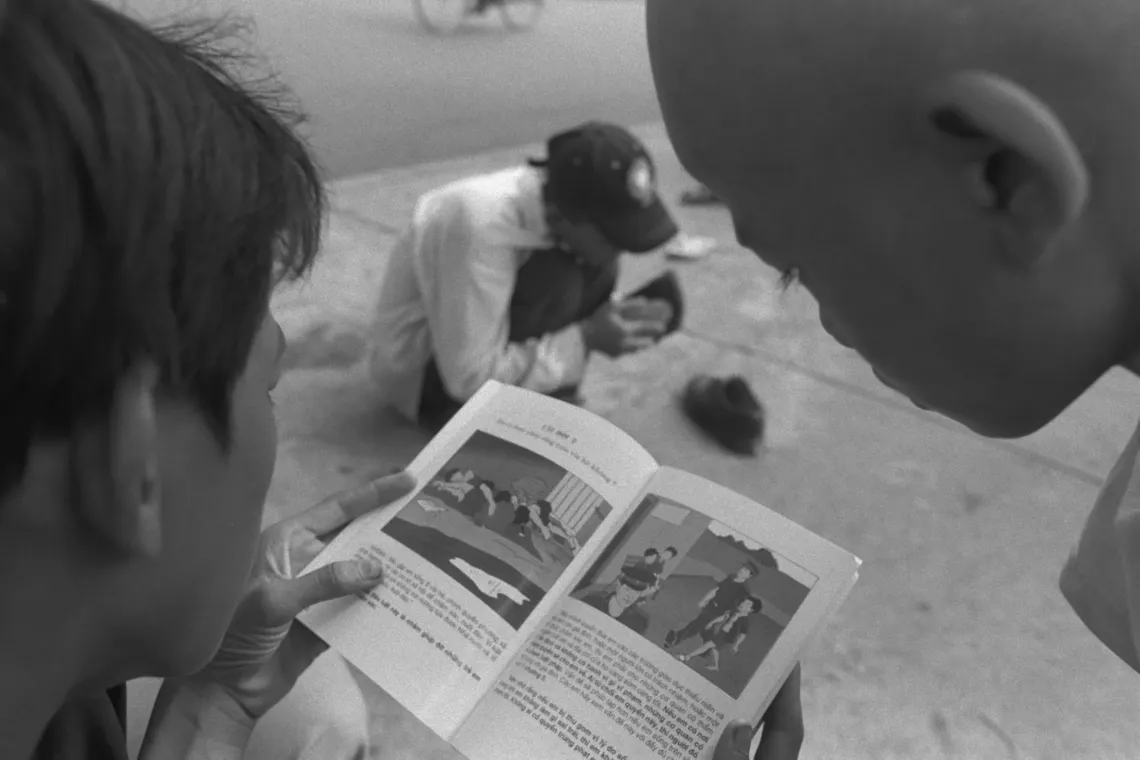
Viet Nam ratified the UN Convention on the Rights of the Child in 1990, becoming the first in Asia and second in the world to commit to this international treaty. In the photo, a UNICEF-produced booklet brings child rights to life for Vietnamese children Viet Nam ratified the UN Convention on the Rights of the Child in 1990, becoming the first in Asia and second in the world to commit to this international treaty. In the photo, a UNICEF-produced booklet brings child rights to life for Vietnamese children
LeMoyne, 1999. Viet Nam ratified the UN Convention on the Rights of the Child in 1990, becoming the first in Asia and second in the world to commit to this international treaty. In the photo, a UNICEF-produced booklet brings child rights to life for Vietnamese children
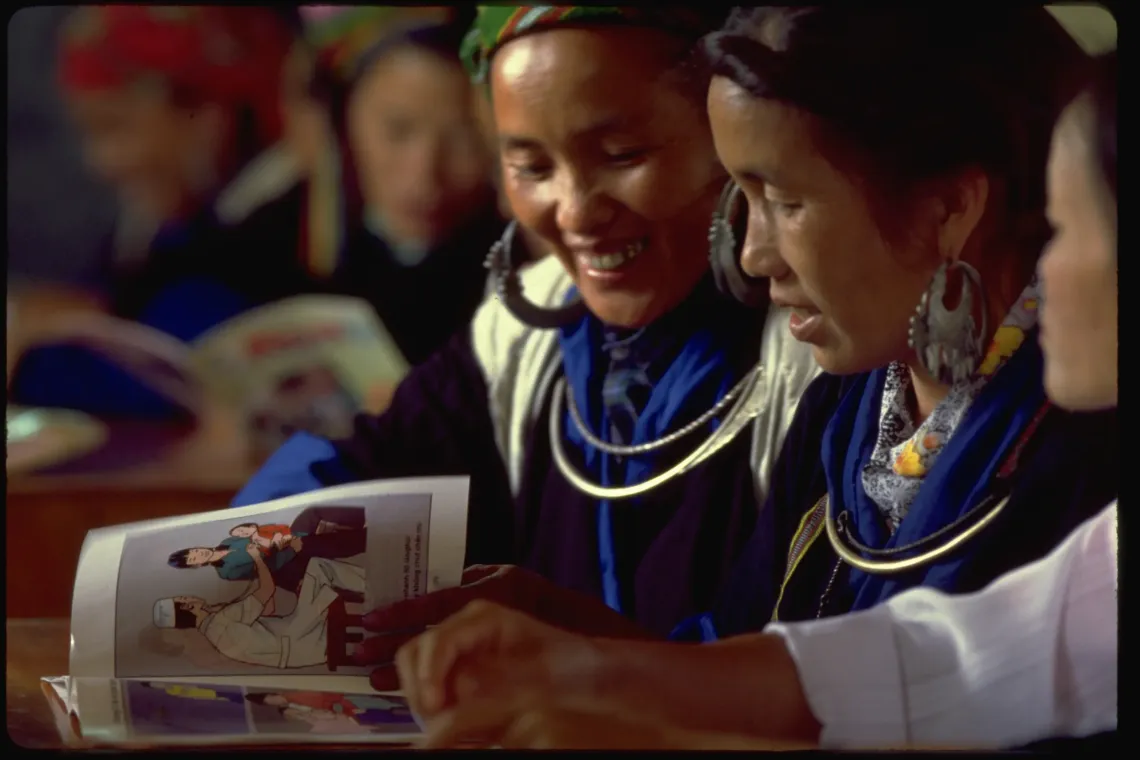
Women from the H'mong ethnic group learn essential child health, gender, and development information during a UNICEF-assisted training session at a Women's Union centre in northern Yen Bai province (now Lao Cai province). These knowledge-sharing sessions were brought to life by Facts for Life, a United Nations inter-agency booklet. By the mid-1990s, over 100,000 Vietnamese women and girls owned a copy. Women from the H'mong ethnic group learn essential child health, gender, and development information during a UNICEF-assisted training session at a Women's Union centre in northern Yen Bai province (now Lao Cai province). These knowledge-sharing sessions were brought to life by Facts for Life, a United Nations inter-agency booklet. By the mid-1990s, over 100,000 Vietnamese women and girls owned a copy.
LeMoyne, 1999 Women from the H'mong ethnic group learn essential child health, gender, and development information during a UNICEF-assisted training session at a Women's Union centre in northern Yen Bai province (now Lao Cai province). These knowledge-sharing sessions were brought to life by Facts for Life, a United Nations inter-agency booklet. By the mid-1990s, over 100,000 Vietnamese women and girls owned a copy.
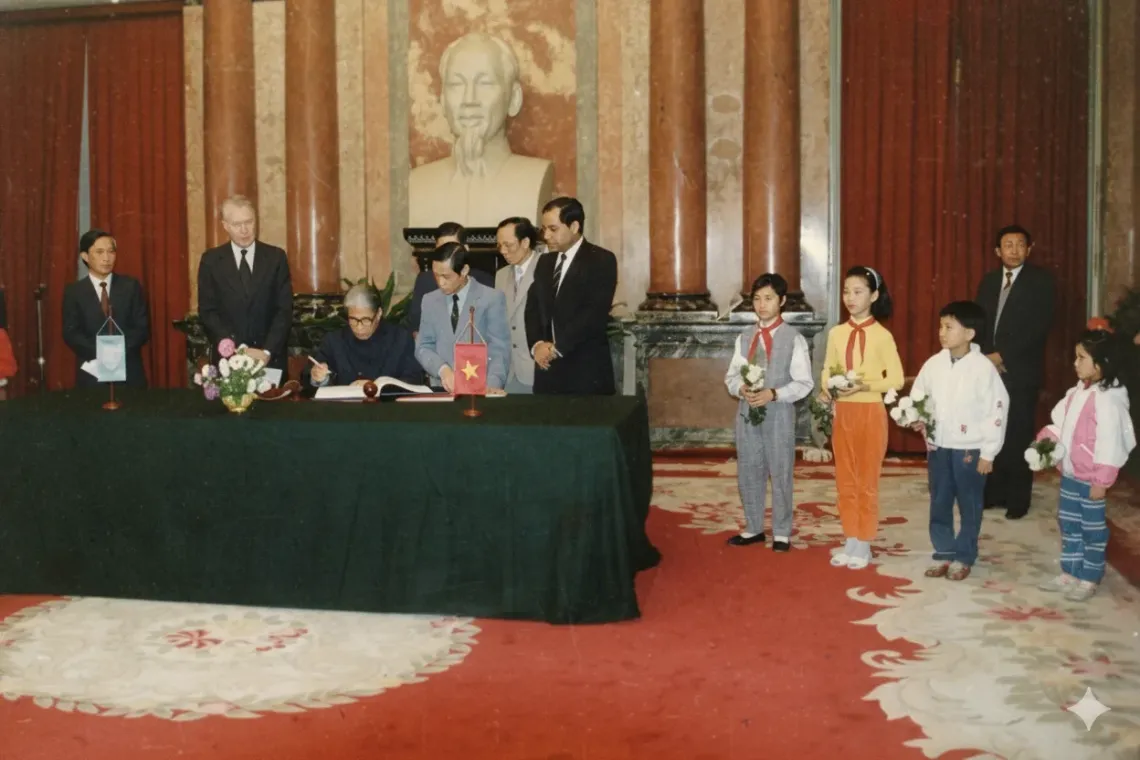
In a landmark move, H.E. Mr Do Muoi, Chairman of the Ministers Council, signed off on the National Programme of Action for Children following Viet Nam’s participation in the World Summit for Children in 1990.  In a landmark move, H.E. Mr Do Muoi, Chairman of the Ministers Council, signed off on the National Programme of Action for Children following Viet Nam’s participation in the World Summit for Children in 1990.
UNICEF Viet Nam, 1991 In a landmark move, H.E. Mr Do Muoi, Chairman of the Ministers Council, signed off on the National Programme of Action for Children following Viet Nam’s participation in the World Summit for Children in 1990.
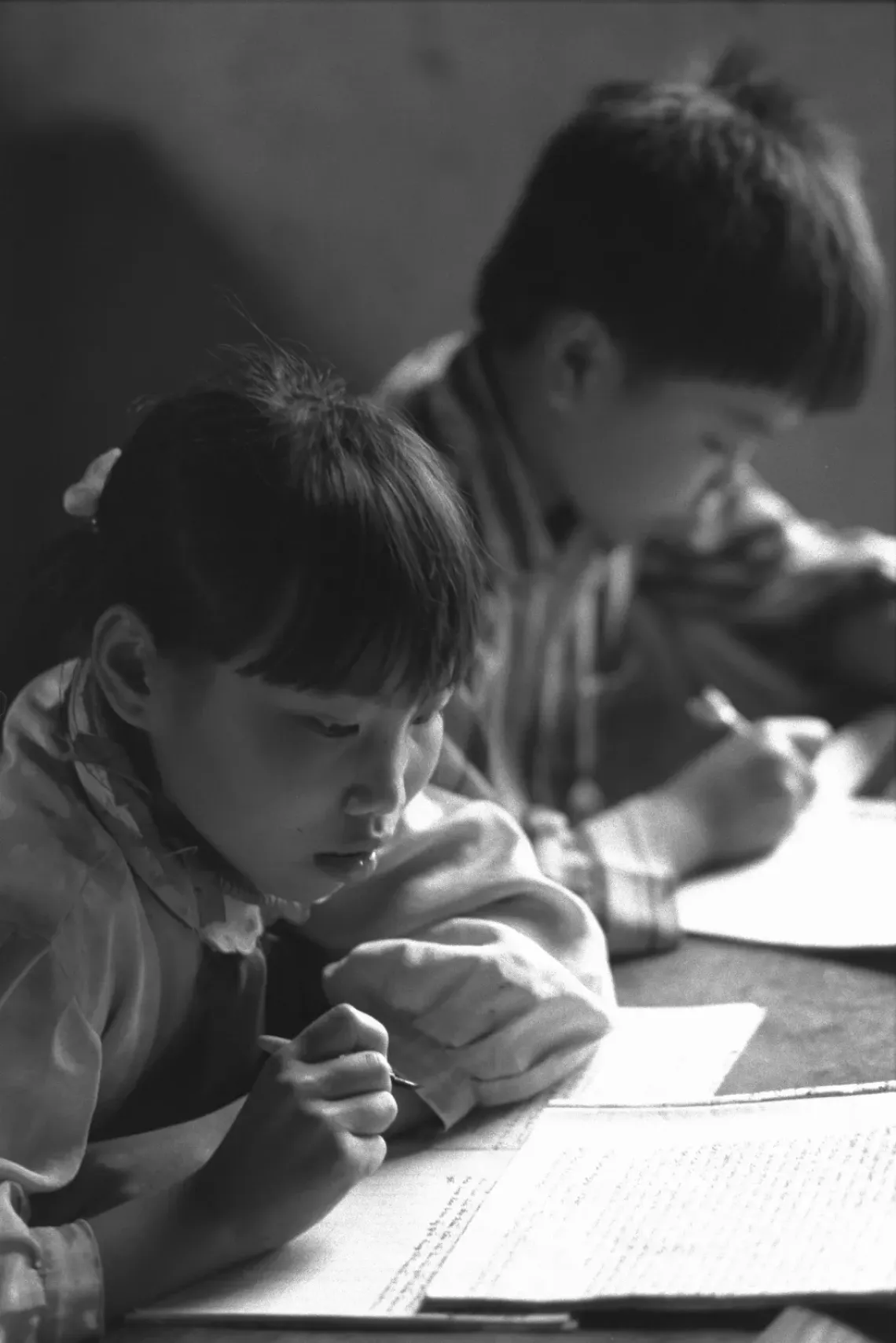
Students at a UNICEF-assisted school in the village of Yen Hung, north-west Yen Bai province (now Lao Cai province), are busy in the classroom as part of UNICEF’s 1991—1995 Country Programme to support the Ministry of Education and Training Students at a UNICEF-assisted school in the village of Yen Hung, north-west Yen Bai province (now Lao Cai province), are busy in the classroom as part of UNICEF’s 1991—1995 Country Programme to support the Ministry of Education and Training
LeMoyne, 1999 Bridging the right to quality education for vulnerable and hard-to-reach communities has been a core part of Viet Nam’s mission over the decades. Here, students at a UNICEF-assisted school in the village of Yen Hung, north-west Yen Bai province (now Lao Cai province), are busy in the classroom as part of UNICEF’s 1991—1995 Country Programme to support the Ministry of Education and Training in improving the quality of education for vulnerable communities. In 1991, Viet Nam enacted two significant laws aligned with the Convention on the Rights of the Child: Protection and Care of Children and Universal Primary Education.
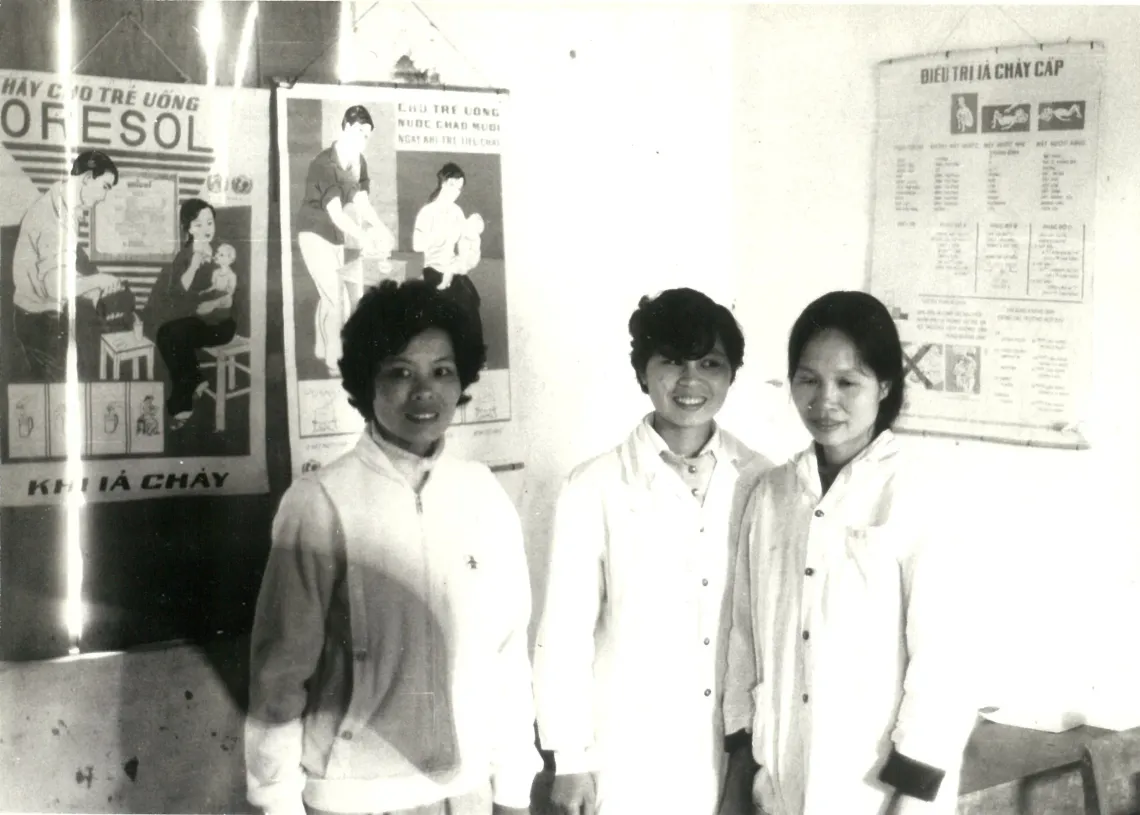
UNICEF-supported campaign posters on treatment of diarrhoeal diseases serve as a backdrop in 1994 to health workers at Minh Bao Commune Health Centre, in northern Yen Bai province (now Lao Cai province) UNICEF-supported campaign posters on treatment of diarrhoeal diseases serve as a backdrop in 1994 to health workers at Minh Bao Commune Health Centre, in northern Yen Bai province (now Lao Cai province)
UNICEF Viet Nam, 1994 Raising public awareness of health risks has remained a key UNICEF goal through the decades. Here, UNICEF-supported campaign posters on treatment of diarrhoeal diseases serve as a backdrop in 1994 to health workers at Minh Bao Commune Health Centre, in northern Yen Bai province (now Lao Cai province). This campaign promoted exclusive breastfeeding, safe feeding practices, clean water access, and improved hygiene. The project reached 62 per cent of children under five in 40 provinces.
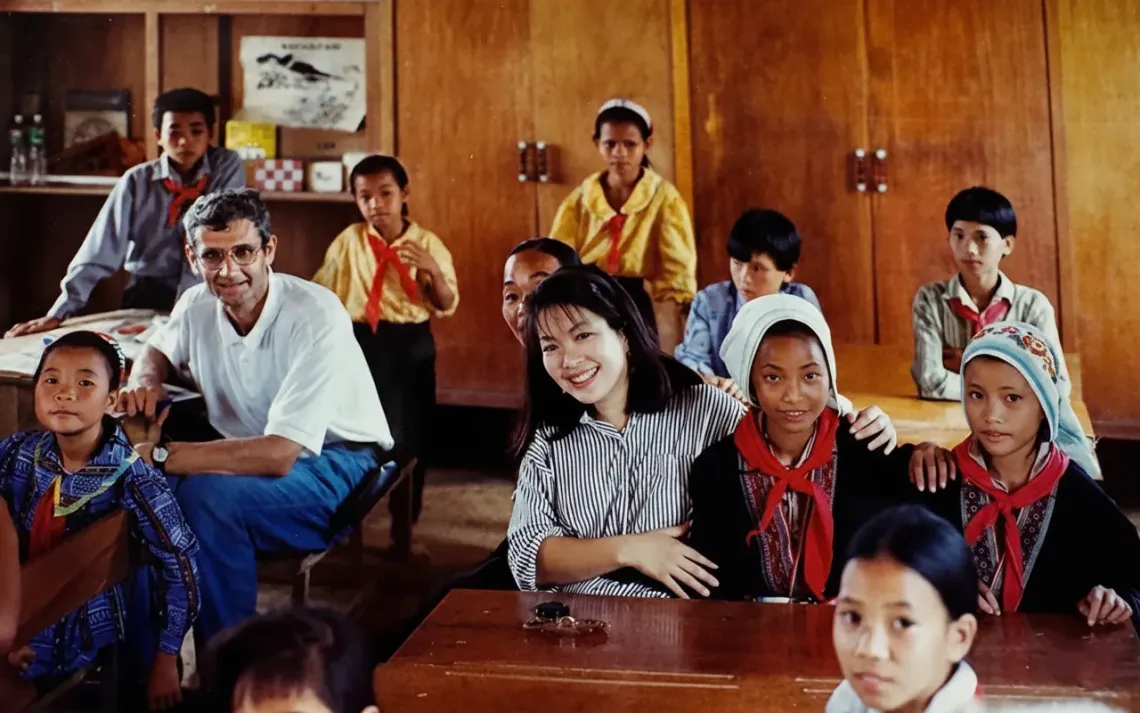
June Kunugi (centre in striped shirt), who was appointed UNICEF Regional Director for East Asia and the Pacific in July 2024, is pictured during a visit to Hoa Binh province (now Phu Tho province) in 1994, when she was serving in Viet Nam as a UNICEF Communications Junior Professional Officer. June Kunugi (centre in striped shirt), who was appointed UNICEF Regional Director for East Asia and the Pacific in July 2024, is pictured during a visit to Hoa Binh province (now Phu Tho province) in 1994, when she was serving in Viet Nam as a UNICEF Communications Junior Professional Officer.
UNICEF Viet Nam, 1994 Supporting government plans to ensure child rights were accessible for every child, UNICEF’s work has focused on reaching the most vulnerable children and their families. In the photo, June Kunugi (centre in striped shirt), who was appointed UNICEF Regional Director for East Asia and the Pacific in July 2024, is pictured during a visit to Hoa Binh province (now Phu Tho province) in 1994, when she was serving in Viet Nam as a UNICEF Communications Junior Professional Officer.
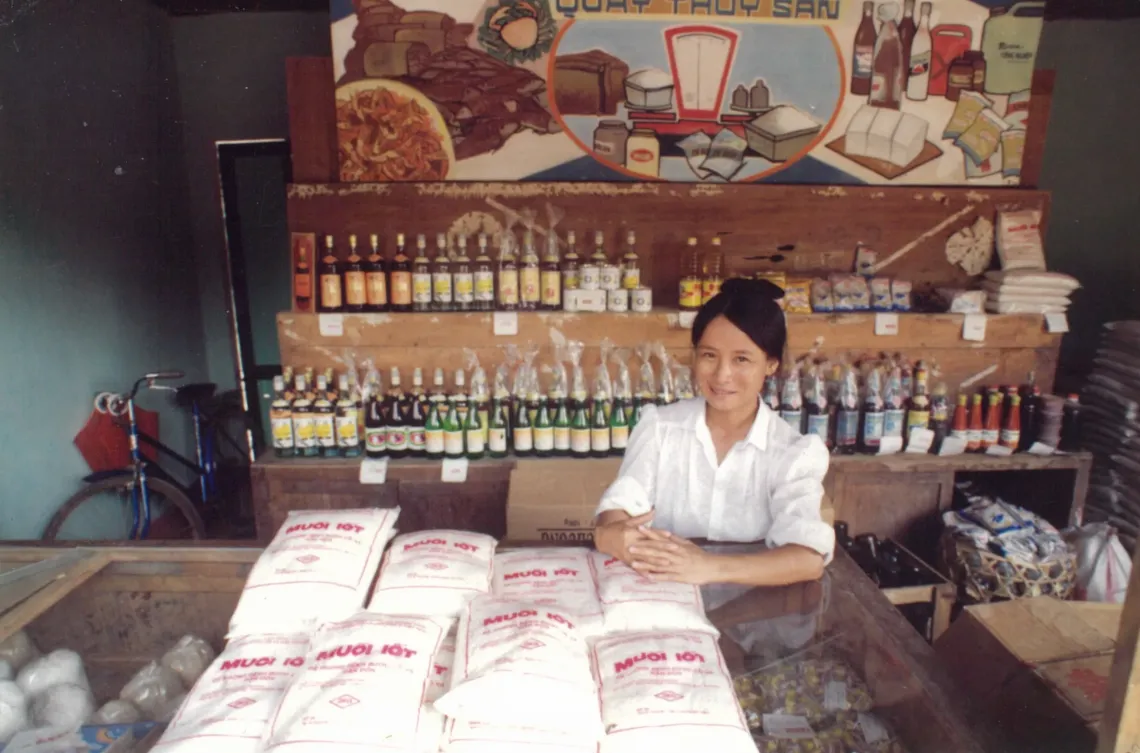
Following a 1994 national survey revealing widespread goitre and low iodine levels in children, UNICEF supported the Government of Viet Nam in scaling up a national programme, with salt iodization as the core strategy. Following a 1994 national survey revealing widespread goitre and low iodine levels in children, UNICEF supported the Government of Viet Nam in scaling up a national programme, with salt iodization as the core strategy.
UNICEF Viet Nam, 1995 Following a 1994 national survey revealing widespread goitre and low iodine levels in children, UNICEF supported the Government of Viet Nam in scaling up a national programme, with salt iodization as the core strategy. With initiatives such as establishing this iodized salt factory in Yen Bai province (now Lao Cai province), Viet Nam had eliminated iodine deficiency by 2005, becoming one of the first countries to achieve universal salt iodization.
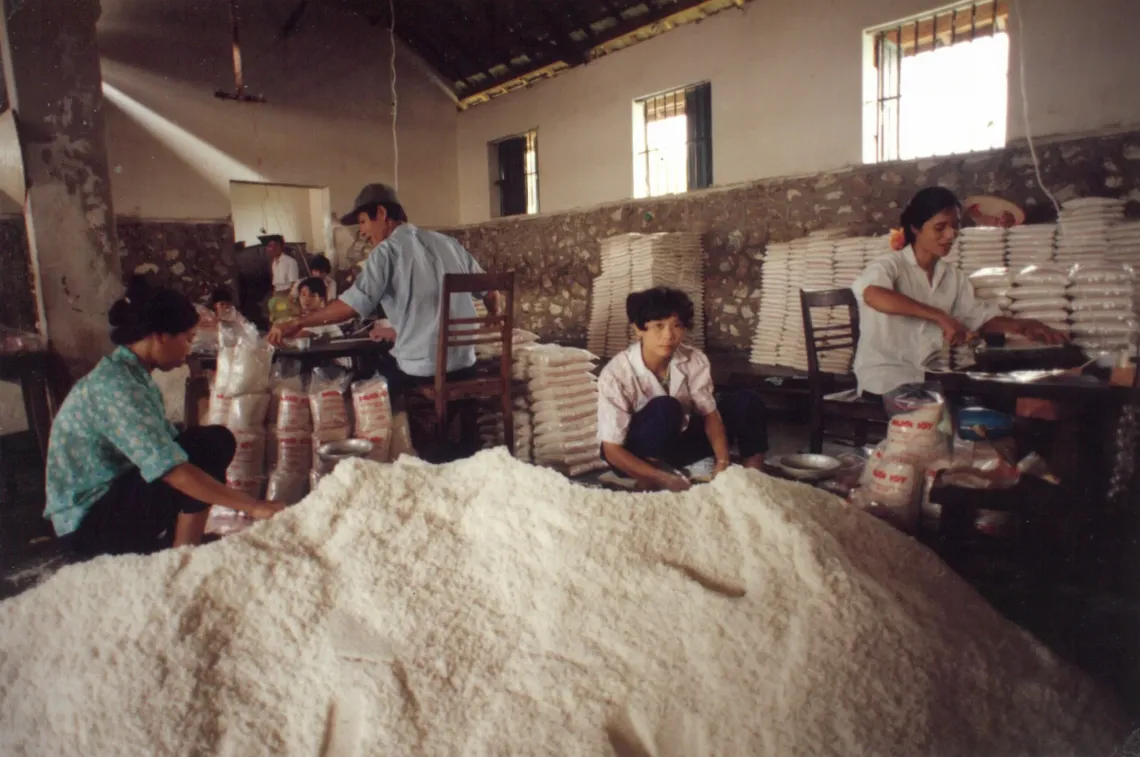
Following a 1994 national survey revealing widespread goitre and low iodine levels in children, UNICEF supported the Government of Viet Nam in scaling up a national programme, with salt iodization as the core strategy. Following a 1994 national survey revealing widespread goitre and low iodine levels in children, UNICEF supported the Government of Viet Nam in scaling up a national programme, with salt iodization as the core strategy.
UNICEF Viet Nam, 1995 Following a 1994 national survey revealing widespread goitre and low iodine levels in children, UNICEF supported the Government of Viet Nam in scaling up a national programme, with salt iodization as the core strategy. With initiatives such as establishing this iodized salt factory in Yen Bai province (now Lao Cai province), Viet Nam had eliminated iodine deficiency by 2005, becoming one of the first countries to achieve universal salt iodization.
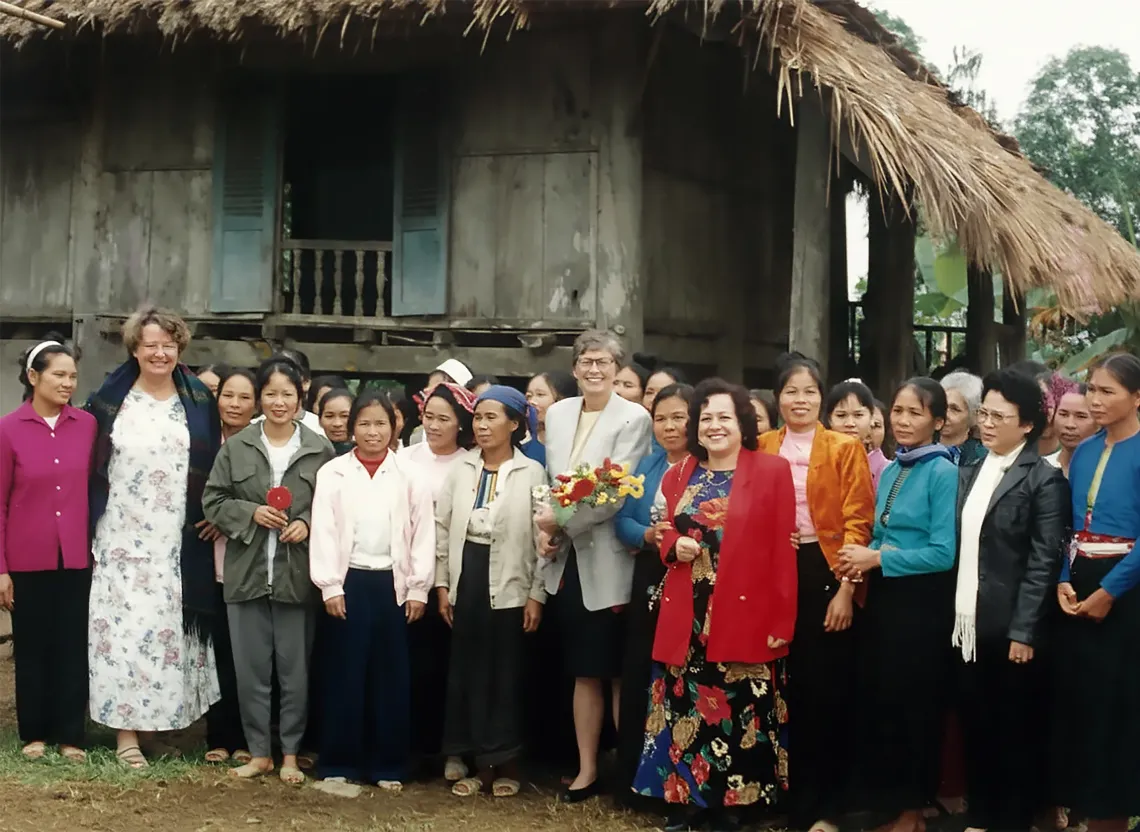
At the time, UNICEF Executive Director, Carol Bellamy (centre, wearing a grey jacket), UNICEF Viet Nam Representative, Rima Salah (fifth from the right, in a red jacket), Madame Tran Thi Thanh Thanh, Chairwoman of the Viet Nam Committee for Children’s Protection and Care (second from the right, wearing a black jacket), and Elaine Furniss, Chief of Education (second left in white dress) during a visit to ethnic communities in Yen Bai province (now Lao Cai province) in 1995. At the time, UNICEF Executive Director, Carol Bellamy (centre, wearing a grey jacket), UNICEF Viet Nam Representative, Rima Salah (fifth from the right, in a red jacket), Madame Tran Thi Thanh Thanh, Chairwoman of the Viet Nam Committee for Children’s Protection and Care (second from the right, wearing a black jacket), and Elaine Furniss, Chief of Education (second left in white dress) during a visit to ethnic communities in Yen Bai province (now Lao Cai province) in 1995.
UNICEF Viet Nam, 1995 At the time, UNICEF Executive Director, Carol Bellamy (centre, wearing a grey jacket), UNICEF Viet Nam Representative, Rima Salah (fifth from the right, in a red jacket), Madame Tran Thi Thanh Thanh, Chairwoman of the Viet Nam Committee for Children’s Protection and Care (second from the right, wearing a black jacket), and Elaine Furniss, Chief of Education (second left in white dress) during a visit to ethnic communities in Yen Bai province (now Lao Cai province) in 1995.
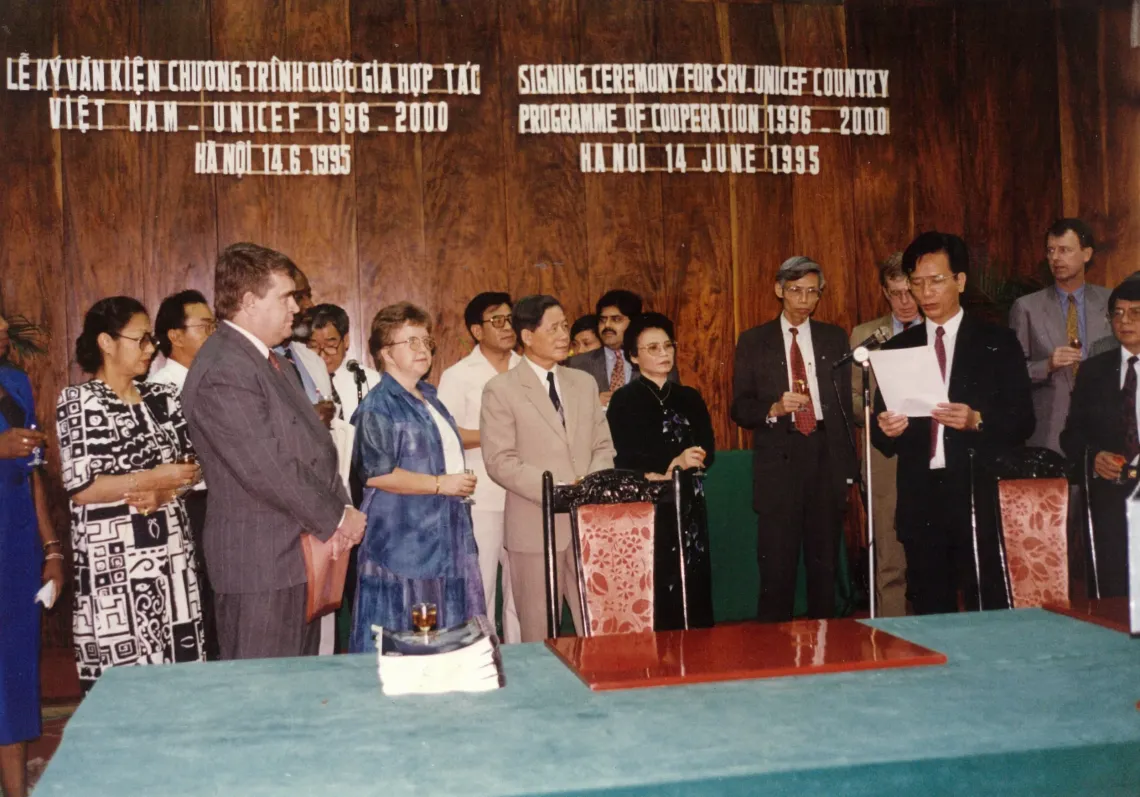
The UNICEF Viet Nam Country Programme of Cooperation for 1996–2000 came into being at a signing ceremony in Hanoi, featuring (left to right) UNICEF Representative Steve Woodhouse (left, in grey suit), UNICEF Chief of Nutrition Marijatta Tolvanen, Viet Nam Deputy Prime Minister Nguyen Khanh, Minister-Chairperson of the Committee for Protection and Care of Children Madame Tran Thi Thanh Thanh, and Vice Chair of National Planning Committee Vo Hong Phuc.  The UNICEF Viet Nam Country Programme of Cooperation for 1996–2000 came into being at a signing ceremony in Hanoi, featuring (left to right) UNICEF Representative Steve Woodhouse (left, in grey suit), UNICEF Chief of Nutrition Marijatta Tolvanen, Viet Nam Deputy Prime Minister Nguyen Khanh, Minister-Chairperson of the Committee for Protection and Care of Children Madame Tran Thi Thanh Thanh, and Vice Chair of National Planning Committee Vo Hong Phuc.
UNICEF Viet Nam, 1995 The UNICEF Viet Nam Country Programme of Cooperation for 1996–2000 came into being at a signing ceremony in Ha Noi, featuring (left to right) UNICEF Representative Steve Woodhouse (in grey suit), UNICEF Chief of Nutrition Marijatta Tolvanen, Viet Nam Deputy Prime Minister Nguyen Khanh, Minister-Chairperson of the Committee for Protection and Care of Children Madame Tran Thi Thanh Thanh, and Vice Chair of National Planning Committee Vo Hong Phuc.
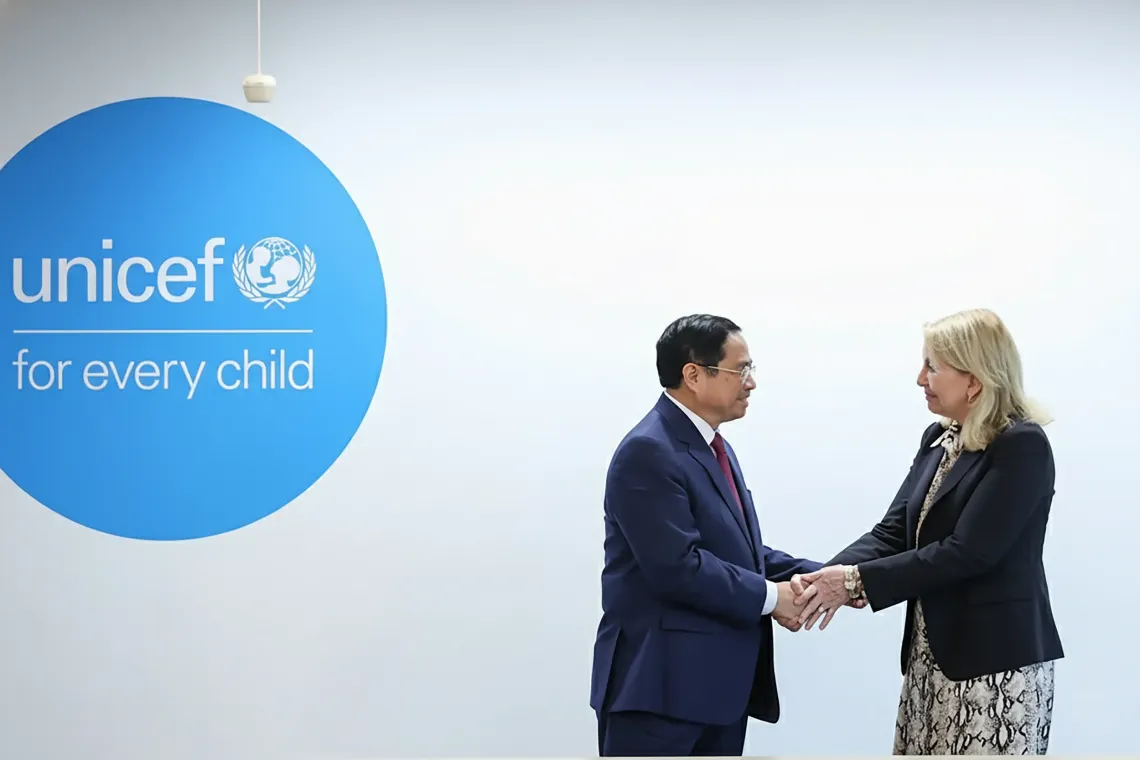
Recent highlights of this long-standing partnership for child rights include  Prime Minister Phạm Minh Chính meeting with UNICEF Executive Director Catherine Russell at UNICEF Headquarters in New York in September 2022. Recent highlights of this long-standing partnership for child rights include  Prime Minister Phạm Minh Chính meeting with UNICEF Executive Director Catherine Russell at UNICEF Headquarters in New York in September 2022.
UNICEF Viet Nam, 2022 With a mandate to deliver results for the children of Viet Nam, the Viet Nam–UNICEF partnership has evolved to reach more children with programmes closely aligned with national priorities, in cooperation with the Government of Viet Nam. Among the many highlights was Viet Nam’s election to the UNICEF Executive Board for the 1996-1998 term - a milestone in the country’s engagement at the United Nations to advance children’s rights. Recent highlights of this long-standing partnership for child rights include Prime Minister Phạm Minh Chính meeting with UNICEF Executive Director Catherine Russell at UNICEF Headquarters in New York in September 2022.
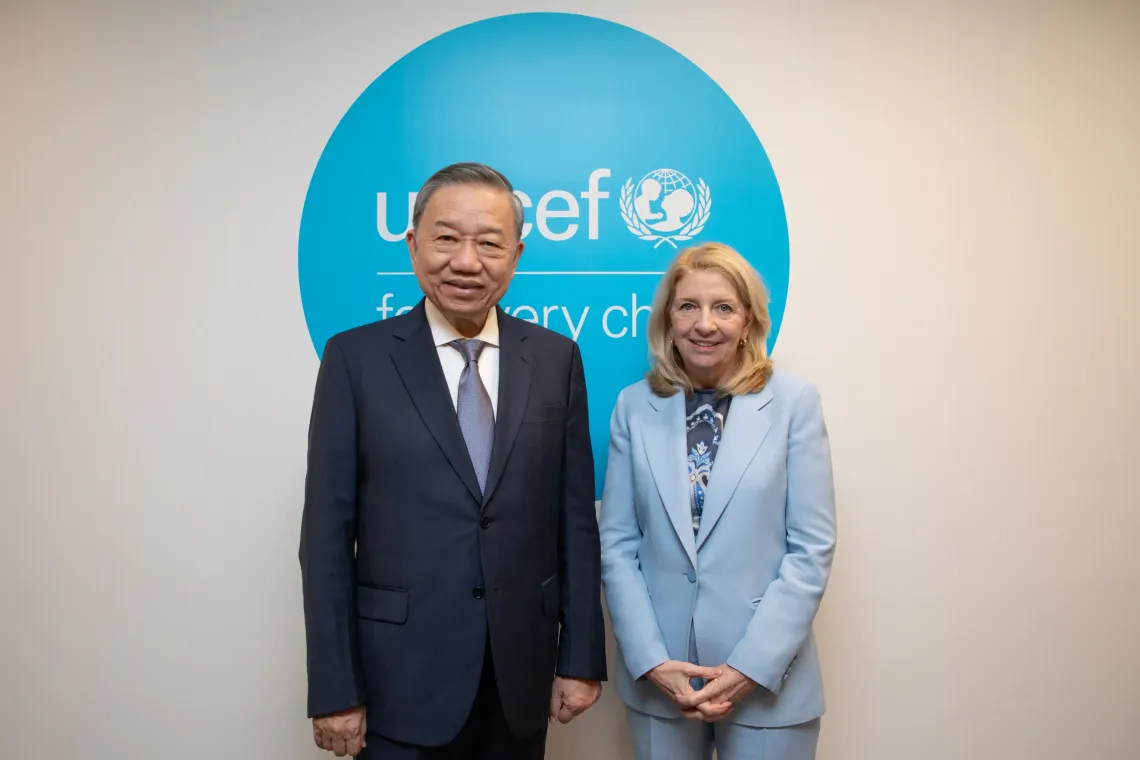
Recent highlights of this long-standing partnership for child rights include Party General Secretary and State President H.E. Tô Lâm meeting with UNICEF Executive Director Catherine Russell at UNICEF Headquarters in New York in September 2024. Recent highlights of this long-standing partnership for child rights include Party General Secretary and State President H.E. Tô Lâm meeting with UNICEF Executive Director Catherine Russell at UNICEF Headquarters in New York in September 2024.
UNICEF Viet Nam, 2024 With a mandate to deliver results for the children of Viet Nam, the Viet Nam–UNICEF partnership has evolved to reach more children with programmes closely aligned with national priorities, in cooperation with the Government of Viet Nam. Among the many highlights was Viet Nam’s election to the UNICEF Executive Board for the 1996-1998 term - a milestone in the country’s engagement at the United Nations to advance children’s rights. Recent highlights of this long-standing partnership for child rights include Party General Secretary and State President H.E. Tô Lâm meeting with UNICEF Executive Director Catherine Russell at UNICEF Headquarters in New York in September 2024.
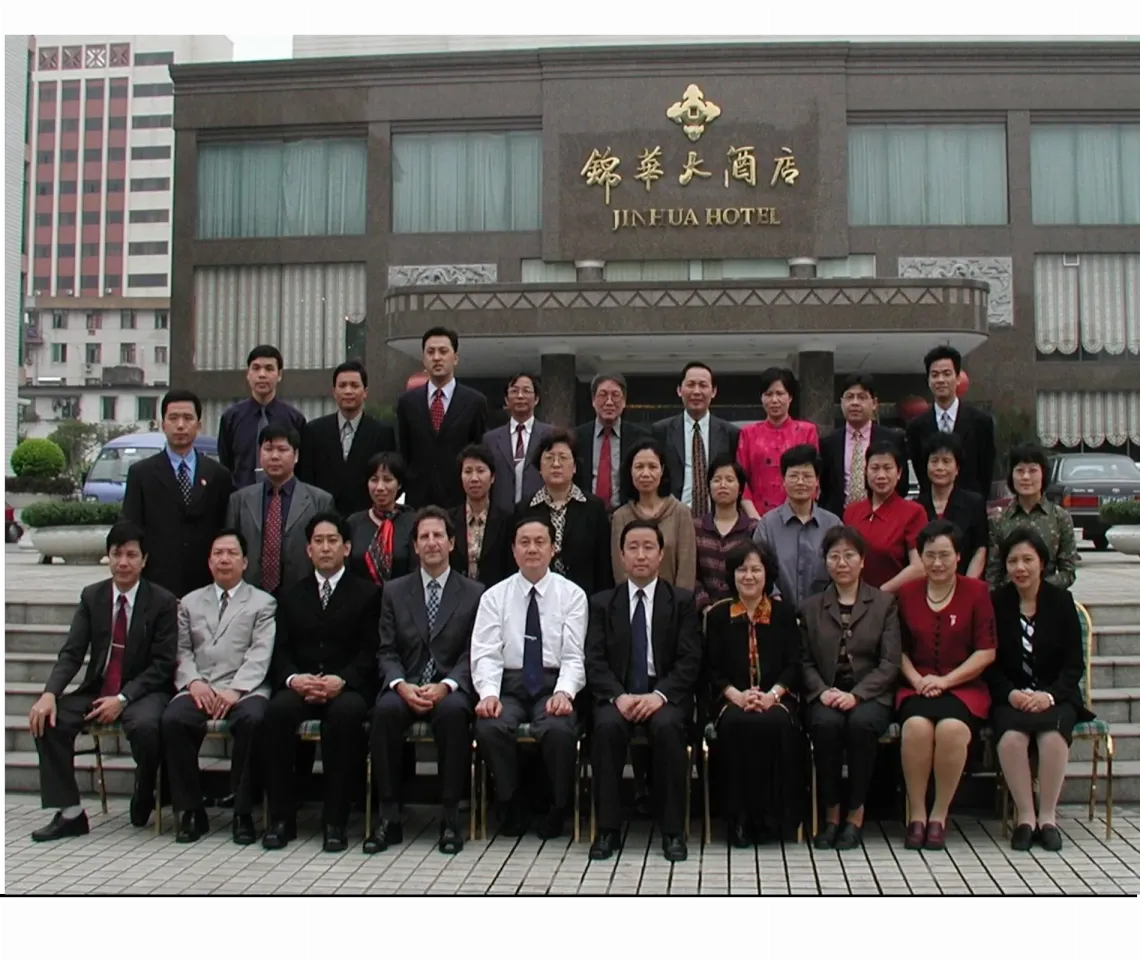
Viet Nam’s delegation included UNICEF Viet Nam Representative Anthony Bloomberg (sitting fourth from left) and relevant stakeholders from the ministries of Public Security, Defence, and Internal Affairs, as well as the Vice President of the Women’s Union, Mme Nguyen Thi Oanh (sitting fourth from right). Viet Nam’s delegation included UNICEF Viet Nam Representative Anthony Bloomberg (sitting fourth from left) and relevant stakeholders from the ministries of Public Security, Defence, and Internal Affairs, as well as the Vice President of the Women’s Union, Mme Nguyen Thi Oanh (sitting fourth from right).
UNICEF, 2002 Viet Nam and China joined hands to take a stand against cross-border human trafficking, with a Vietnamese delegation visiting Nanning City, China, in April 2002 to help strengthen cooperation and vigilance for the protection of every child. Viet Nam’s delegation included UNICEF Viet Nam Representative Anthony Bloomberg (sitting fourth from left) and relevant stakeholders from the ministries of Public Security, Defence, and Internal Affairs, as well as the Vice President of the Women’s Union, Mme Nguyen Thi Oanh (sitting fourth from right).
UNICEF Goodwill Ambassador Jackie Chan (centre left, in a UNICEF t-shirt) meditates with Buddhist monks and children in 2005 at Phap Van Pagoda in Hanoi. UNICEF Goodwill Ambassador Jackie Chan (centre left, in a UNICEF t-shirt) meditates with Buddhist monks and children in 2005 at Phap Van Pagoda in Hanoi.
Horner, 2005 UNICEF Goodwill Ambassador Jackie Chan (centre left, in a UNICEF t-shirt) meditates with Buddhist monks and children in 2005 at Phap Van Pagoda in Ha Noi. The monks provided counselling to children, many of whom were orphaned due to HIV/AIDS, through a UNICEF-supported Buddhist Leadership Initiative.
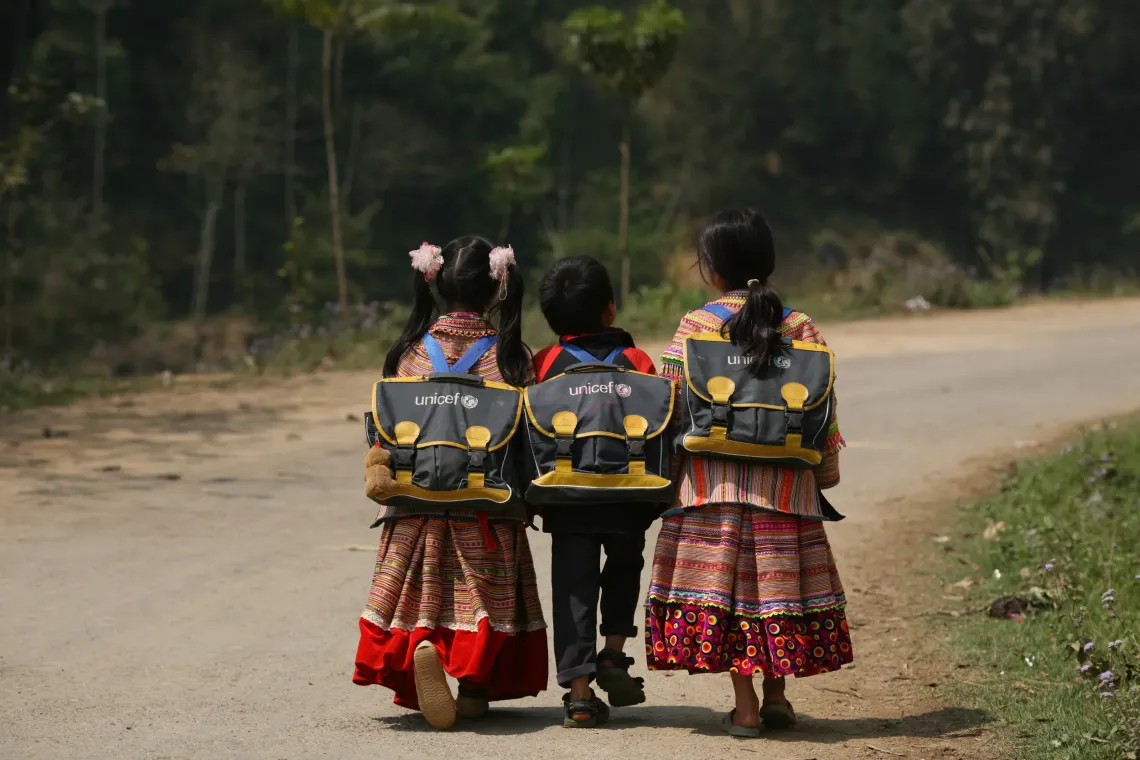
Carrying their UNICEF school bags, 10-year-old Lu Thi Dung (left), her six-year-old brother Lu Seo Nha (centre), and her 10-year-old cousin Thao Thi Linh walk home from Ban Pho primary school in 2009 to their community in northern Lao Cai province’s Bac Han District. Carrying their UNICEF school bags, 10-year-old Lu Thi Dung (left), her six-year-old brother Lu Seo Nha (centre), and her 10-year-old cousin Thao Thi Linh walk home from Ban Pho primary school in 2009 to their community in northern Lao Cai province’s Bac Han District.
Estey, 2009 Carrying their UNICEF school bags, ten-year-old Lu Thi Dung (left), her six-year-old brother Lu Seo Nha (centre), and her ten-year-old cousin Thao Thi Linh walk home from Ban Pho primary school in 2009 to their community in Lao Cai province. The UNICEF-supported school provides education in a safe, child-friendly environment and includes classes taught in the children’s native language.
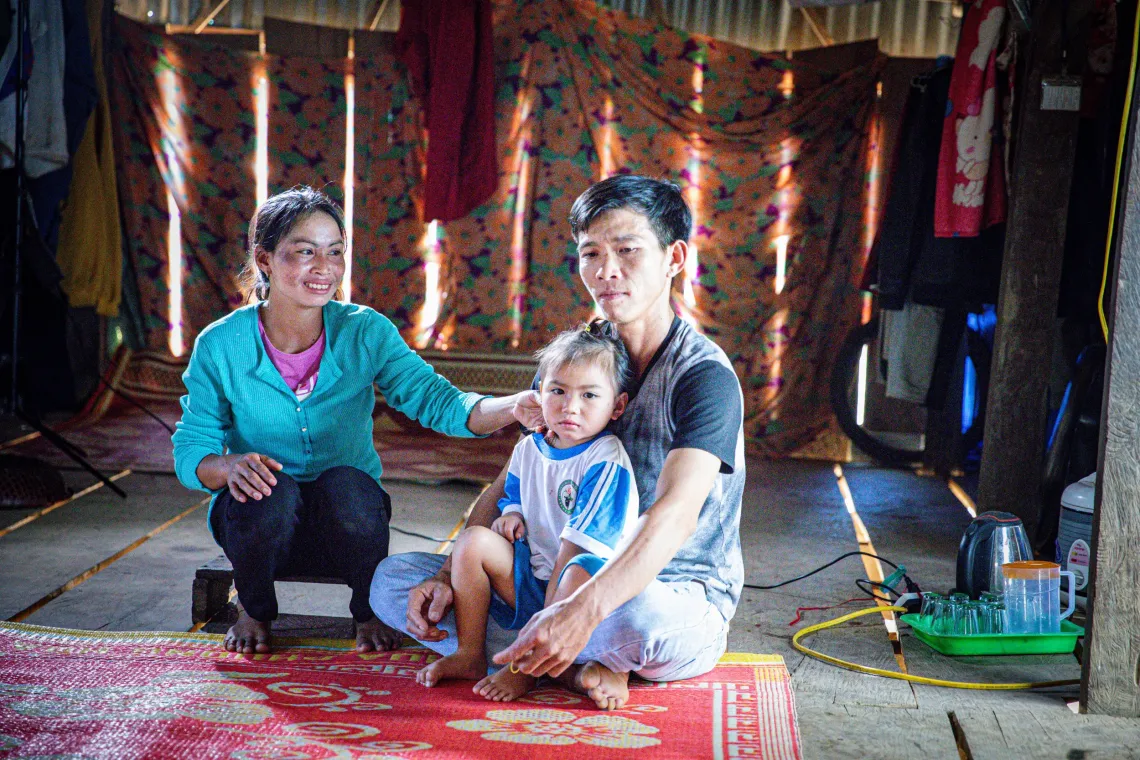
Ly Thuy Trang, pictured with her father Thang and mother Tay at their home in Kret Kot village, in central Gia Lai province in 2024. Ly Thuy Trang, pictured with her father Thang and mother Tay at their home in Kret Kot village, in central Gia Lai province in 2024.
Truong Viet Hung, 2024 Viet Nam has strengthened its system to monitor multi-dimensional poverty affecting children and families. This is a UNICEF approach that was introduced in 2009 and adopted by the National Statistics Office. UNICEF continues to support this analysis, shifting from monetary aspects to a broader understanding of child deprivation across areas like education, health, nutrition, shelter, water and sanitation, leisure, and access to information. This broader lens helps capture the lived realities of children like Ly Thuy Trang, pictured with her father Thang and mother Tay at their home in Kret Kot village, in central Gia Lai province in 2024.
Viet Nam has been taking steps to strengthen the child protection system to ensure vulnerable children and families access quality care and support Viet Nam has been taking steps to strengthen the child protection system to ensure vulnerable children and families access quality care and support
Truong Viet Hung Viet Nam has been taking steps to strengthen the child protection system to ensure vulnerable children and families access quality care and support, with the Prime Minister launching a national plan to professionalize social work in 2010 and a Law on Justice for Minors passed in 2024.
Thai Thi Kim Oanh and her brother were abandoned and raised by their grandmother in southern Dong Thap province. Thai Thi Kim Oanh and her brother were abandoned and raised by their grandmother in southern Dong Thap province.
Truong Viet Hung, 2015 Thai Thi Kim Oanh and her brother were abandoned by their parents. They were raised by their grandmother in southern Dong Thap province. With support from local authorities, they received birth registration so Oanh could attend school. Their story highlights the importance of birth registration and child-centred policies like the 2010 Law on Child Adoption, which prioritizes children's best interests and access to care.
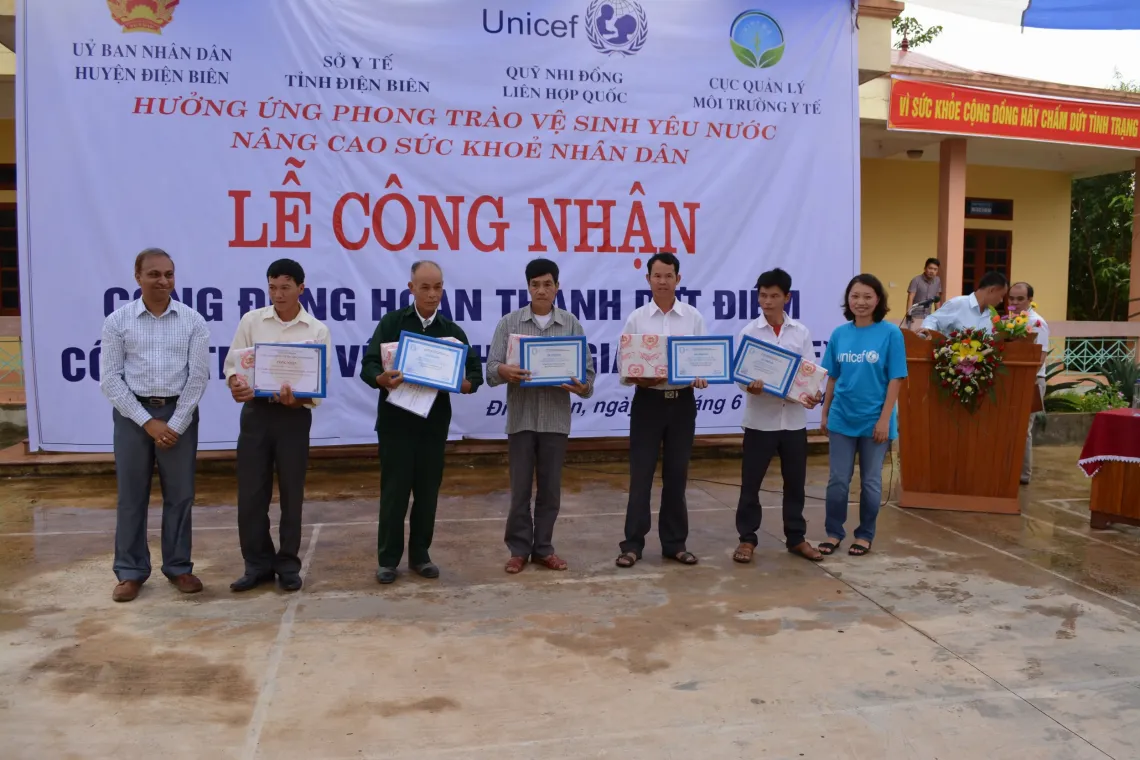
Northern Dien Bien was recognized as the first open-defecation free province in 2014. Northern Dien Bien was recognized as the first open-defecation free province in 2014.
UNICEF Viet Nam, 2014 Northern Dien Bien was recognized as the first open-defecation free province in 2014. Initially piloted by UNICEF and partners in Dien Bien and Kon Tum (now Quang Ngai) provinces, the Community-led Total Sanitation model achieved remarkable success, expanding to other provinces.
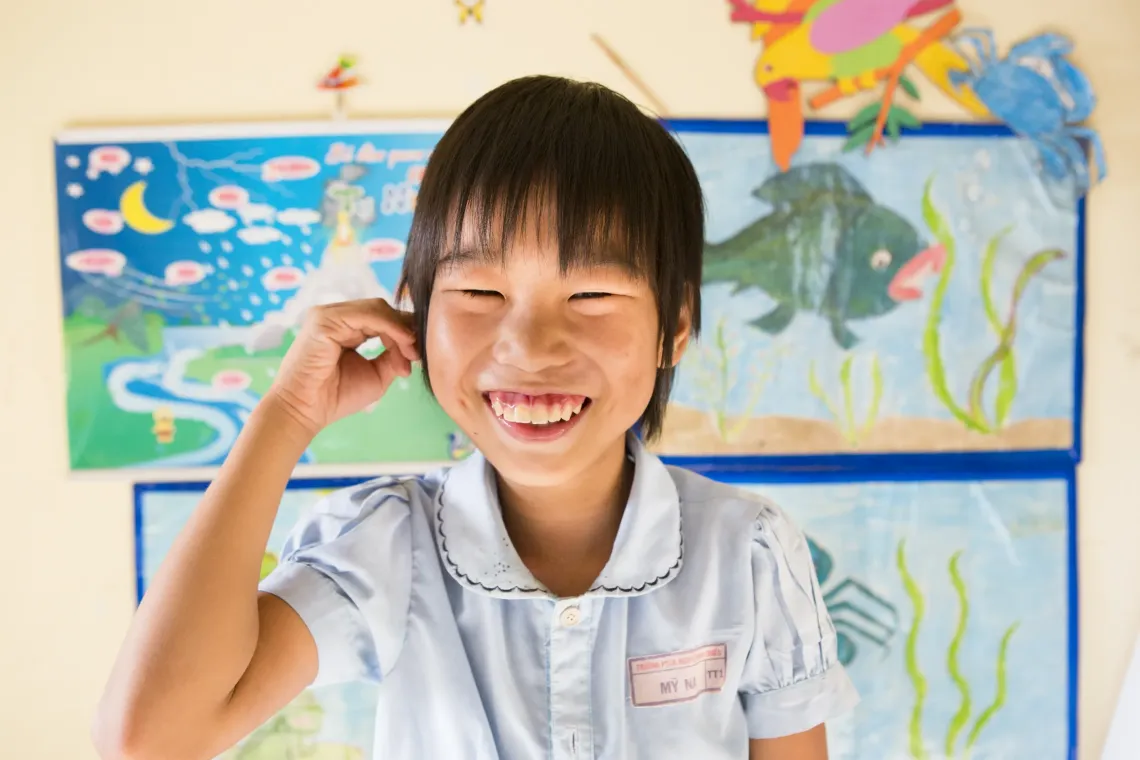
Bui My Na attends class with a smile on her face at the Nguyen Dinh Chieu Special School in Da Nang. Bui My Na attends class with a smile on her face at the Nguyen Dinh Chieu Special School in Da Nang.
UNICEF Viet Nam, 2012 Bui My Na attends class with a smile on her face at the Nguyen Dinh Chieu Special School in Da Nang. Na, who suffers from mental and learning disabilities, now enjoys active learning in the classroom after the National Assembly ratified the Convention on the Rights of Persons with Disabilities in 2014, marking a commitment to equal rights and full participation for children with disabilities.
 In 2016, Viet Nam established its first Family and Juvenile Court in Ho Chi Minh City, marking a milestone in child-sensitive justice.  In 2016, Viet Nam established its first Family and Juvenile Court in Ho Chi Minh City, marking a milestone in child-sensitive justice.
Truong Viet Hung, 2015 In 2016, Viet Nam established its first Family and Juvenile Court in Ho Chi Minh City, marking a milestone in child-sensitive justice. The model has since expanded to 36 provinces and cities. An estimated 84,000 children interact with the justice system each year across Viet Nam as victims, witnesses, alleged perpetrators or involved in civil cases. Through capacity building and by sharing international best practices, UNICEF continues to support Viet Nam to ensure that every child can access a child-friendly, gender-sensitive and well-equipped system to secure children’s rights.
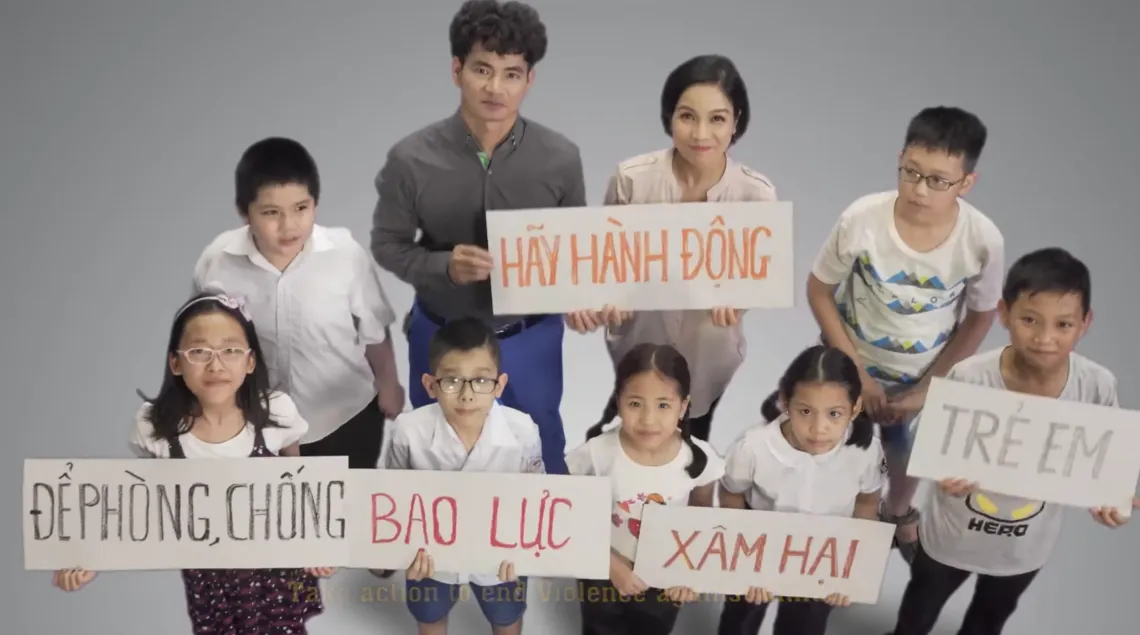
Former UNICEF Ambassador Xuan Bac with singer My Linh in a call to end violence against children in Viet Nam Former UNICEF Ambassador Xuan Bac with singer My Linh in a call to end violence against children in Viet Nam
UNICEF Viet Nam, 2017 Former UNICEF Ambassador Xuan Bac with singer My Linh in a call to end violence against children in Viet Nam, particularly child sexual abuse, digital risks and school bullying. This was part of the Government’s National Month of Action for Children in June 2017.
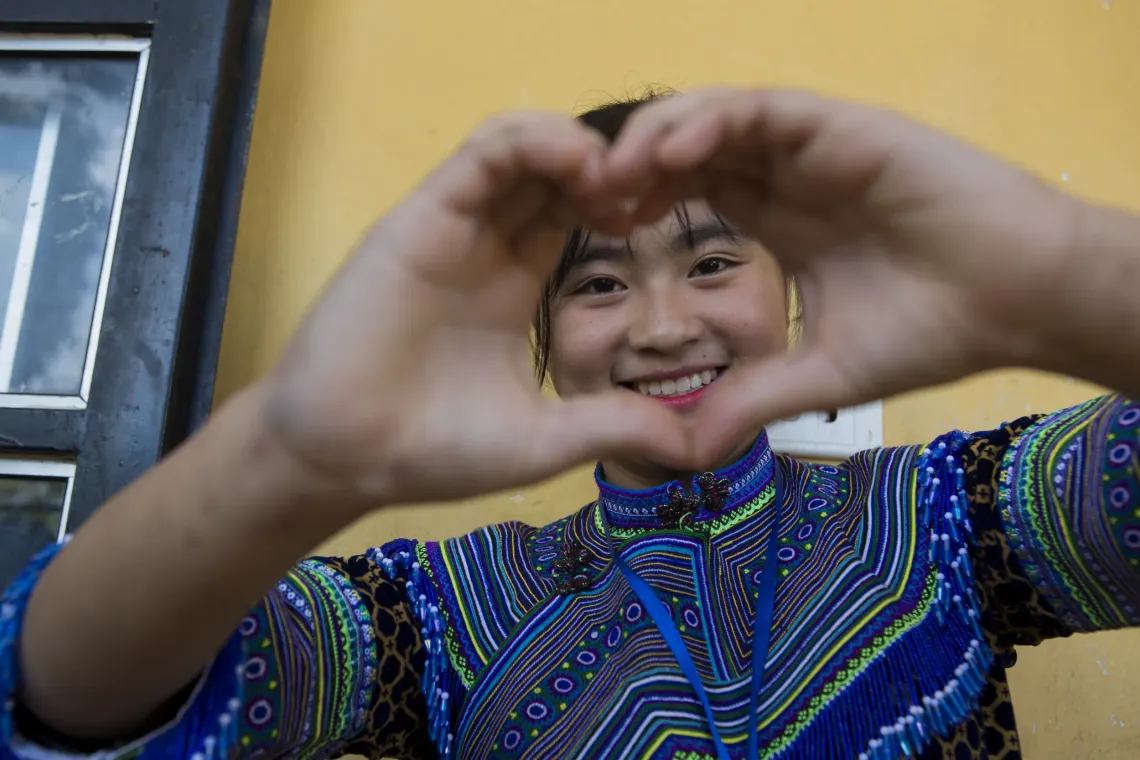
In the photo, Vang Thi Thu Ha, Ha accelerated learning in both her Mong native language and the Vietnamese language thanks to the UNICEF-backed Action Research on Mother Tongue-Based Bilingual Education programme, after attending the Ethnic Minority Boarding School in Bac Ha district, northern Lao Cai province. In the photo, Vang Thi Thu Ha, Ha accelerated learning in both her Mong native language and the Vietnamese language thanks to the UNICEF-backed Action Research on Mother Tongue-Based Bilingual Education programme, after attending the Ethnic Minority Boarding School in Bac Ha district, northern Lao Cai province.
Truong Viet Hung, 2018 Harnessing the power of bilingual education, Vang Thi Thu Ha is now realizing her dreams. Ha accelerated learning in both her Mong native language and the Vietnamese language thanks to the UNICEF-backed Action Research on Mother Tongue-Based Bilingual Education programme, after attending the Ethnic Minority Boarding School in Bac Ha district, northern Lao Cai province. Ha wishes that one day, all ethnic children can study in a bilingual environment and chase their dreams.
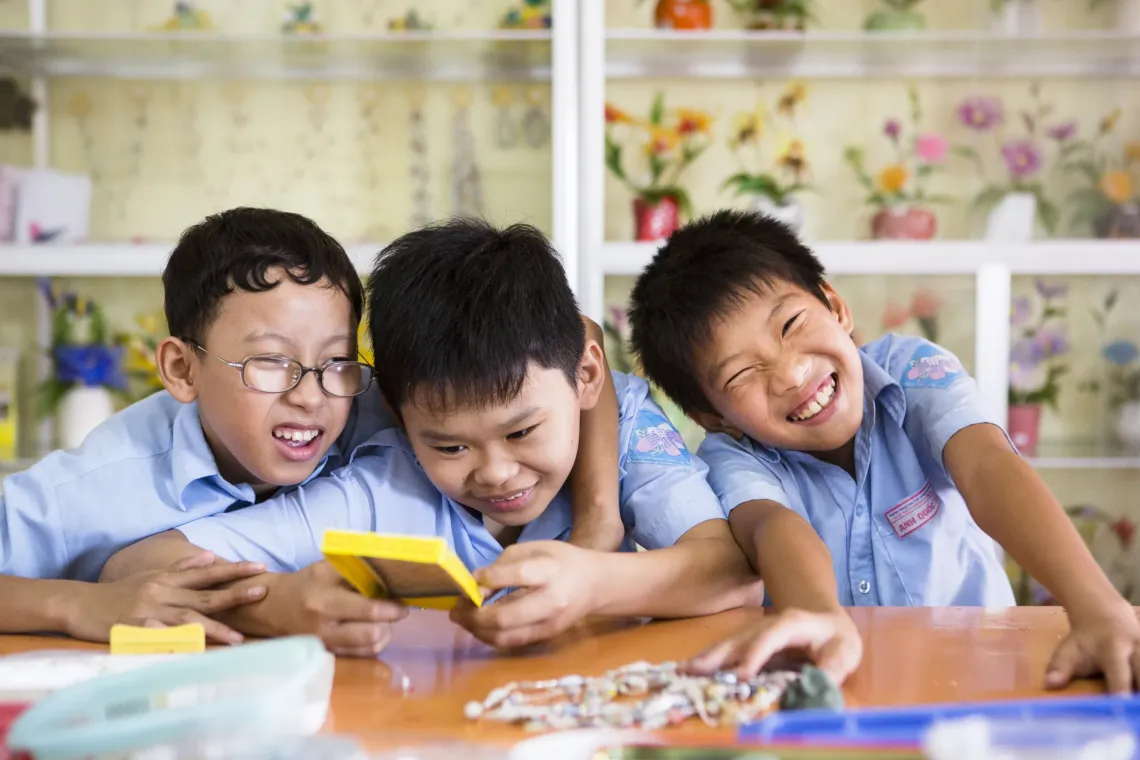
Nguyen Trung Nghia (left), Nguyen Da Hoa (centre) and Trinh Anh Quoc attend a vocational class making necklaces at Nguyen Dinh Chieu Special School in Danang. Nguyen Trung Nghia (left), Nguyen Da Hoa (centre) and Trinh Anh Quoc attend a vocational class making necklaces at Nguyen Dinh Chieu Special School in Danang.
UNICEF Viet Nam, 2012 Nguyen Trung Nghia (left), Nguyen Da Hoa (centre) and Trinh Anh Quoc attend a vocational class making necklaces at Nguyen Dinh Chieu Special School in Da Nang. In 2019, Viet Nam revised the Education Law to ensure inclusive education for children with disabilities and to extend compulsory schooling to nine years.
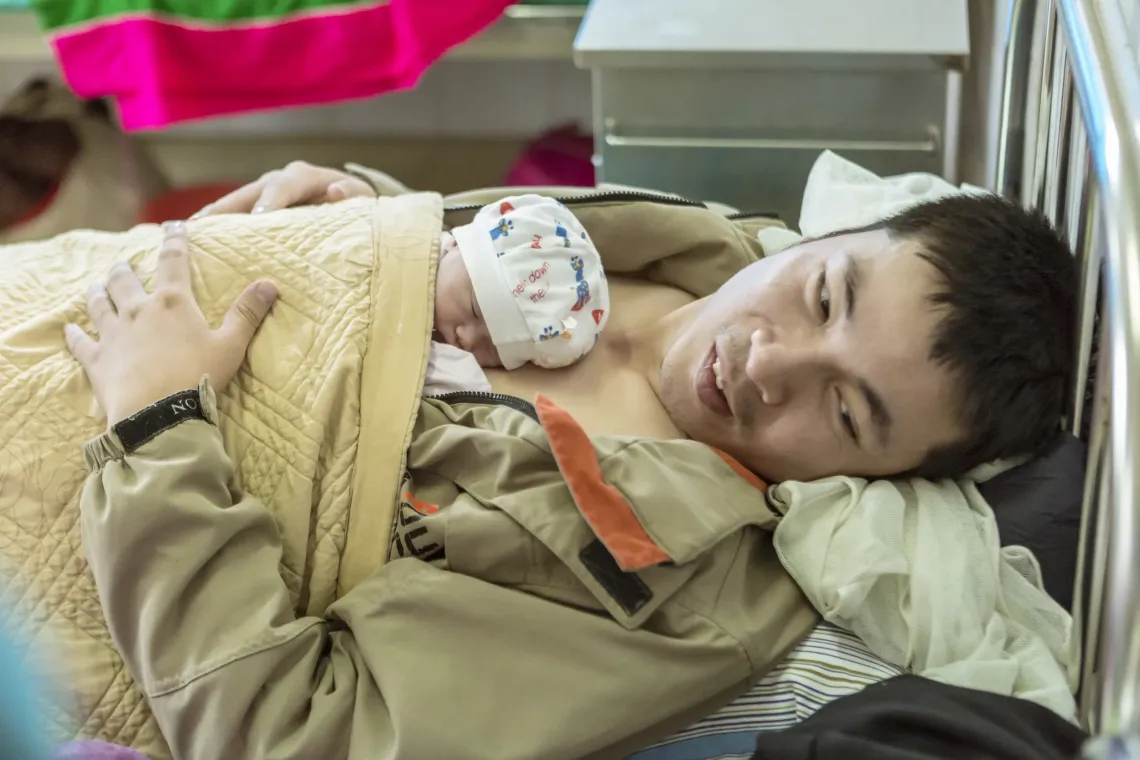
Father Pham Van Dat providing kangaroo care to one of his twins, both born slightly underweight, at northern Dien Bien province’s general hospital. Father Pham Van Dat providing kangaroo care to one of his twins, both born slightly underweight, at northern Dien Bien province’s general hospital.
Truong Viet Hung, 2019 Father Pham Van Dat providing kangaroo care to one of his twins, both born slightly underweight, at Dien Bien province’s general hospital. UNICEF, together with UN partners, supports the expansion of Early Essential Newborn Care (EENC) and the kangaroo method, involving immediate skin-to-skin contact between newborns and premature or low-birth-weight babies and their caregivers. This method is part of broader efforts to expand EENC.
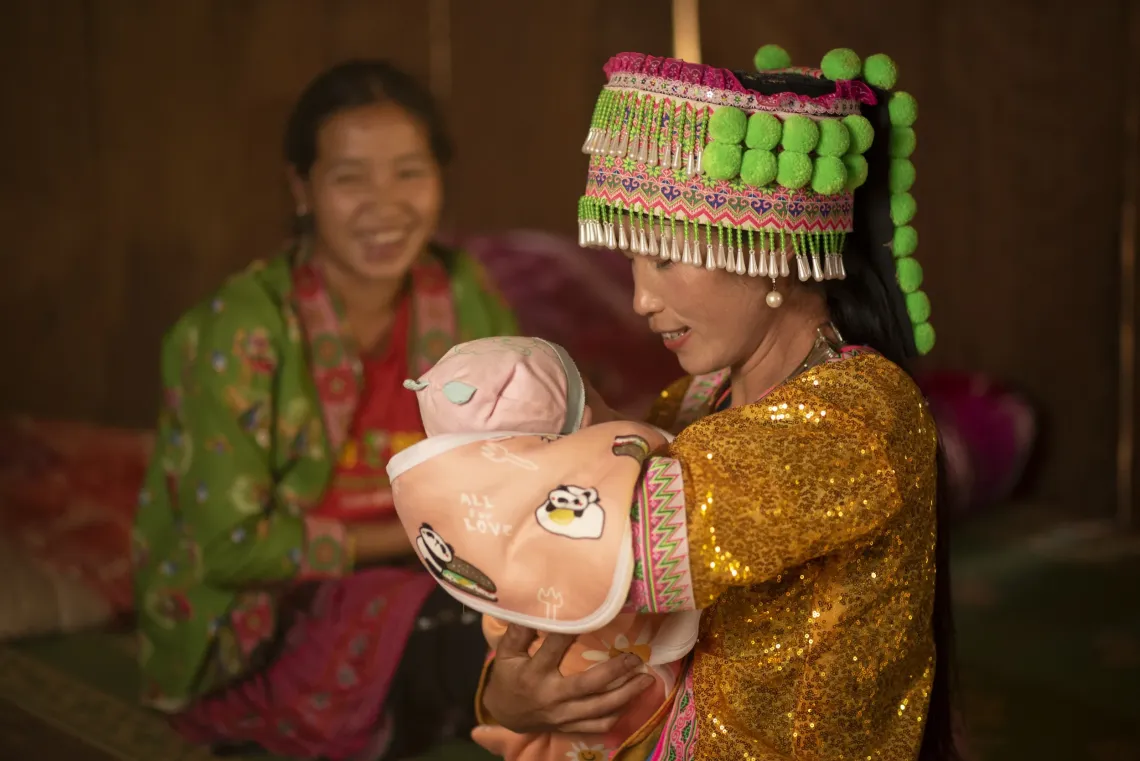
Ethnic midwife Sung Thi Cua (with the baby) during a maternal and newborn health check up with Sung Thi Ghenh, mother of Hang A Cua at their house in Pu Nhi commune, located in northern Dien Bien province’s Dong district Ethnic midwife Sung Thi Cua (with the baby) during a maternal and newborn health check up with Sung Thi Ghenh, mother of Hang A Cua at their house in Pu Nhi commune, located in northern Dien Bien province’s Dong district
Ho Hoang Thien Trang, 2022 Ethnic midwife Sung Thi Cua (with the baby) during a maternal and newborn health check up with Sung Thi Ghenh, mother of Hang A Cua at their house located in Dien Bien province as part of a UNICEF-supported village-based midwife initiative in partnership with the Ministry of Health. The programme contributes to ensuring that pregnant women, mothers and newborns in remote mountainous areas, where access to healthcare facilities is limited, receive essential care at home.
Student in Hoa Ban preschool students playing with UNICEF-supported toys at a community-based library in Lao Cai province. Student in Hoa Ban preschool students playing with UNICEF-supported toys at a community-based library in Lao Cai province.
Vu Le Hoang, 2024 In 2018, the Prime Minister approved the Integrated Early Childhood Development (IECD) National Scheme, paving the way for nationwide implementation. Working with teachers, parents and the community, UNICEF has supported students to develop social-emotional skills by promoting play-based, child-centered learning activities, as part of this innovative model, as illustrated by Hoa Ban preschool students playing with UNICEF-supported toys at a community-based library in Lao Cai province. In 2020, with UNICEF support, a roadmap was launched towards a new gender-responsive social emotional learning curriculum based on international standards with increased parental involvement in the development and well-being of their children.
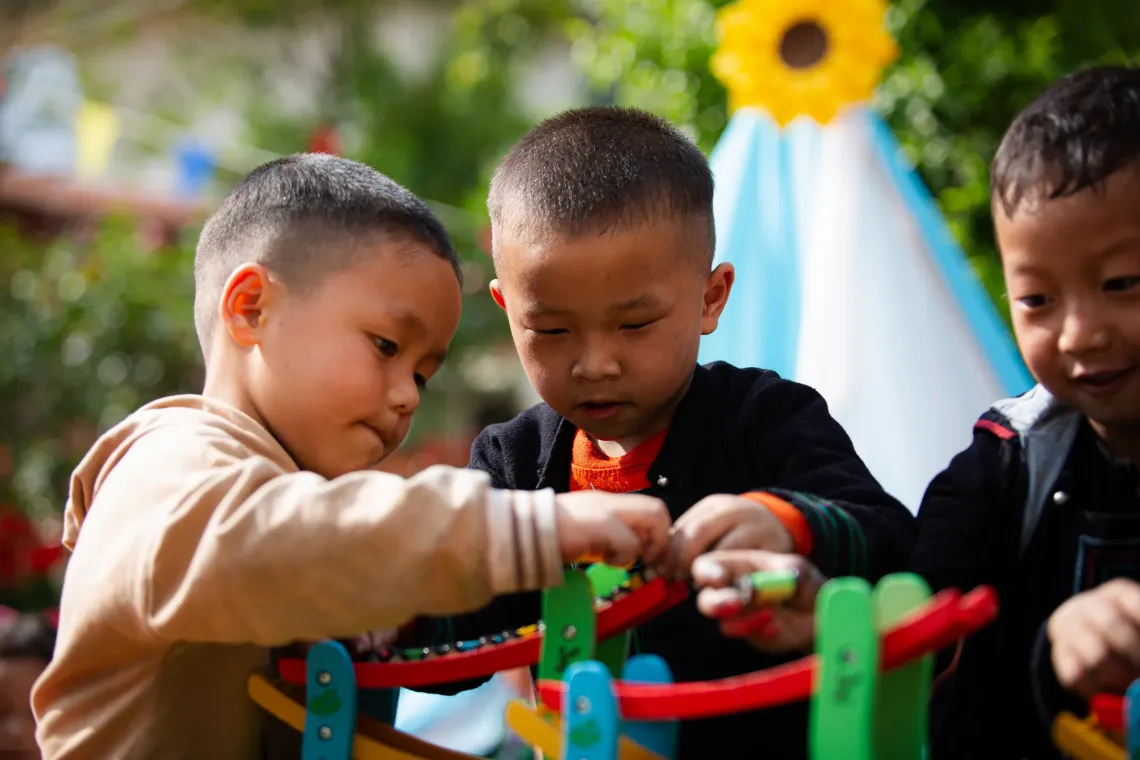
Students in Lo Pang preschool, in the Central Highlands province of Gia Lai, playing with their UNICEF-supported materials.   Students in Lo Pang preschool, in the Central Highlands province of Gia Lai, playing with their UNICEF-supported materials.
Truong Viet Hung, 2024 In 2018, the Prime Minister approved the Integrated Early Childhood Development (IECD) National Scheme, paving the way for nationwide implementation. Working with teachers, parents and the community, UNICEF has supported students to develop social-emotional skills by promoting play-based, child-centered learning activities, as part of this innovative model, as illustrated by Lo Pang preschool, in the Central Highlands province of Gia Lai, playing with their UNICEF-supported materials. In 2020, with UNICEF support, a roadmap was launched towards a new gender-responsive social emotional learning curriculum based on international standards with increased parental involvement in the development and well-being of their children.
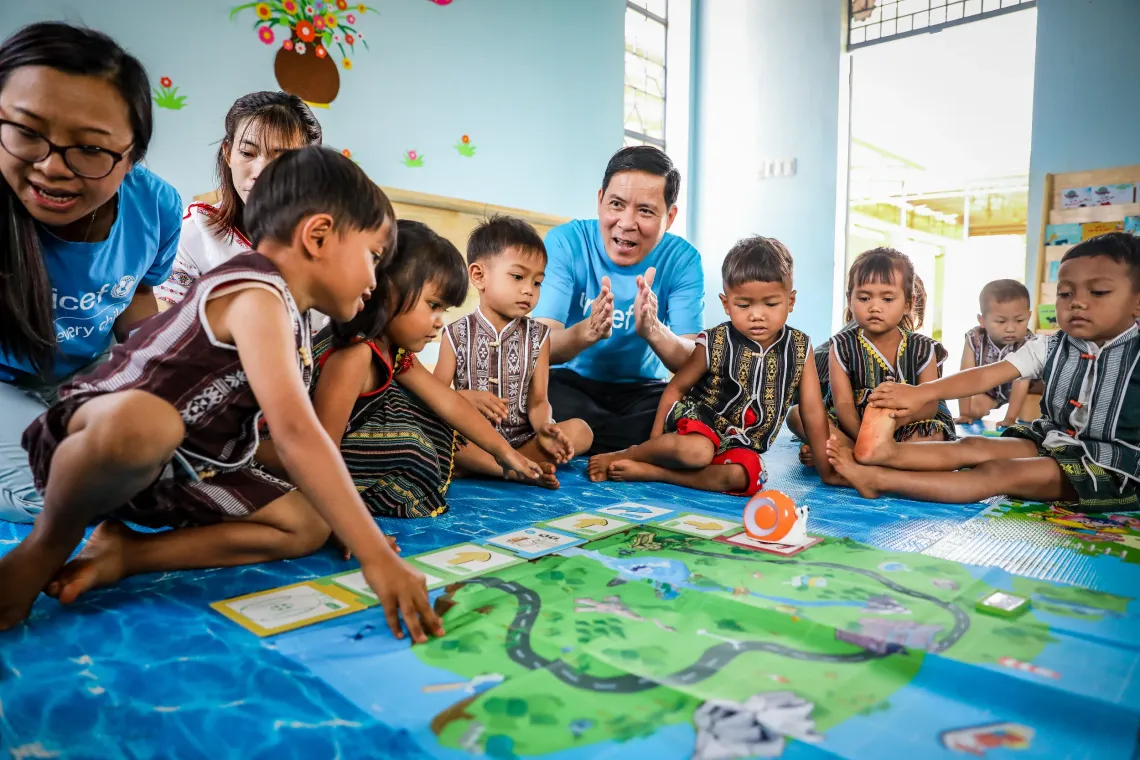
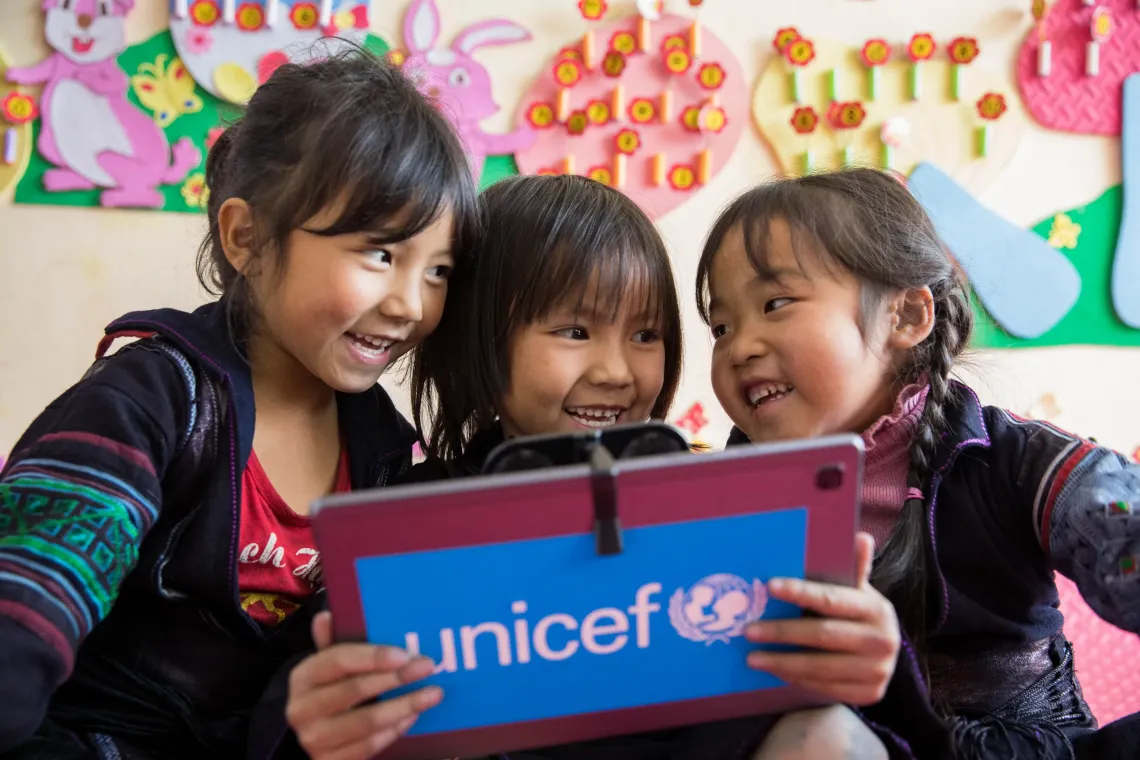
Hang Thi Do and her friends Ma Thi Co and Ma Thi Phing experiencing Augmented and Virtual Reality (AVR) technology introduced by UNICEF in 2020.  Hang Thi Do and her friends Ma Thi Co and Ma Thi Phing experiencing Augmented and Virtual Reality (AVR) technology introduced by UNICEF in 2020.
Vu Le Hoang, 2021 Unlocking the power of science, technology, engineering, and mathematics (STEM) education, students from Ham Rong pre-school in northern Lao Cai province tap into technology-driven education solutions in Viet Nam’s remote mountainous provinces. UNICEF is helping schools in remote areas provide access to STEM learning. Hang Thi Do and her friends Ma Thi Co and Ma Thi Phing experiencing Augmented and Virtual Reality (AVR) technology introduced by UNICEF in 2020.
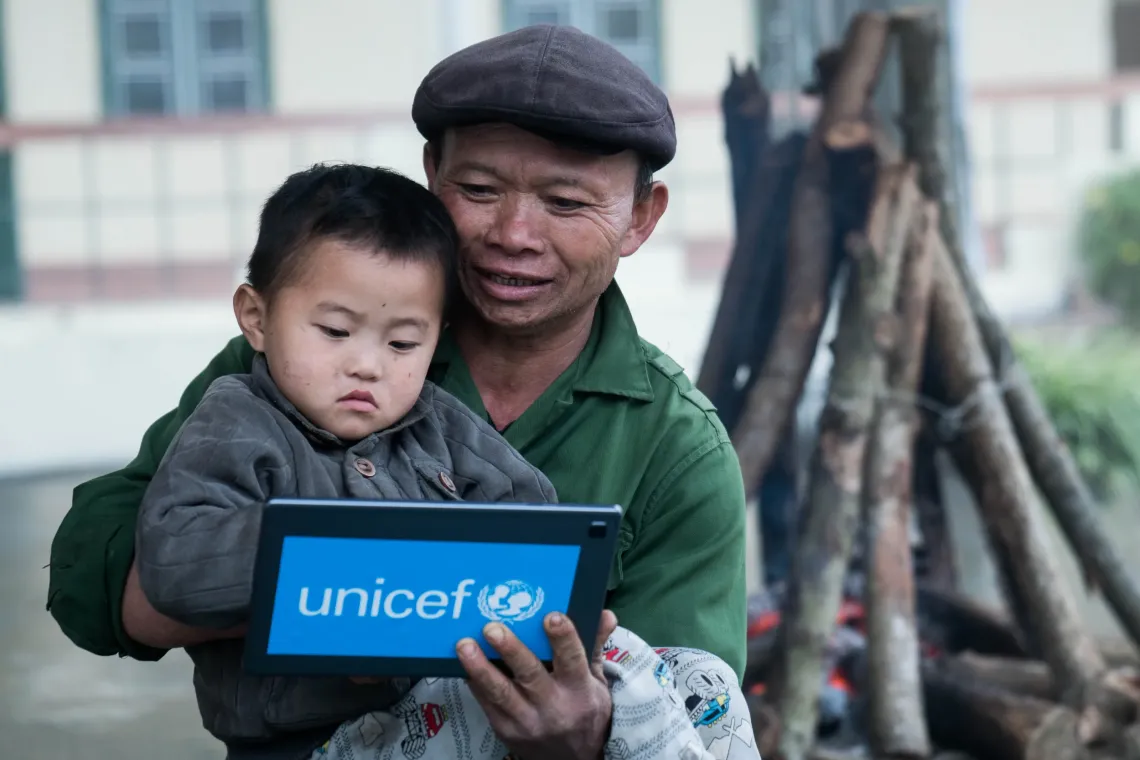
Giang A Sang and his grandfather Giang A Seng in Lao Cai experiencing Augmented and Virtual Reality (AVR) technology introduced by UNICEF in 2020.  Giang A Sang and his grandfather Giang A Seng in Lao Cai experiencing Augmented and Virtual Reality (AVR) technology introduced by UNICEF in 2020.
Vu Le Hoang, 2021 Unlocking the power of science, technology, engineering, and mathematics (STEM) education, students from Ham Rong pre-school in northern Lao Cai province tap into technology-driven education solutions in Viet Nam’s remote mountainous provinces. UNICEF is helping schools in remote areas provide access to STEM learning. Giang A Sang and his grandfather Giang A Seng in Lao Cai experiencing Augmented and Virtual Reality (AVR) technology introduced by UNICEF in 2020.
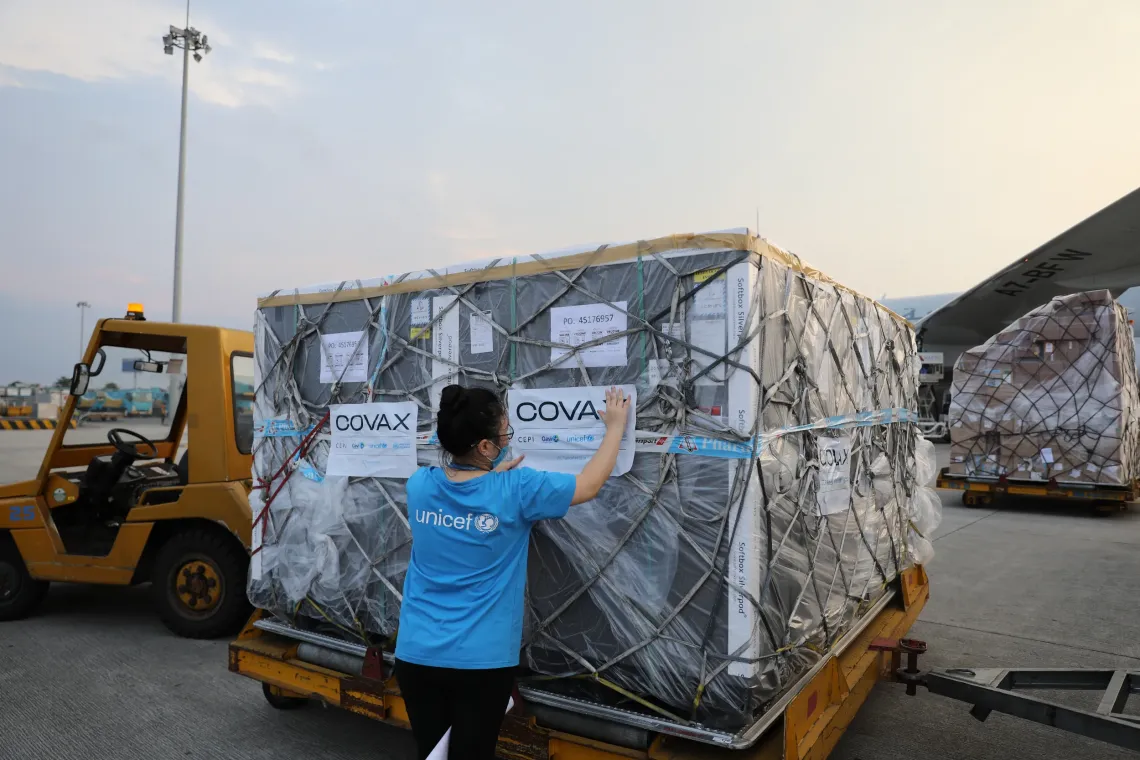
In the photos, vaccines arriving to Viet Nam in 2021 In the photos, vaccines arriving to Viet Nam in 2021
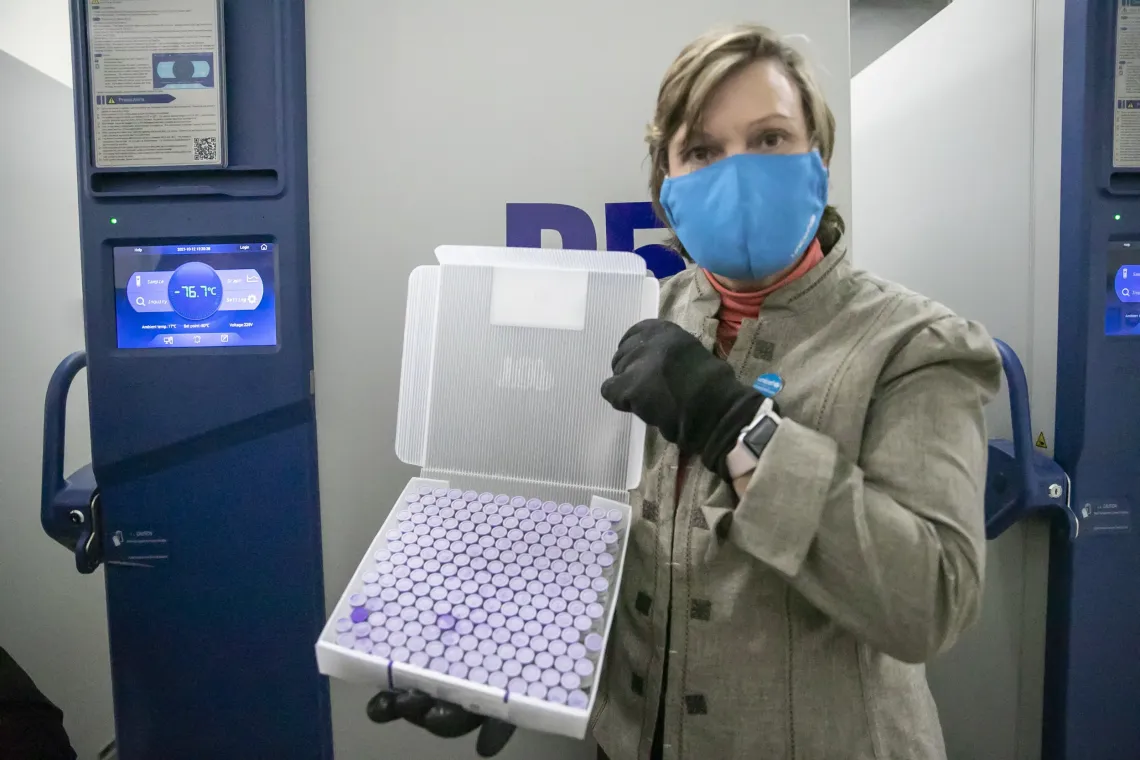
Truong Viet Hung, 2021 UNICEF played a critical role in supporting the response of the Government of Viet Nam to the COVID-19 pandemic. Coordinating COVAX efforts with the support of 27 donor governments, UNICEF helped deliver over 85 million vaccine doses and 200 million injection devices, strengthened cold chain systems, trained health workers, and supported mobile and home vaccination. In the photos, vaccines arriving to Viet Nam.
UNICEF Representative in Viet Nam, Rana Flowers, with a box of vaccines UNICEF Representative in Viet Nam, Rana Flowers, with a box of vaccines
Truong Viet Hung, 2021 UNICEF played a critical role in supporting the response of the Government of Viet Nam to the COVID-19 pandemic. Coordinating COVAX efforts with the support of 27 donor governments, UNICEF helped deliver over 85 million vaccine doses and 200 million injection devices, strengthened cold chain systems, trained health workers, and supported mobile and home vaccination. In the photo, former UNICEF Representative in Viet Nam, Rana Flowers, with a box of vaccines.
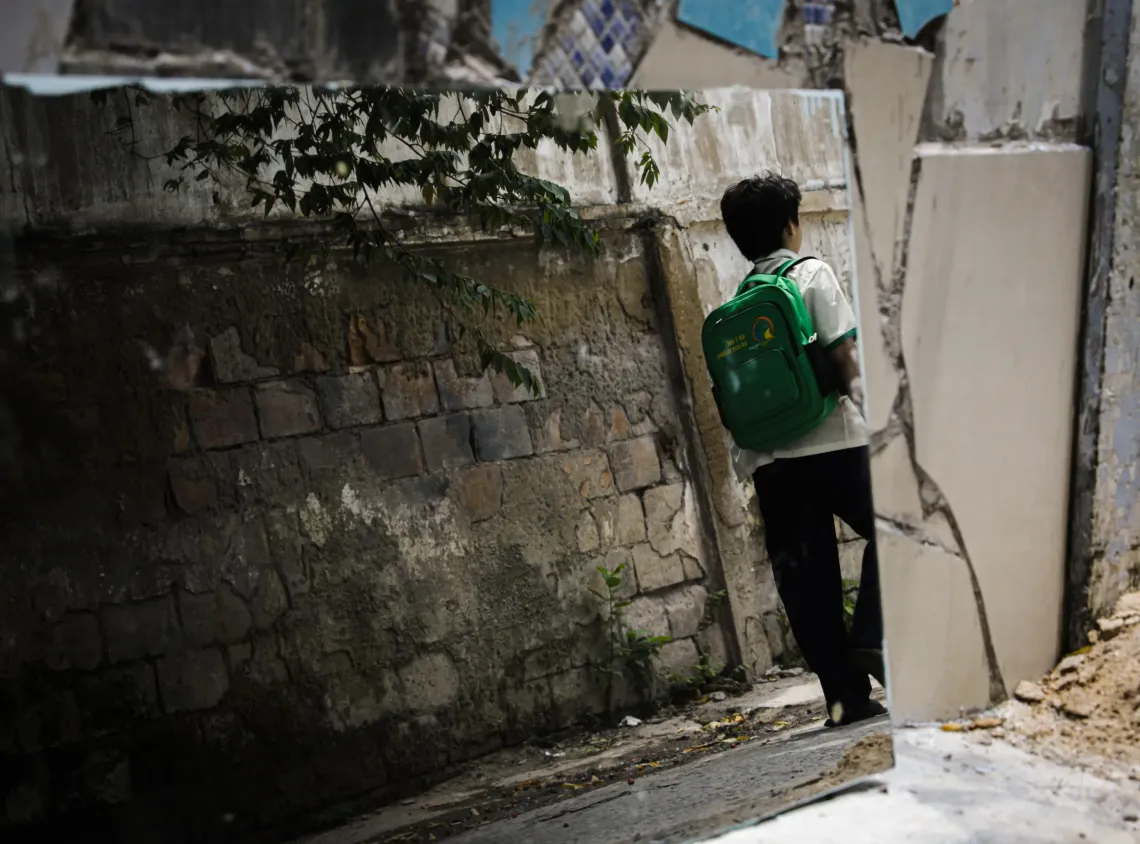
Tra Long walking on the street in Ho Chi Minh city Tra Long walking on the street in Ho Chi Minh city
Vu Le Hoang, 2022 Long used to skip school regularly and sell lottery tickets with his mother. This absence from the classroom continued until his mother was approached by UNICEF-supported Thao Dan Social Centre in Ho Chi Minh City. Thanks to the efforts of social workers at the centre, Long returned to school and is thriving in the classroom. UNICEF works with social centres across Viet Nam to help ensure every child has a supportive family environment, access to justice and protection from violence, abuse and exploitation.
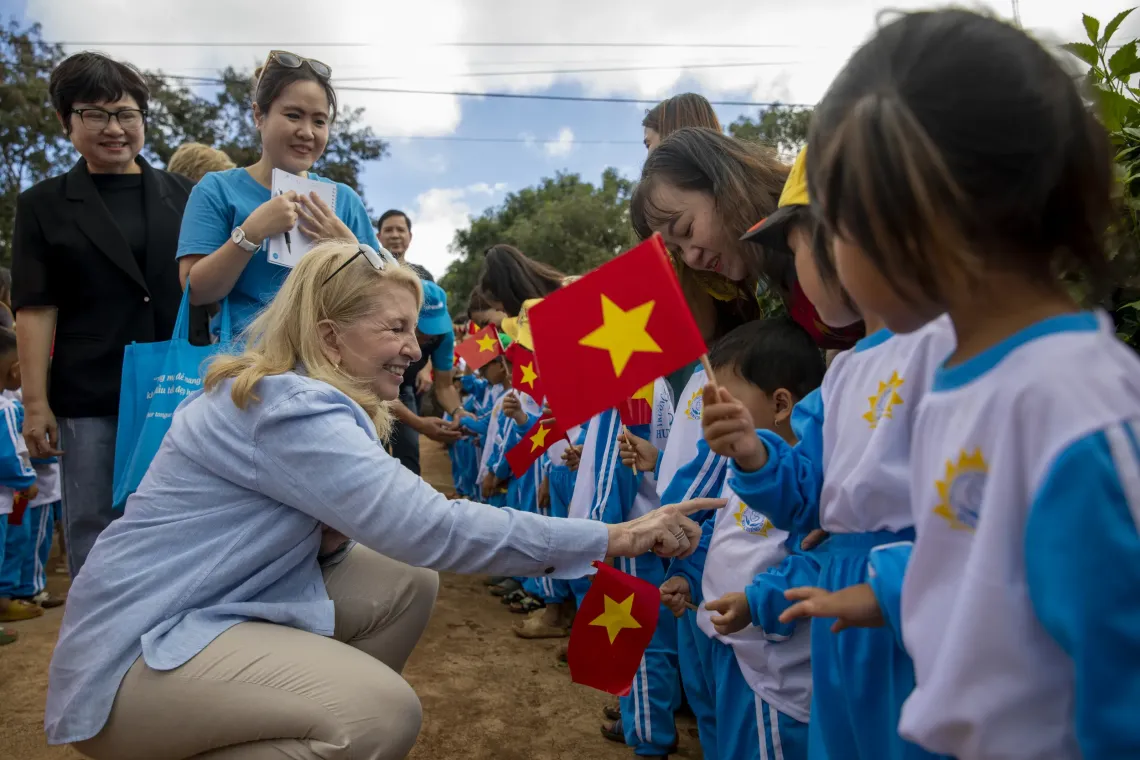
UNICEF Executive Director Catherine Russell visited Gia Lai, meeting children, parents, and partners implementing programmes supported by UNICEF UNICEF Executive Director Catherine Russell visited Gia Lai, meeting children, parents, and partners implementing programmes supported by UNICEF
Truong Viet Hung, 2022 UNICEF Executive Director Catherine Russell visited Gia Lai, meeting children, parents, and partners implementing programmes supported by UNICEF. Her visit focused on early childhood education activities.
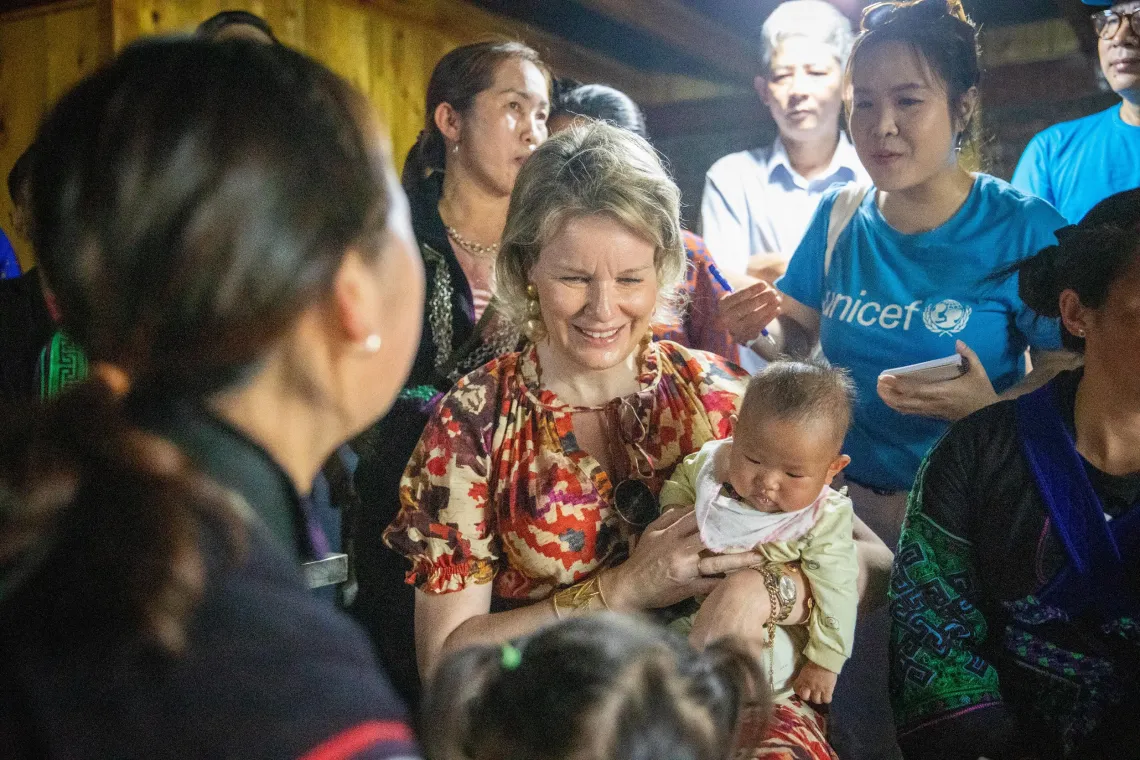
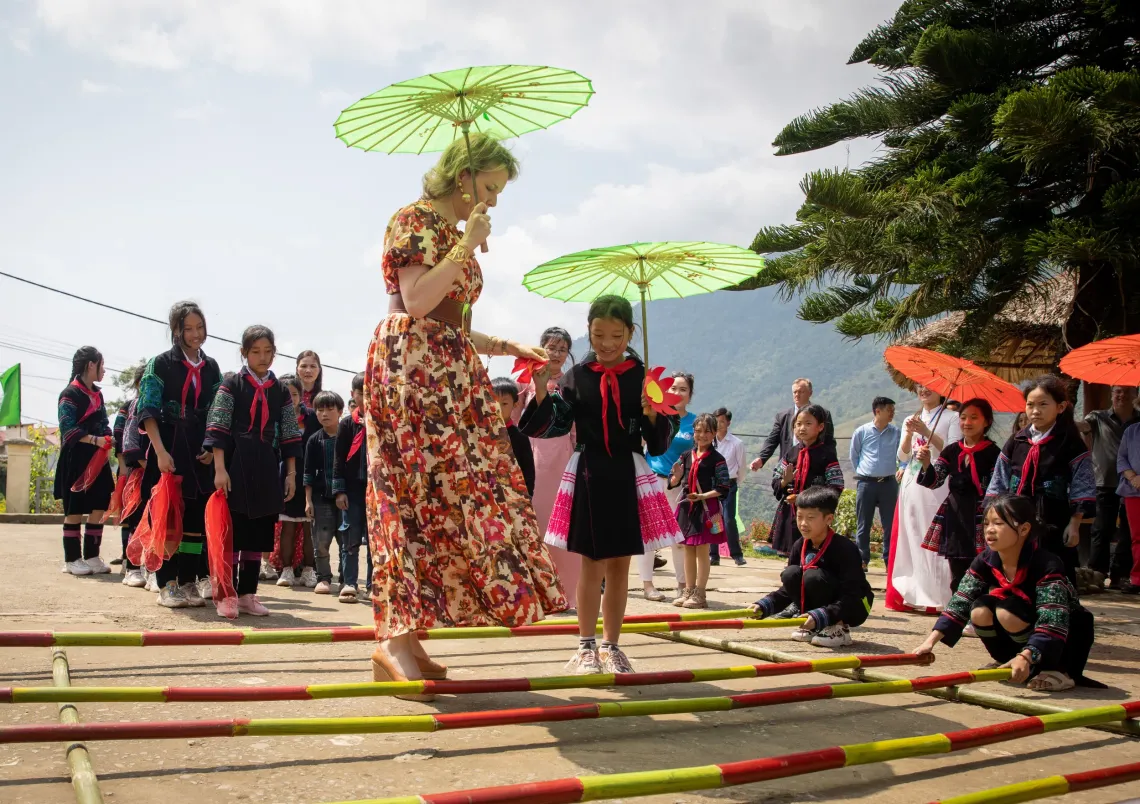
Her Majesty Queen Mathilde of Belgium visited Viet Nam in 2023 as Honorary President of UNICEF Belgium Her Majesty Queen Mathilde of Belgium visited Viet Nam in 2023 as Honorary President of UNICEF Belgium
Truong Viet Hung, 2023 Her Majesty Queen Mathilde of Belgium visited Viet Nam in 2023 as Honorary President of UNICEF Belgium. During her three-day visit to Ha Noi and Lao Cai province, she learned how UNICEF and the Government of Viet Nam work to close equity gaps and expand opportunities for the most vulnerable children. The Queen met government representatives, children, teachers, parents, and health workers, learning first-hand about UNICEF’s cooperation and Viet Nam’s progress for every child.
Her Majesty Queen Mathilde of Belgium visited Viet Nam in 2023 as Honorary President of UNICEF Belgium. Her Majesty Queen Mathilde of Belgium visited Viet Nam in 2023 as Honorary President of UNICEF Belgium.
Truong Viet Hung, 2023 Her Majesty Queen Mathilde of Belgium visited Viet Nam in 2023 as Honorary President of UNICEF Belgium. During her three-day visit to Hanoi and Lao Cai province, she learned how UNICEF and the Government of Viet Nam work to close equity gaps and expand opportunities for the most vulnerable children. The Queen met government representatives, children, teachers, parents, and health workers, learning first-hand about UNICEF’s cooperation and Viet Nam’s progress for every child.
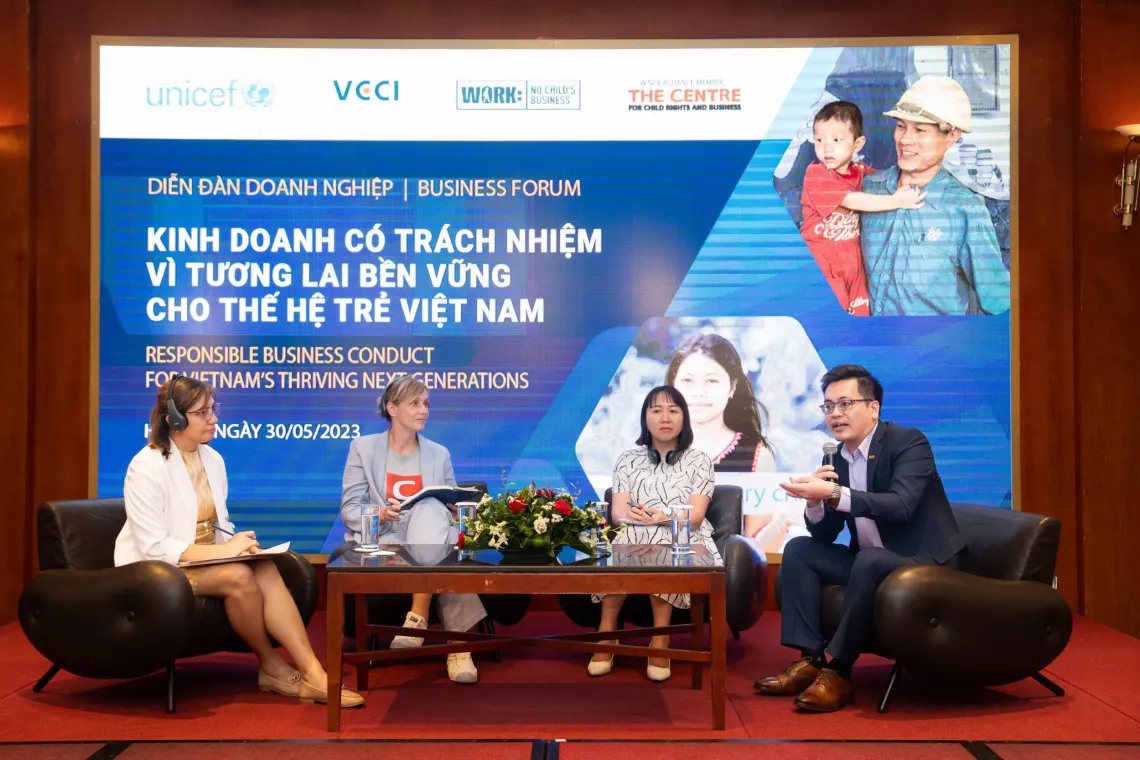
the Child Rights and Business Forum: Responsible Businesses for Viet Nam’s Thriving Next Generation held in 2023 the Child Rights and Business Forum: Responsible Businesses for Viet Nam’s Thriving Next Generation held in 2023
UNICEF Viet Nam, 2023 UNICEF is active in bringing the world of business to the table to champion child rights. Since 2017 it has guided companies on the full range of actions they can take in the workplace, marketplace and community to respect and support children's rights. Initiatives include the Child Rights and Business Forum: Responsible Businesses for Viet Nam’s Thriving Next Generation held in 2023, while 215 companies championed UNICEF Child-focused Sustainable Business in 2024 to prevent child labour and promote child-responsive Environmental, Social, and Governance guidelines in step with family-friendly workplace policies.
Children are on the frontlines of the climate crisis. In response, UNICEF is working with Viet Nam to help shape disaster-risk reduction and response plans with a focus on children. UNICEF’s work includes climate awareness and preparedness in schools, building climate-resilient services, child-led campaigns, and humanitarian responses in support of government emergency plans.  Children are on the frontlines of the climate crisis. In response, UNICEF is working with Viet Nam to help shape disaster-risk reduction and response plans with a focus on children. UNICEF’s work includes climate awareness and preparedness in schools, building climate-resilient services, child-led campaigns, and humanitarian responses in support of government emergency plans.
Truong Viet Hung, 2023 Children are on the frontlines of the climate crisis. In response, UNICEF is working with Viet Nam to help shape disaster-risk reduction and response plans with a focus on children. UNICEF’s work includes climate awareness and preparedness in schools, building climate-resilient services, child-led campaigns, and humanitarian responses in support of government emergency plans.
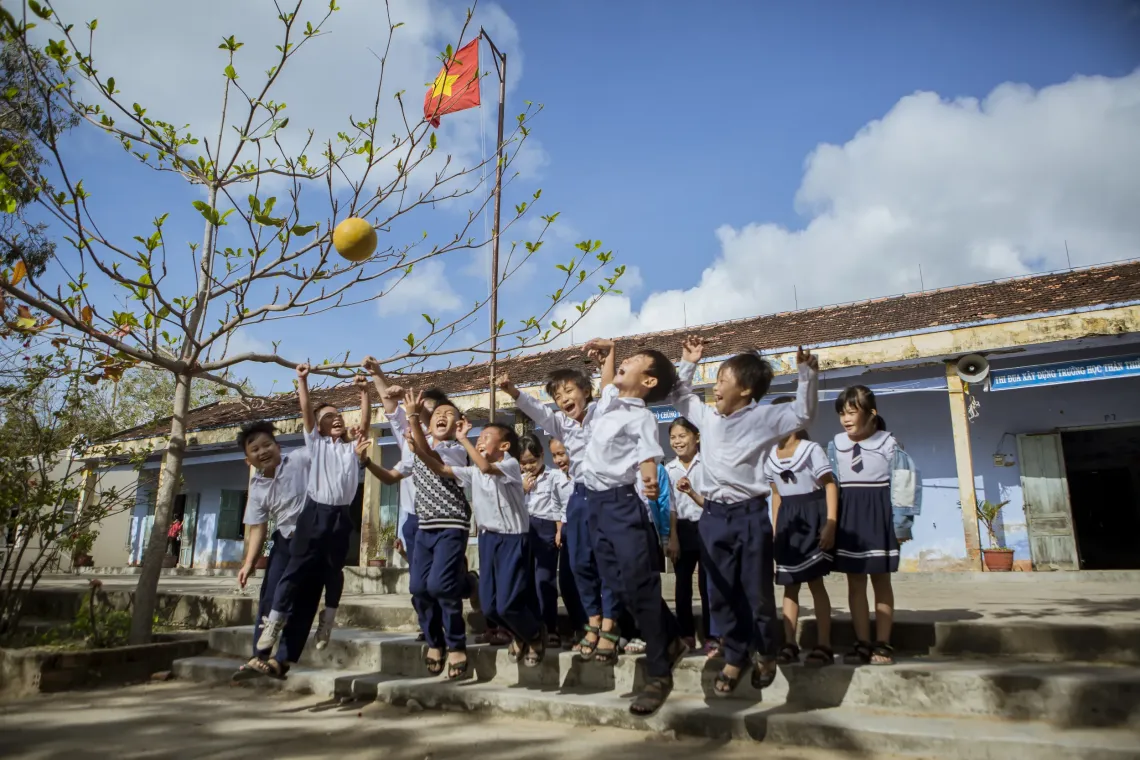
Children play with a ball at Vinh Hy Primary School, Ninh Thuan Province (now Khanh Hoa province) Children play with a ball at Vinh Hy Primary School, Ninh Thuan Province (now Khanh Hoa province)
Truong Viet Hung, 2018 Children play with a ball at Vinh Hy Primary School, Ninh Thuan Province (now Khanh Hoa province) — a powerful reminder that the right to play nurtures both physical and mental well-being. Recognizing the critical importance of mental health, UNICEF collaborated with the Ministry of Health in 2021 to develop Viet Nam’s first National Scheme on Mental Healthcare System Strengthening (2024–2030).
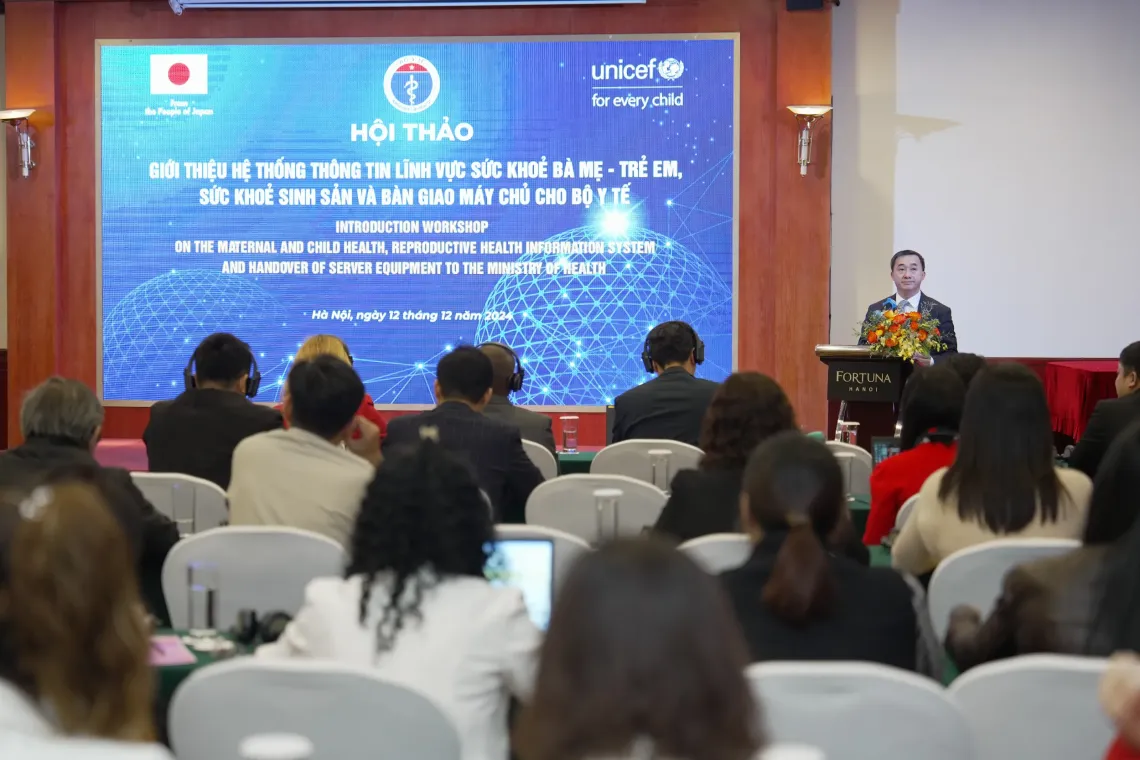
Deputy Minister of Health Tran Van Thuan, in 2024, helped launch the Ministry of Health’s initiative - the Digital Maternal and Child Health and Reproductive Health Information System (e-MCH) - with support from UNICEF. Deputy Minister of Health Tran Van Thuan, in 2024, helped launch the Ministry of Health’s initiative - the Digital Maternal and Child Health and Reproductive Health Information System (e-MCH) - with support from UNICEF.
UNICEF Viet Nam, 2024 To usher Viet Nam’s health system for the 21st century and beyond, Deputy Minister of Health Tran Van Thuan, in 2024, helped launch the Ministry of Health’s initiative - the Digital Maternal and Child Health and Reproductive Health Information System (e-MCH) - with support from UNICEF. This digital transformation connects essential maternal, child and reproductive health data to improve healthcare services, especially for mothers and children.
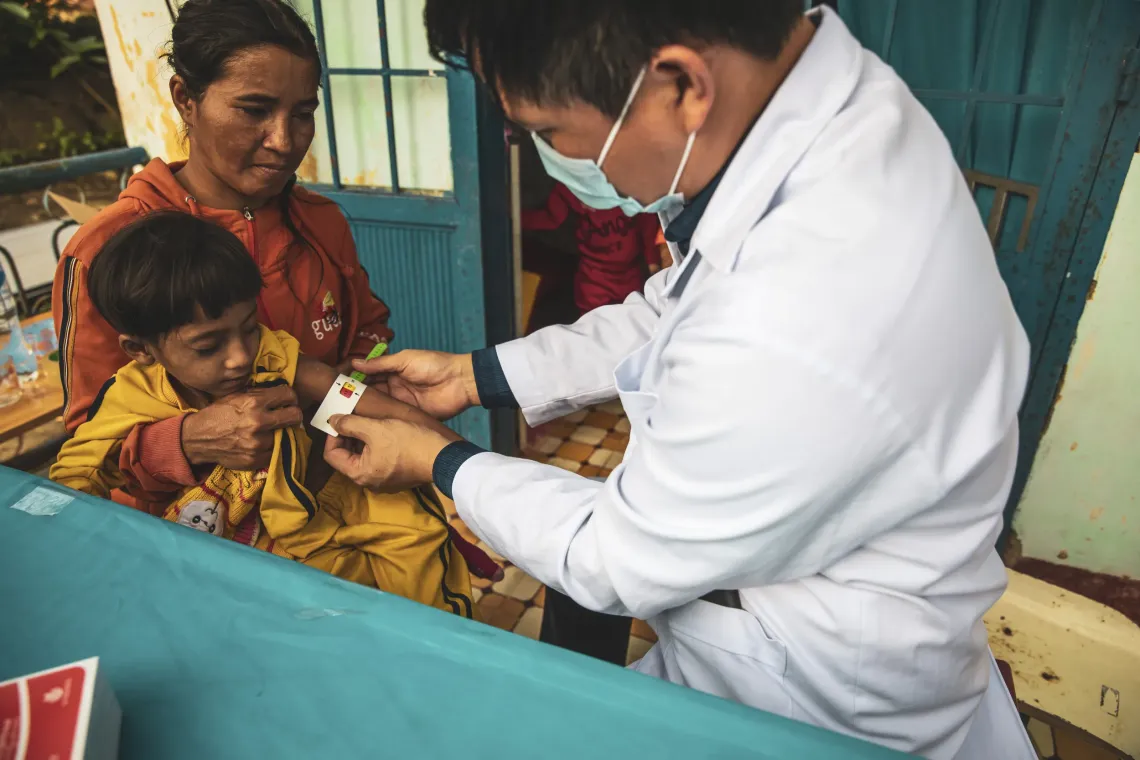
UNICEF is supporting local health workers to enhance nutrition screening efforts and deliver therapeutic products to children affected by SAM. UNICEF is supporting local health workers to enhance nutrition screening efforts and deliver therapeutic products to children affected by SAM.
Truong Viet Hung, 2021 In 2024, the Ministry of Health issued Circular No. 30/2024/TT-BYT, stipulating the list and content of basic healthcare service packages to be delivered by commune, ward, and township health stations. The circular provides guidance on the implementation and funding of community-based health and nutrition service packages for children suffering from severe acute malnutrition (SAM). This marks a significant step forward in scaling up SAM prevention and treatment —services that are currently not covered by health insurance. UNICEF is supporting local health workers to enhance nutrition screening efforts and deliver therapeutic products to children affected by SAM.
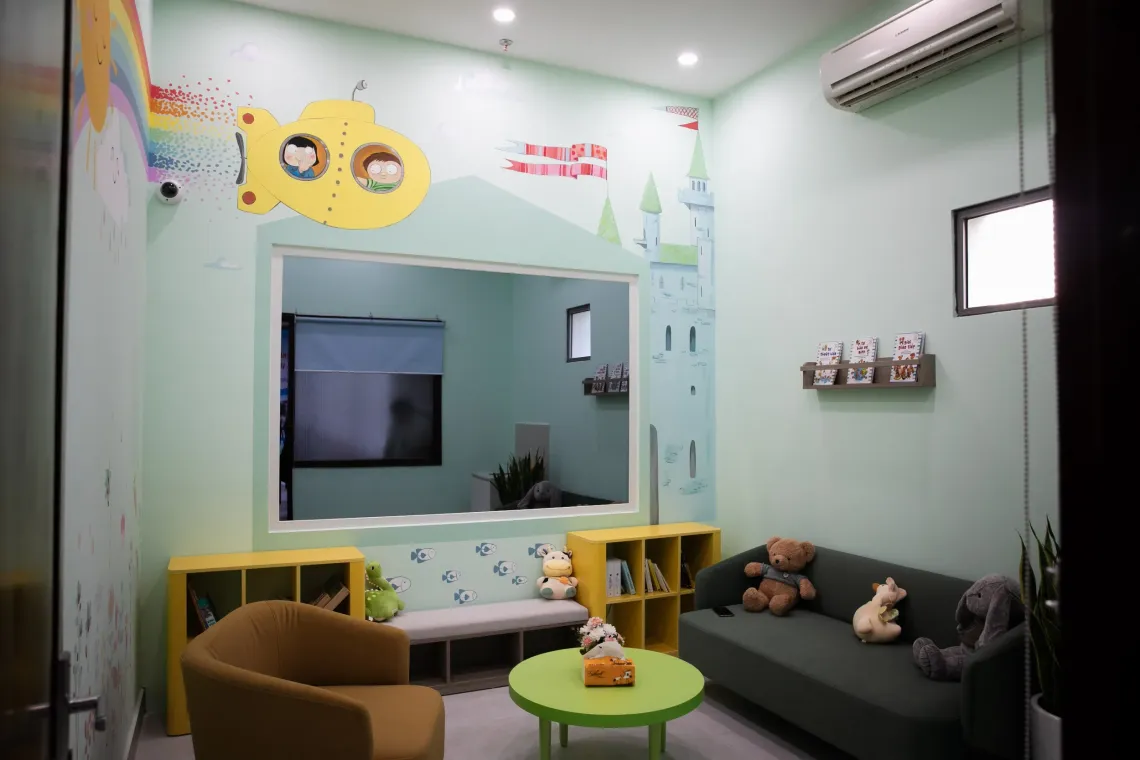
UNICEF and the National Children’s Hospital launched Vietnam’s first Hospital Child Protection Committee, offering integrated care and protection services for children affected by violence and abuse. UNICEF and the National Children’s Hospital launched Vietnam’s first Hospital Child Protection Committee, offering integrated care and protection services for children affected by violence and abuse.
Vu Le Hoang, 2024 A significant milestone in child protection was achieved in 2024, when UNICEF and the National Children’s Hospital launched Viet Nam’s first Hospital Child Protection Committee, offering integrated care and protection services for children affected by violence and abuse.
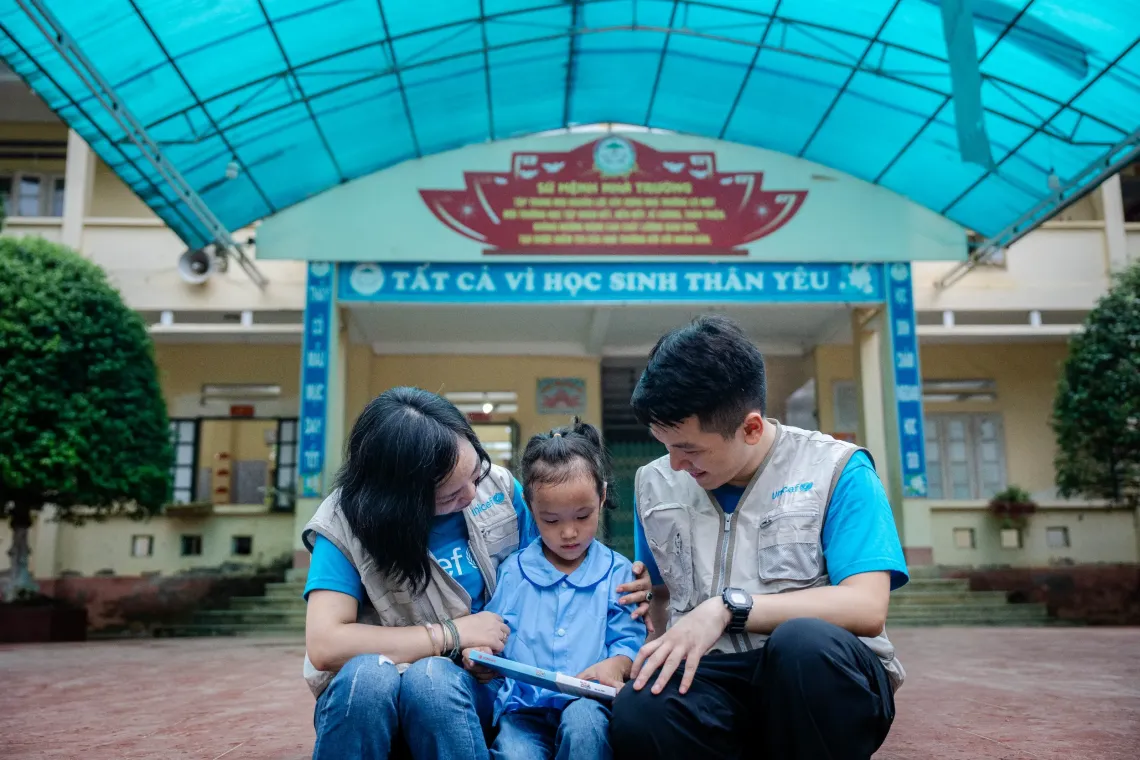
Hoang Ngoc Lan is pictured with UNICEF staff a few days after Typhoon Yagi destroyed her village, burying her home and taking the lives of her parents and brothers in September 2024. Hoang Ngoc Lan is pictured with UNICEF staff a few days after Typhoon Yagi destroyed her village, burying her home and taking the lives of her parents and brothers in September 2024.
Le Lijour, 2024 Hope after the storm: Hoang Ngoc Lan is pictured with UNICEF staff a few days after Typhoon Yagi destroyed her village, burying her home and taking the lives of her parents and brothers in September 2024. Amid the heartbreak, UNICEF teams were there to provide warm hugs, reassurance, and life-saving support, helping children like Lan find safety, care, and hope after an unimaginable loss. UNICEF’s response teams were on the ground just days after the typhoon struck and worked with the Government of Viet Nam and partners to deliver humanitarian assistance in 11 of the hardest-hit northern provinces. Our emergency work reached almost 230,000 people, including more than 5,000 families receiving humanitarian cash transfers.
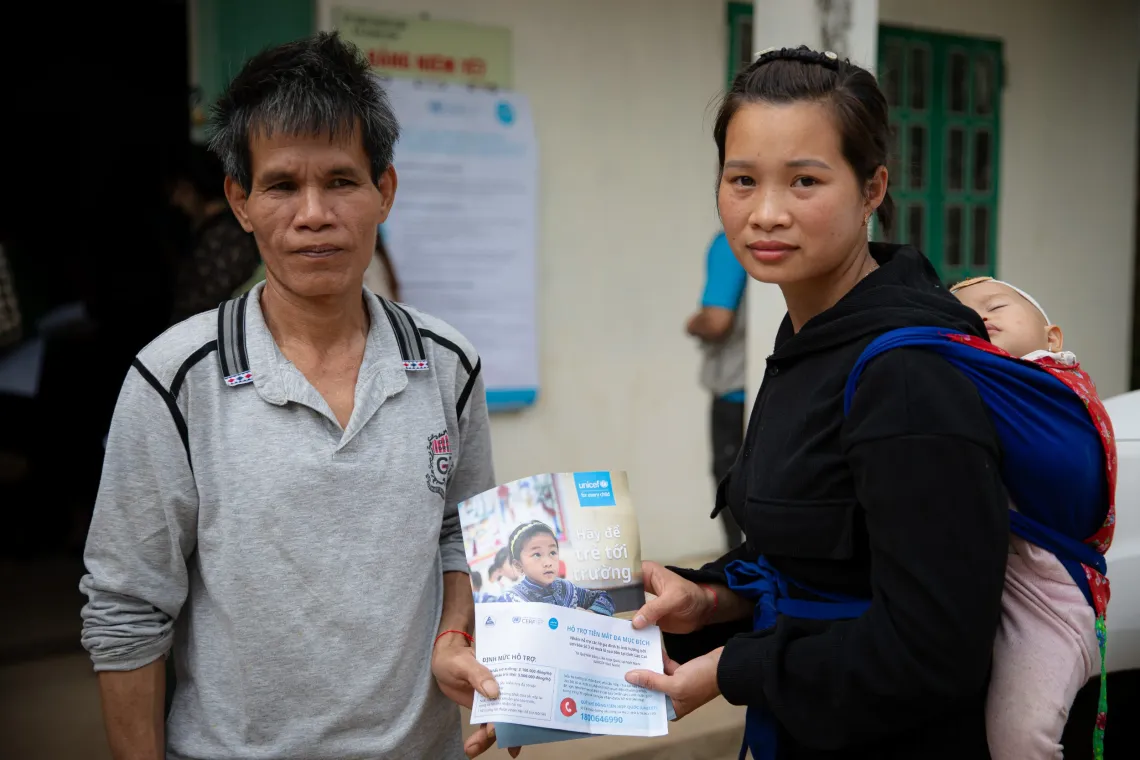
Pictured left is Hoang Van Trinh, with Co Thi Van and one-year-old Hoang Thi Quynh Nhu in Lao Cai province Pictured left is Hoang Van Trinh, with Co Thi Van and one-year-old Hoang Thi Quynh Nhu in Lao Cai province
Vu Le Hoang, 2024 Humanitarian cash transfers supported by UNICEF reached families affected by Typhoon Yagi. Pictured is Hoang Van Trinh, with Co Thi Van and one-year-old Hoang Thi Quynh Nhu in Lao Cai province. "During the typhoon, part of our house was destroyed. I will use this money to buy a new education kit for my Grade 3 child, who lost all his books in the flood," Van said.
Giang Thi Ly (left) and Ma Thi Do, at Sin Cheng semi-boarding lower secondary school Giang Thi Ly (left) and Ma Thi Do, at Sin Cheng semi-boarding lower secondary school
Truong Viet Hung, 2019 In 2025, Viet Nam advanced more inclusive and equitable education for children like Giang Thi Ly (left) and Ma Thi Do, at Sin Cheng semi-boarding lower secondary school. Enabled by strong national policy momentum, including recent resolutions on digital transformation and breakthroughs in education and training, and provisions under the Law on Education, children across the country can now access expanded universal preschool and tuition-free general education from preschool to upper-secondary level. These reforms are improving learning outcomes and accelerating digital transformation in alignment with Viet Nam’s commitments under the Convention on the Rights of the Child and Sustainable Development Goal 4.
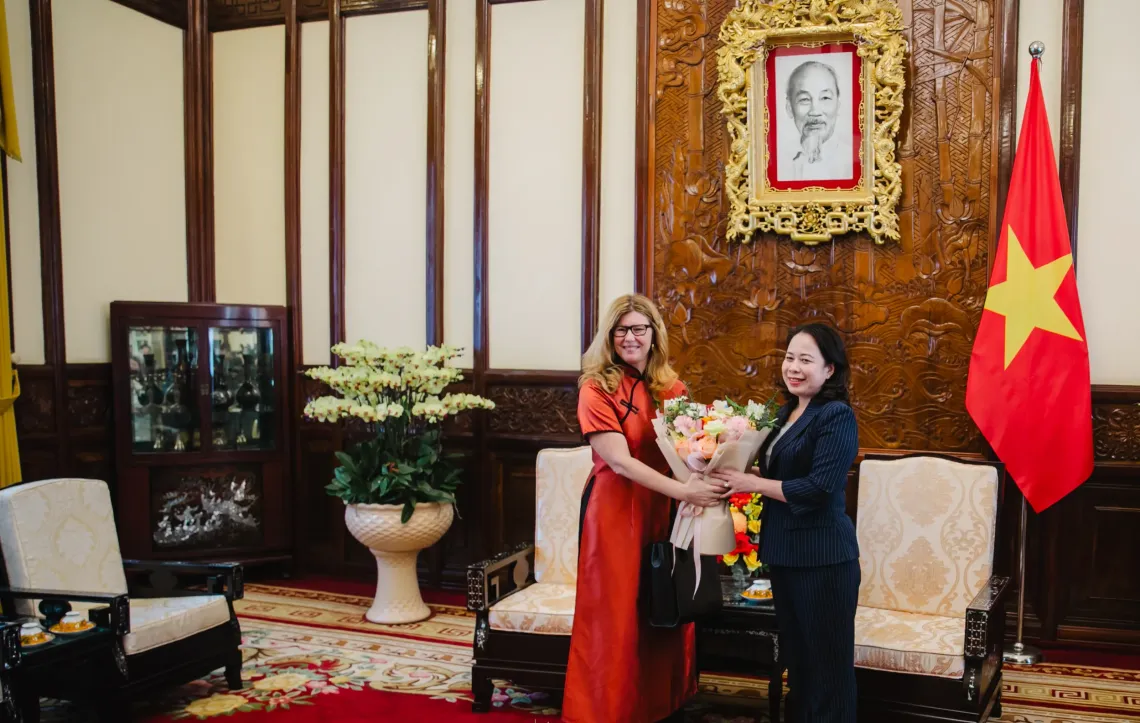
Silvia Danailov, UNICEF Viet Nam Representative, met with State Vice President Vo Thi Anh Xuan to discuss strengthening the partnership to advance children’s rights in Viet Nam.  Silvia Danailov, UNICEF Viet Nam Representative, met with State Vice President Vo Thi Anh Xuan to discuss strengthening the partnership to advance children’s rights in Viet Nam.
UNICEF Viet Nam, 2025 Silvia Danailov, UNICEF Viet Nam Representative, met with State Vice President Vo Thi Anh Xuan to discuss strengthening the partnership to advance children’s rights in Viet Nam. As 2025 marks 50 years of UNICEF’s cooperation and 35 years since Viet Nam ratified the Convention on the Rights of the Child, this dialogue took place in a milestone year — celebrating 80 years of Viet Nam’s independence and the founding of the United Nations. These anniversaries remind us of the enduring power of partnership and shared commitment to building a future where every child enjoys every right
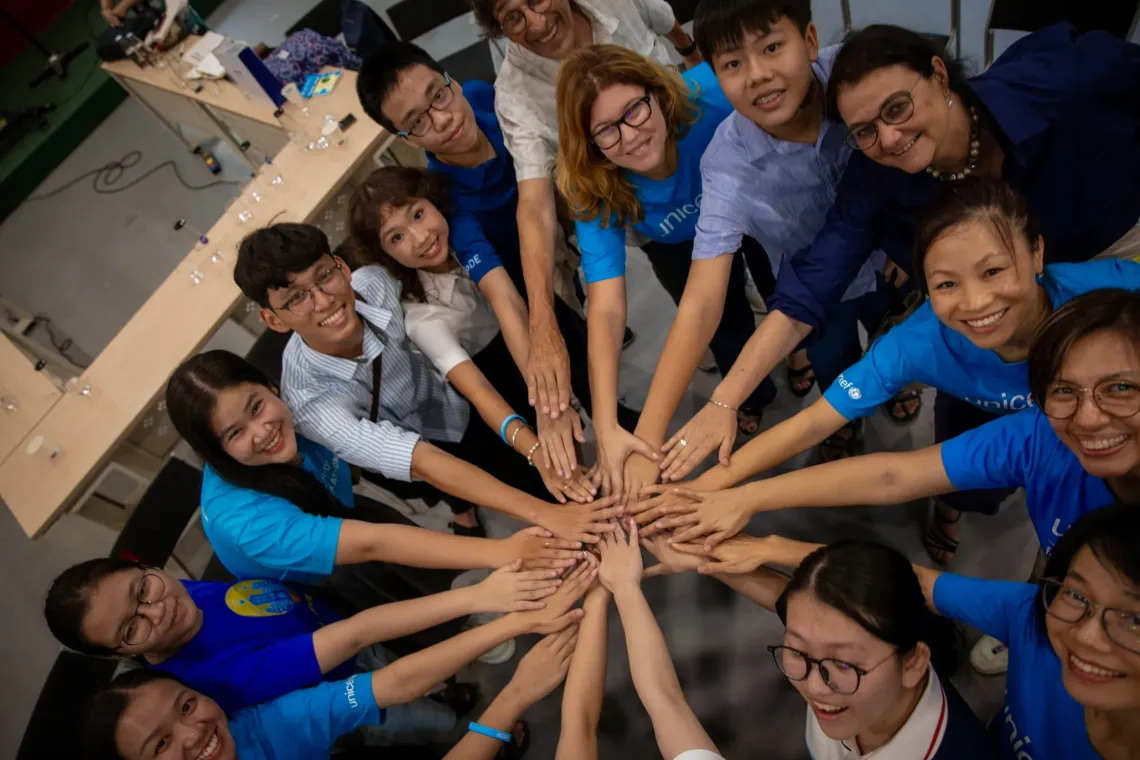
Together with the Government of Viet Nam, youth, children, and partners across all sectors, UNICEF renews its promise to every child — until the child rights agenda is fully realized. Together with the Government of Viet Nam, youth, children, and partners across all sectors, UNICEF renews its promise to every child — until the child rights agenda is fully realized.
UNICEF Viet Nam, 2025 In the heart of a rising Viet Nam, every child holds the promise of a brighter tomorrow. As we celebrate the strides made for children's rights, we remain steadfast in our mission: to ensure that no child is left behind. Together with the Government of Viet Nam, youth, children, and partners across all sectors, UNICEF renews its promise to every child — until the child rights agenda is fully realized. The journey with our partners continues, and the commitment endures.

Find more information

A journey for every child in Viet Nam

50 years of partnership for Viet Nam’s children and 35 years since Viet Nam ratified the Convention on the Rights of the Child

Learn more

50 years of progress for children in Viet Nam

Opportunities and investments for future generations

Read now