When home feels safe again: A family’s return to hope in Vilniansk
In April 2026 the five‑storey block where Olena lives with her two sons — 15‑year‑old Nazar and nine‑year‑old Myron was damaged. The roof above the room where the children were staying was damaged. Both boys suffered physical and psychological injuries.

- Українська
- English
“She’s actually just Owl Nastia,” smiles nine‑year‑old Myron, pointing to his drawing of a bird in a blue dress. Nearby, the family pet — a cat called Farhad — he has been with the family since before Myron was born. On the shelf lies a large encyclopaedia Myron recently read almost within two weeks, and beside it are his exercise books and games.
This is an ordinary day today in the family flat in Vilniansk. A few months ago things were very different.
In April 2026 the five‑storey block where Olena lives with her two sons — 15‑year‑old Nazar and nine‑year‑old Myron was damaged. The roof above the room where the children were staying was damaged. Both boys suffered physical and psychological injuries.
“We’re a normal, close family. I’m proud of my children, probably like every mother. They are honest, fair, kind and able to empathise with other people’s suffering. Until 2022 we lived in a small, cosy town. After the full‑scale invasion everything changed, and life split into before hit and after. We are still under stress, constantly afraid. But the support of relatives and those close to us helps,” says Olena
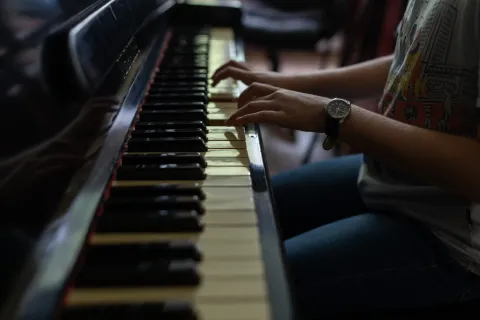
Despite what they have been through, Olena tries to preserve a normal life for her sons as much as possible. She works as an accountant in the Children’s Services. The boys are currently on school holidays, and in the evenings the family eat together, go for walks in the park when the security situation allows, watch films and study. Myron reads books, enjoys modelling and drawing, while his elder brother Nazar attends a theatre club and writes music.
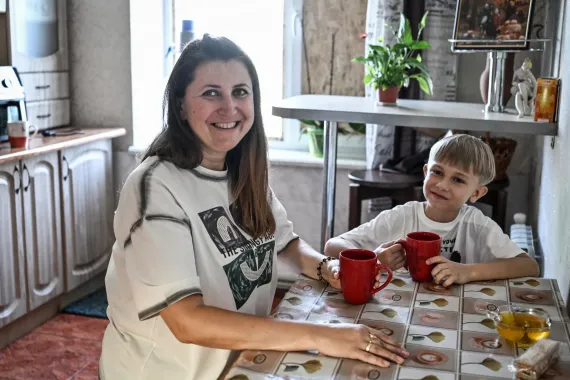

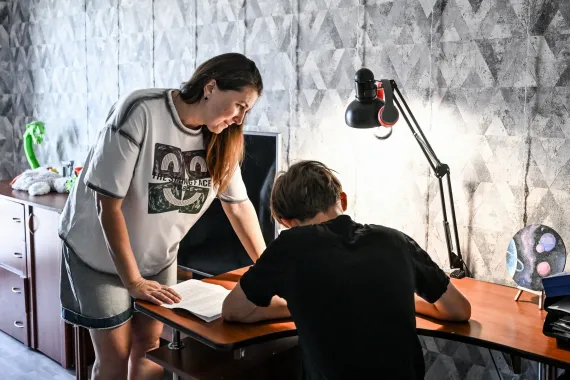


Immediately after the strike the family began receiving comprehensive support from UNICEF and partner NGO Responsible Citizens. The family was given cash assistance as well as psychological support and case management. Olena today singles out the psychological help as one of the most important.
“After what happened, many people helped our family. The children particularly felt this support. The financial assistance is very important for our family. Psychologists from the NGO also began to visit us. They taught the children how to calm down, how to gain control when they are scared. Now my younger son even reminds me which exercises we need to do to regain control over our lives. It really helps both children and adults,” she explains.
Olena is convinced there is no shame in asking for such help, especially when it concerns children.
“Material support is important, but psychological help is no less necessary. If you have the opportunity to see a psychologist, don’t think it’s unnecessary. And know that whatever happens, you must not lose heart,” she says.
The mother is even considering a complete change of profession now — leaving accounting to train as a psychologist. Olena says she has especially felt the desire to move towards her dreams and to be a motivator for her sons, showing by example that it is never too late to learn and that one should always follow one’s heart.


Despite everything they have endured, the family try to give the children a happy childhood: the boys animatedly discuss their favourite books, make crafts with a 3D pen and practise acting. Myron is happy to introduce visitors to Farhad the cat, show his creations and talk about the friends he likes to play with.
“I’m moving up to Year 4. I have best friends — the twins Timur and Rinat. They live on our street and we play different games together. At first it was hard to tell them apart, but now it’s not a problem. I like making crafts with my hands and reading books. I’ve already read all the books assigned for the summer. My favourite book is this encyclopaedia with various scientific facts about people and animals,” Myron eagerly shares.
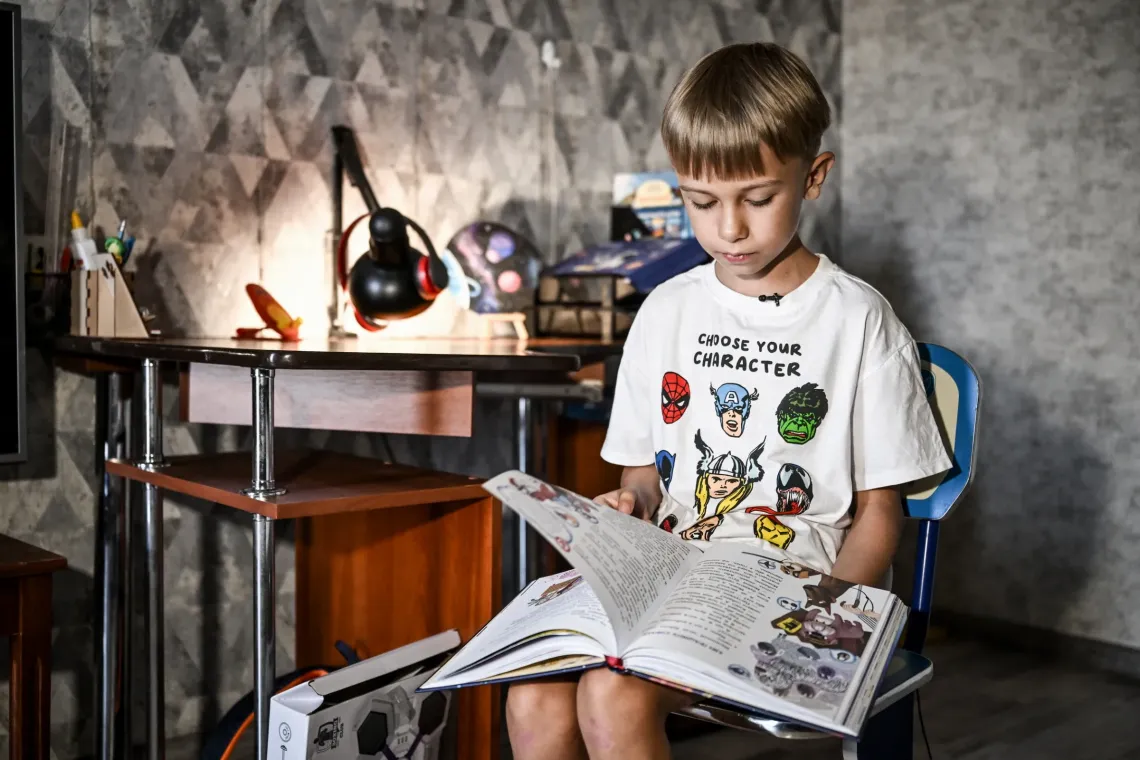
He also says that, like his older brother, he would like to connect his life with acting and hopes to work in theatre. When we ask him about his biggest dream, the boy answers instantly: he simply dreams of the war ending.
With UNICEF’s support, a comprehensive programme of assistance is being implemented for families with children affected by shelling, which includes cash support, case management, psychological assistance and other social services. Since the start of 2026, 231 children from frontline areas in Donetsk, Dnipropetrovsk and Zaporizhzhia regions have sustained physical and psychological injuries as a result of the war.