War deprives young people of hope for future in Ukraine
After living through years of conflict in Ukraine, 18-year-old Daryna, who lives with a disability, feels her future is as uncertain as ever.
- Українська
- English
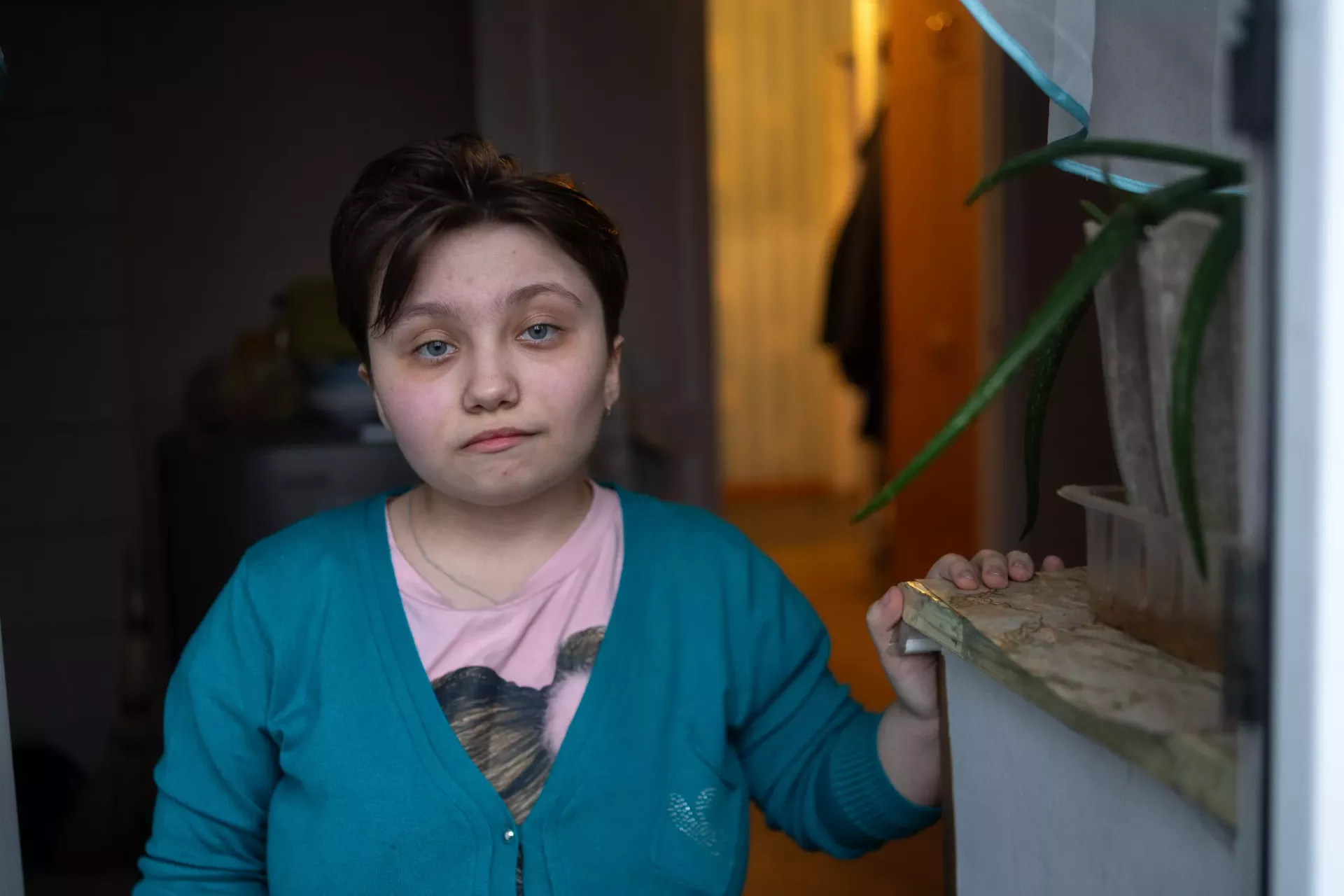
A Christmas cactus on Daryna’s windowsill has finally begun to bloom. In the small studio apartment this 18-year-old shares with her guardians, its flowers bring a wave of joy amid challenging times. Daryna has fled the war in Ukraine four times already.
“And it’s probably not for the last time,” she says, sadly.
“The shelling has started here too, and we’ll have to leave again. I don’t know what tomorrow will bring or where we’ll be. I’ll be sad to leave these flowers behind.”

Years of war have caused Daryna to expect the worst. She is originally from Zolote, a mining town in eastern Ukraine that has been caught up in conflict since 2014. After the full-scale war broke out in 2022, fighting left the town ruined and uninhabitable.
Daryna was born with a congenital illness and lives with a disability. She has been raised by her guardians, Borys and Natalia, amid a devastating war.
"I had plans for the future. But the war ruined everything. Now, I have no plans at all. You see, the future just… doesn’t exist.”
“It was hard for me emotionally”
Daryna does not remember much about 24 February 2022. To her, it was just another day in Zolote, where shelling had become routine.
“They were always shooting at us, and I had grown used to it,” she recalls. “My school was destroyed in 2015, then rebuilt, and I returned. But there were only five students in a two-story building. I sat alone in my classroom. It was so hard – being alone all the time, with no one to talk to, no one to play with during recess.”
When Daryna’s father died of a heart attack and her mother turned to alcohol, Borys and Natalia – her uncle and aunt – took her in, giving her a sense of stability.
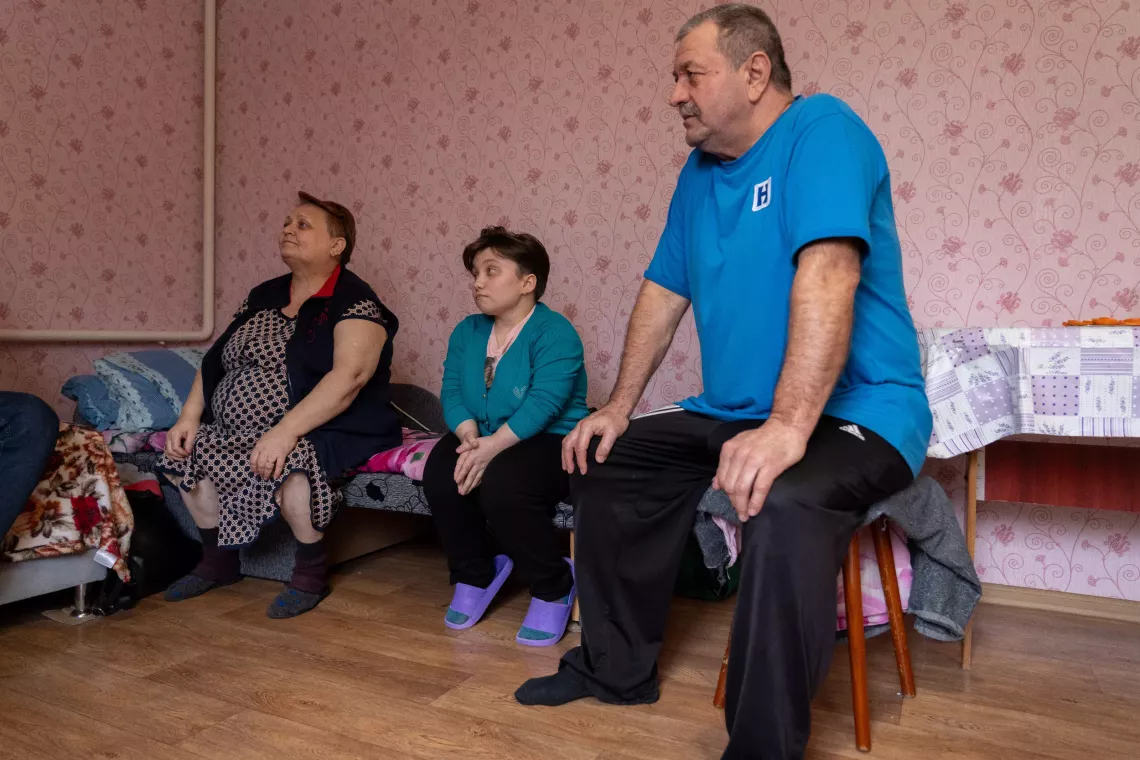
However, she frequently describes her past as lonely. Making friends was difficult – not only because most of her peers had left Zolote, but also because of how others treated her.
“I know I’m not like everyone else. People first see appearances. They notice I’m different. And when they see someone different, they don’t accept them. People can be very cruel.”
Natalia and Borys have always told Daryna that she is just as capable as anyone else. But during her darkest times in Zolote, she longed to hear those words from her peers, too.
“It was hard for me emotionally. Not just the war, but everything else. By the tenth grade, I had given up on school. My grades were terrible. But somehow, I pulled myself together and managed to graduate.”

“I wish that I could hug them”
A psychologist, recommended by volunteers, helped Daryna through her struggles. Through online games and chat groups, she made friends online, building a small but meaningful support network.
“I have internet friends who support me,” she says. “I wish they were closer, that I could hug them. But at least I have someone to talk to, and I’m grateful for that. It means a lot. But because of the war, we’ll probably never meet in person.”
After Zolote came under renewed attack, Daryna’s family moved several times before settling in a tiny, unfurnished apartment in Synelnykove. Due to constant relocations, air raids and stress, she missed the opportunity to apply to university after high school. Her education since 2020 has been entirely online, often interrupted and inconsistent.
“There was no one to tell me I should start preparing for university early. I missed the deadlines. So instead, we found private graphic design courses, and now I study remotely.”
Art gives her hope. Always passionate about art, particularly drawing and sculpting, she is now trying her hand at digital design and envisions a future in that field.
However, private courses are a significant financial burden. And with the front line shifting unpredictably, Daryna fears they will be forced to move yet again, disrupting everything once more.
“I dream of a life where I don’t have to move constantly. A life with stability, where I can make plans. I want to know where I’m headed. My biggest dream is to figure out what I truly want from life, what I want to achieve… and to find my place in this world.”

For teenagers in Ukraine, developing essential skills has never been more critical. Five years of disrupted education – first due to the COVID-19 pandemic, now the war – have left many youngsters struggling academically and uncertain about their futures. School is where young people learn to solve problems, communicate and adapt – soft skills essential for rebuilding their lives and their country. Yet, isolation, displacement and limited opportunities have made it harder for them to develop these crucial aptitudes. Nearly one-third of teenagers in Ukraine report feeling so sad or hopeless that it disrupts their daily lives.
UNICEF is working with adolescents to help bridge this gap by providing safe learning spaces, mentorship and youth programmes that empower young people through building life skills, nurturing their creativity and encouraging entrepreneurial mindsets. Through these opportunities, we can help to foster social cohesion as adolescents come together to discuss issues affecting them and build relevant skills to help them today and for the years to come as they shape Ukraine’s future.