UNICEF and social services build better lives for children in Ukraine
The ‘Better care for every child’ programme is helping mothers and children who face hardship to rebuild their lives, amid ongoing war.

- Українська
- English
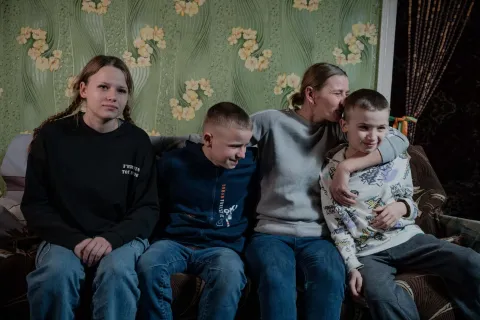
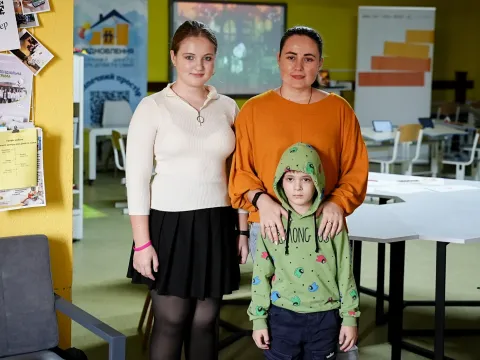
For years, 17-year-old Diana and her two sisters lived and studied at a boarding school in central Ukraine, due to difficulties at home. Money was tight – their mother, Alyona, struggled to find a permanent job, taking on any small part-time work to support her children, who all have special educational needs.
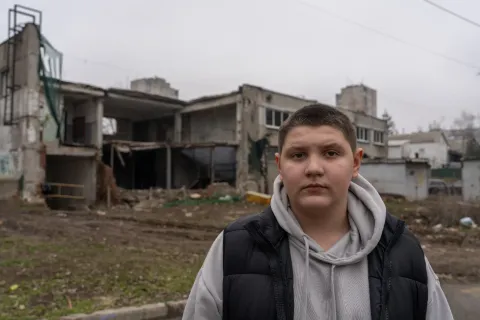
Then, in 2022, when the full-scale war started in Ukraine, Diana and her sisters returned home. However, studying was difficult.
“In addition to air raids, there were problems with the internet, electricity and technology,” recounts Diana. “We are three sisters in different classes, and we had only one phone for all of us. Thanks to UNICEF's support, we were able to buy another phone, which made things much easier.”


Social services and the United Nations Children's Fund (UNICEF) were determined to help. Tamara Vasyliuk, a social work specialist and case manager, developed an individualised support plan based on the family's key needs.
Case management in social work is a proactive, personalised approach to supporting families with children. It involves a collaborative effort, uniting various services and professionals to help address a family’s issues, minimise negative outcomes and make decisions in the child's best interests.
Tamara helped Alyona to learn about the basics of responsible parenting, healthy living, rational resource use and psychological support for her children.
“All three of Alyona's daughters have special educational needs, so they had previously attended intensive pedagogical classes and received help from a psychologist. After they returned home, we organized individual sessions with a psychologist for the girls, which positively impacted their attitude toward learning and family relationships.”

The children have also taken part in extracurricular activities like rock climbing and robotics, aiding their physical and psychological development, fostering new friendships and talents. With Tamara’s support, Alyona has even found a permanent job. Despite her heavy workload, she and her husband Anton spend a lot of time with their children. Diana enjoys walking with her mother and loves to draw.
"I believe growing up in a family has a significant impact on a child's future,” says Tamara. “Diana and her mom are now not only family but also friends. Alyona does everything she can to help Diana become independent and gain the social skills needed for her future life.”
Alyona says that financial assistance from UNICEF has made it possible for the children to study remotely, thanks to power banks and improved connectivity. She also used some of the cash assistance to buy clothes for the children and pay for public transport, which is essential for travelling to extracurricular classes.

Diana has now improved in her studies and plans to go to college. She has dreams of becoming a famous chef.
“In my free time, my mom, sisters and I go for walks or draw together. When my mom is at work, we spend time with my grandfather. He makes us more disciplined and helps us with our studies,” says Diana.
"I am really happy to be with my mother, sisters, brother and grandparents. I know they love and believe in me”.


In Ukraine, many children in institutional care, such as boarding schools and children’s homes, are unable to return home due to family financial difficulties, parental behavior, risk of domestic violence and a lack of social services in the community. According to the NGO League of Social Workers of Ukraine, only 28 per cent of institutionalisation cases are related to child health issues, such as a lack of inclusive education and medical reasons.
"Institutions can never provide the feeling of having a family member by your side, even in a good school with professional teachers,” says Viktoria Halaidiuk, executive director of the NGO League of Social Workers of Ukraine. “From experience, I can also say that most boarding school graduates are not prepared for real life.”
UNICEF implements the ‘Better care for every child’ programme to help children grow up in family environments filled with care, love and understanding. To prevent children from being placed in institutions, UNICEF supports vulnerable families through targeted interventions based on the case management model.
The programme operates in 19 regions of Ukraine through the NGO League of Social Workers of Ukraine, with support from UNICEF and the European Union.