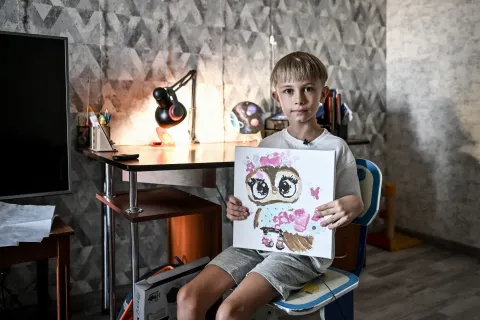
More than 340 educational facilities damaged or destroyed in Ukraine this year
Education continues to come under attack, as the growing toll of the war on children’s learning and development places their future at risk.
- Українська
- English
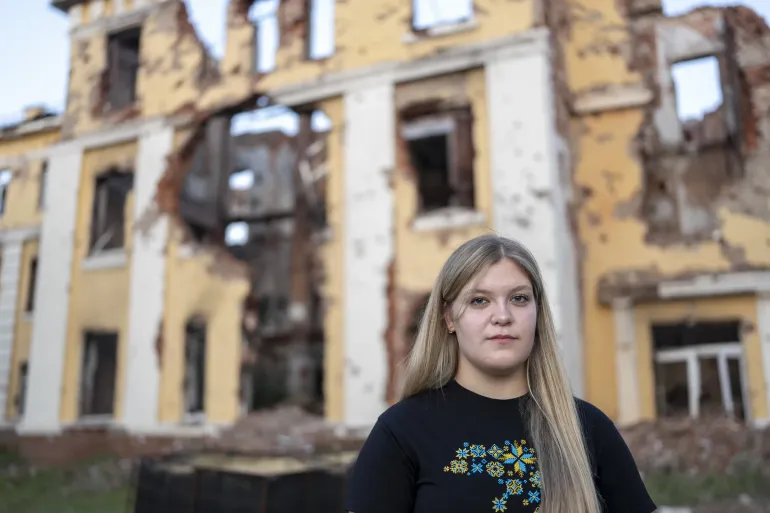
KYIV, 26 November 2025 — More than 340 educational facilities in Ukraine have been damaged or destroyed this year as the full-scale war rages, disrupting children’s learning and depriving them of their right to education.
This brings the total number of schools damaged or destroyed to 1,611 since the escalation of the war in February 2022. As these are only UN-verified incidents, the true number is likely higher.
“Schools must be protected spaces where children can learn safely, even during war. In times of crises, education provides a lifeline and sense of normalcy to children,” said Munir Mammadzade, UNICEF Representative to Ukraine. “Schools are places to learn that also support children’s holistic development through socialization with their peers and teachers, as well as enabling access to other social services,” added Mammadzade.
This schoolyear, 4.6 million children in Ukraine face educational barriers as they persist through a fourth academic year during the full-scale war. Continued attacks damage or destroy schools and threaten children’s lives. Air raid alarms disrupt classes. Many schools, especially in frontline areas, remain closed because of hostilities or the lack of adequate shelters, forcing almost 1 million children to study online.
For those who study in mixed modality or fully online, the lack of in-person interaction with their teachers and peers affects their ability to learn and exacerbates the emotional toll of the war.
“Despite the challenges, children in Ukraine are determined to continue learning – whether in school or online, in classrooms or in shelters. They are hopeful for a future where they can achieve their dreams,” said Mammadzade.
UNICEF’s response, alongside government and local partners, has enabled more than half a million children to access inclusive formal or non-formal education, including in-person safe learning, which is the most impactful, and help them catch up lost learning through remedial education.
This year marks 10 years since the adoption of the Safe Schools Declaration, a global commitment to protect children’s right to education during war, support the continuation of education, and prevent the military use of schools.
At the International Conference on the Safe Schools Declaration in Nairobi, 25-26 November, UNICEF is joining governments, children, youth advocates and many others to discuss how to better protect children’s education in armed conflict and to renew this global commitment.
Protecting schools and children’s right to education is not optional during war; it is imperative. UNICEF urges international partners to continue their support to Ukraine’s education sector as a non-negotiable investment in children and the country’s future.
Media contacts
About UNICEF
UNICEF works in some of the world’s toughest places, to reach the world’s most disadvantaged children. Across 190 countries and territories, we work for every child, everywhere, to build a better world for everyone. For more information about UNICEF and its work for children, visit www.unicef.org
Follow UNICEF Ukraine on Facebook, Instagram , Twitter та TikTok.