Social protection
Addressing child poverty to improve the well-being of children

The situation
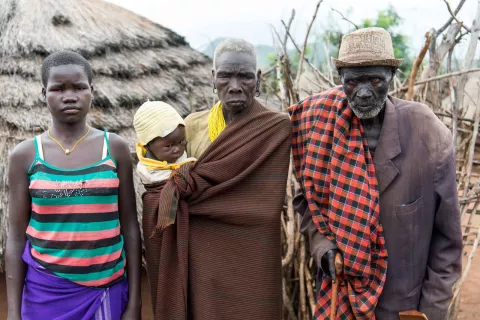
Poverty is devastating. It damages childhoods, life chances and ultimately everyone in society. In Uganda, great effort has been made to curb income poverty, which fell from 56 per cent in 1992 to 20 per cent in 2012. However, child poverty remains high and widespread. More than 50 per cent of children under 5 live in poverty, and one in five live in extreme poverty. Poverty in this sense is defined as an experience of two or more deprivations in food and nutrition, health, education, water, shelter and information.
According to the 2014 Situation Analysis of Child Poverty and Deprivation in Uganda, nutrition is a very common form of deprivation in Ugandan children, with 38 per cent of children aged 6–17 affected. Undernutrition sets children on a life-limiting path and costs Uganda 5.6 per cent of its annual gross domestic product.
In other areas, child deprivation is equally alarming: more than a third of young children experience deprivation in health care, 30 per cent in access to safe drinking water and 17 per cent in shelter.
Not only do children as a whole bear the burden of poverty, they also experience it differently, depending on where they live, what families they are born into or what life circumstances they find themselves in. Child poverty and deprivation are higher in rural areas, northern and eastern Uganda, in families where parents or the heads of households are uneducated and among orphans and fostered or adopted children.

UNICEF response
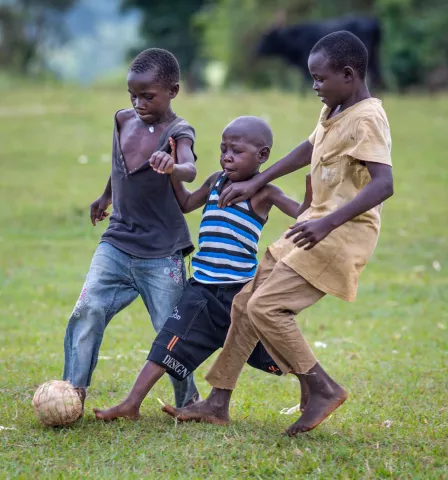
Investing in children is key to breaking the cycle of poverty and reducing the wide inequities that children face. Making sure that children grow up healthy, educated and productive is also essential if Uganda is to reach its vision of becoming a middle income country by 2040. To achieve this vision, UNICEF will:
- Provide technical support to implement the national social protection policy framework and its costed implementation plan.
- Focus on exploring new and innovative avenues to minimise social exclusion and discrimination while promoting empowerment and resilience of poor and vulnerable families.
- Support the government’s multi-sectoral coordination mechanism, and the development partners’ task force to harmonize and align social protection interventions with the government’s policy agenda and programmes.
Expected results:
- If the target of reaching 6 per cent of households with social assistance is met by 2020, around 625,000 very poor and vulnerable Ugandans, including children, will be lifted above the poverty line.
- If the target to reduce the rate of child poverty to 17 per cent is achieved by 2020, 5.2 million children will have a better future.
#InvestInUGchildren : Realize Uganda's Vision 2040
Resources
Learn more about about work - download our UNICEF Uganda Annual Report 2019
Social Protection Investment Case
Investing in Social Protection in Uganda
Situation Analysis of Children in Uganda