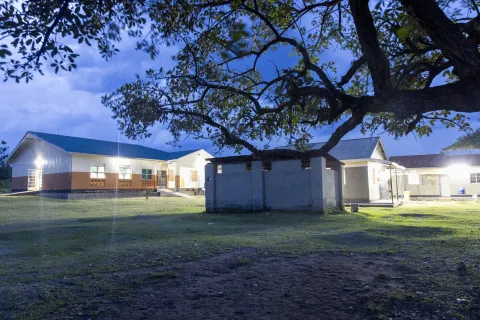
West Nile region eyes zero maternal, infant deaths after nine hospitals get high-dependency units
"The HDUs have reduced the referral of critical cases, decongested other wards in the hospitals and increased the patient survival rate.”
According to the 2021 Annual Maternal and Perinatal Death Surveillance and Response (MPDSR) Report by the Ministry of Health, the West Nile region reported one of the highest delays to provide care.
While the first delay (mothers coming to hospitals late) was a major contributor to perinatal deaths, the report findings indicated that the third delay (delay to provide care) contributed most perinatal deaths countrywide.
With support from the Swedish International Development Cooperation Agency (SIDA), UNICEF mooted an intervention to create High-Dependency Units (HDUs) at major hospitals in West Nile under the District Health Systems Strengthening Project.
Through AVSI, the implementing partner, nine HDUs have been set up and are fully operational at all the project sites. These are Arua Regional Referral Hospital, Angal, St. Luke Hospital, Nebbi General Hospital, Moyo General Hospital, Adjumani General Hospital, Maracha Hospital, Kuluva Hospital, Koboko General Hospital and Nyapea Hospital in Koboko District.
Eve Nakabembe, a Senior Obstetrician and Gynaecologist at UNICEF Uganda said the HDUs are spread out between public and private not-for-profit hospitals and the number of beds in each unit depends on the catchment area the hospital serves and the space available.
“Most hospitals serve refugee and border communities from the Democratic Republic of Congo (DRC), South Sudan, and the host communities. Not only are they stretched in human resource, but some also didn’t have basic supplies such as gloves to tend to mothers,” she noted.

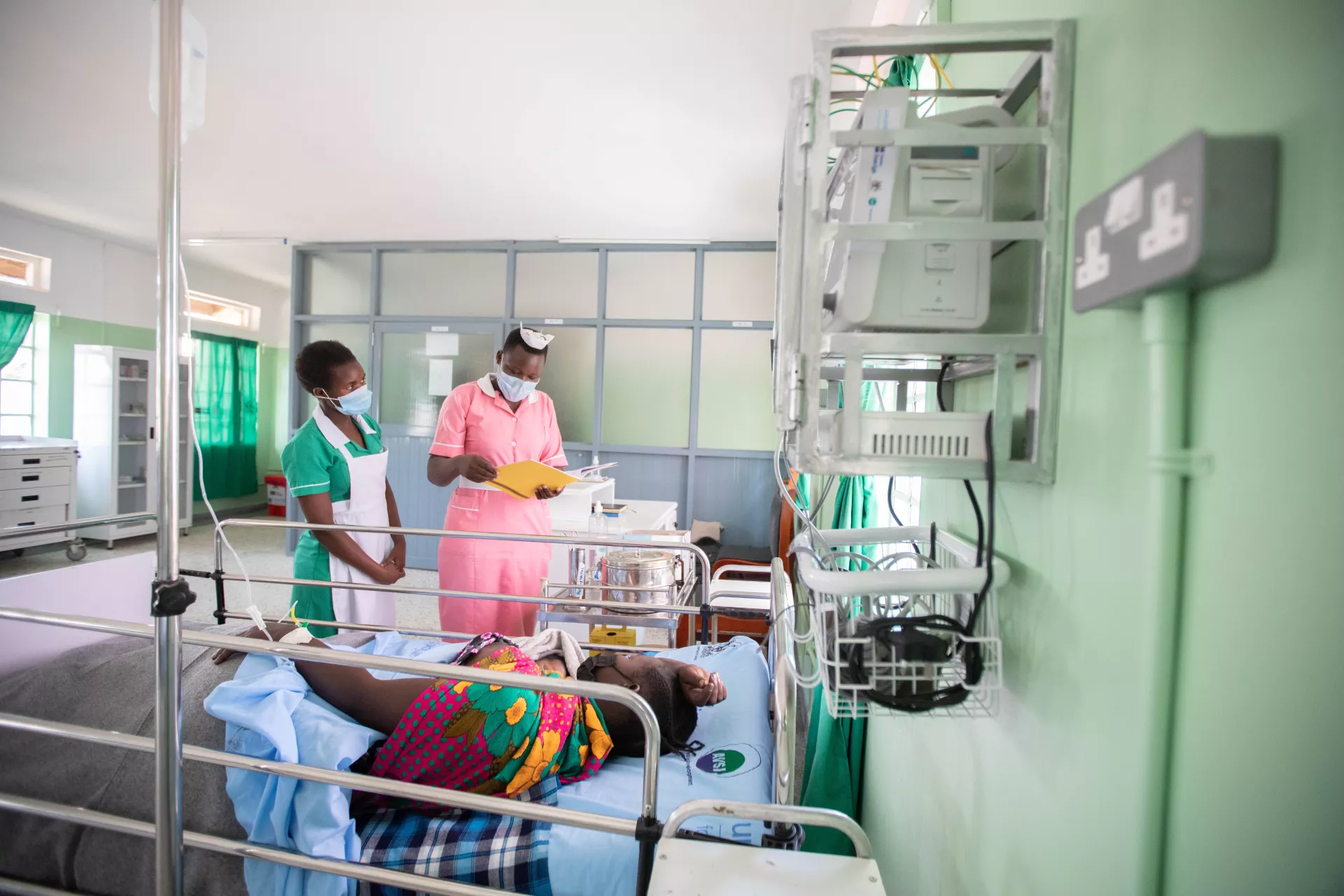
In total, the West Nile region now boasts of 34 HDU beds – complete with emergency drugs, sundries, oxygen cylinders and concentrators, blood pressure, pulse and temperature monitors, drip stands and suction machines.
Additional facilities in the HDUs include sockets to guarantee the functionality of the equipment, terrazzo floors, sanitation facilities such as sinks and washrooms, medicine cabinets, warm blankets and bedsheets, a nursing station and a monitoring room.
“The HDUs,” explains Dr. Emmanuel Odar, a Senior Consultant for the West Nile region, “have reduced the referral of critical cases, decongested other wards in the hospitals and increased the patient survival rate.”
Beyond equipment
The provision of quality care at health facilities transcends having equipment in state-of-the-art rooms. It is a function of continuous training, motivation and dedication of health workers to save lives, even with meagre resources.
To achieve this, AVSI, with support from UNICEF is conducting training sessions at all the nine health facilities in line with using HDU equipment, productivity, professionalism, identifying mothers who need critical care, admitting and discharging patients.
More than 85 nurses, midwives, and doctors across the nine districts have received first-line training, although not all are stationed in the HDU. Due to human resource shortfalls, hospitals have developed other training routines and rotations in all wards.
Moyo General Hospital, for instance, has a continuous medical education (CME) training every Friday, which Dr. Charles Koma, the hospital’s Medical Director, admitted has increased staff motivation and raised the quality of services throughout the hospital.
Challenges persist
Despite the gains made, there are still logistical challenges that threaten to undermine the HDUs’ effectiveness. In some hospitals, refilling oxygen cylinders is still a significant challenge. Additionally, there are staffing gaps as most hospitals cannot afford to station nurses and midwives in HDU full-time.
Some of the hospitals, such as Moyo General Hospital, have no obstetrician or gynaecologist. The entire hospital has one visiting surgeon – a missionary working on a voluntary basis.
“Sometimes we run out of blood and oxygen which we must collect from Arua and on some occasions, there is no blood in Arua either. In such instances, even with the HDU in place, the chances of losing this mother are high,” said Dr. Isaac Newton Ojok, the Senior Doctor at Moyo General Hospital.
However, Ojok is optimistic that the HDUs provide the right tools and incentives to eliminate mother and child deaths in hospitals with staff dedication and continuous training.
He recommends that the HDUs be rolled out in all hospitals countrywide if Uganda is to meet the international target of less than 70 per 100,000 live births by 2030.
Currently, Uganda is at 368 per 100,000 live births, according to the Uganda Bureau of Statistics (UBOS)’s 2021 Women’s Day brochure.