Giving newborns a fighting chance with Oxygen-as-a-Service
A new approach is making oxygen reliable, accessible, and life-saving in Uganda’s health facilities.

Late at night, a young mother in labor was rushed to Kiryandongo General Hospital. Doctors quickly recognized signs of fetal distress and moved her into surgery. Shortly after midnight, she delivered her baby girl, yet the tiny newborn lay motionless.
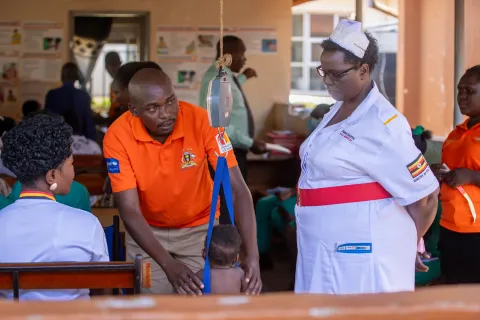
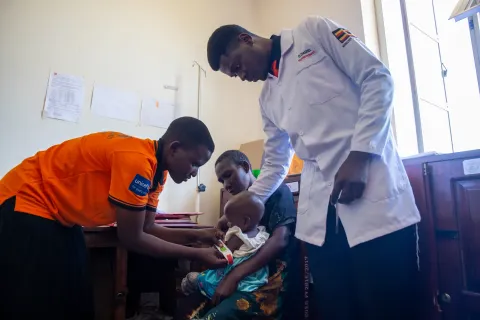
“The baby required resuscitation immediately,” said Juliet Awoko, a nurse on duty that night. “At birth, her oxygen saturation was dangerously low. She was transferred to the neonatal unit and placed on Continuous Positive Airway Pressure (CPAP), a device that supports breathing.”
Within two hours, her oxygen levels had risen to 94 per cent, and her skin colour improved from blue to a healthy pink, signalling that she was out of danger.
Providing Oxygen-as-a-Service
In Uganda, where pneumonia is the leading cause of death for children under five, many newborns face complications that require oxygen. Hospitals often struggle to keep a steady supply; cylinders run out, concentrators break down, and health workers are left with few options.
“That night we had only one cylinder and four other babies who also needed oxygen,” recalls Awoko. “If we only had the cylinder, it would not have been enough.”
At the hospital in Kiryandongo District, Oxygen-as-a-Service (O2aaS) was installed through a public-private partnership between the Ministry of Health, UNICEF Uganda, and private sector partners. This system now makes oxygen as dependable as water or electricity. It provides a continuous flow at the bedside, backed by solar power, and is maintained by specialists, allowing health workers to focus on patient care.
This reliability meant the newborn in Awoko’s care could use the cylinder, while other babies received uninterrupted oxygen through the O2aaS system. “Oxygen is no longer uncertain, but a guarantee,” she says.

From one baby to a stronger system
For patients, O2aaS means oxygen is available and reliable when it’s needed most. The newborn in Awoko’s care survived because therapy began immediately; one of dozens of infants at Kiryandongo each month who now receive oxygen without delay.
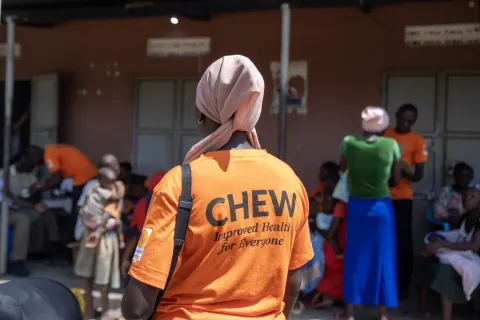
O2aaS is now deployed in 35 remote health facilities across the country, including Kiryandongo, Nakaseke, and Luwero districts. This ensures that children with severe pneumonia and babies in respiratory distress can now receive treatment faster and more reliably, rather than waiting for a cylinder or facing risky referrals.
For families, this change brings peace of mind. “We have blackouts in this area all the time, and we know it affects oxygen machines,” says Rose Ayoo, the baby’s grandmother. “But the health workers told me there will always be oxygen here now. I was so relieved”
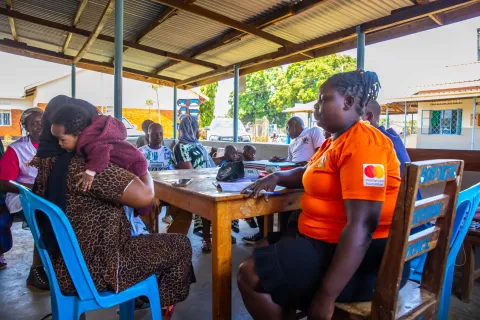
Families no longer face the cost or stress of transferring a critically ill child to a distant hospital. Care is now delivered closer to home, at lower cost and with less disruption.
For health workers, O2aaS has transformed daily practice. Awoko can start oxygen within minutes, confident it will work. Staff report greater trust in their skills and in the system around them, which boosts ward morale and strengthens community confidence in local health centers.
The impact on health systems is wide ranging. Cylinder use has dropped by more than half, and fewer patients need referrals to other hospitals.
Referrals for oxygen-dependent patients have been reduced by 60 to 100 per cent, easing the burden on higher-level hospitals and saving districts the costs of fuel and transport.
Oxygen is now reliable across these 35 facilities, allowing districts to plan and budget with confidence, making health care more efficient, equitable, and sustainable.

Breathing into the future
Over the next two days, the baby slowly began to move, breathe on her own, and open her eyes. After being weaned off CPAP, she remained on low-flow oxygen for seven more days. By then, she was breathing independently at 96 per cent oxygen saturation. That low-flow therapy, delivered through the O2aaS system, saved the equivalent of one and a half large cylinders, oxygen that could instead be used for other critical patients.
Nine days after her birth, the baby was stable and almost ready to go home. She still had no name, but she already carried a powerful story of survival. Reliable oxygen, once uncertain, was now a constant presence at the hospital. For health workers, it brought confidence. For families, it brought hope. For this little girl, oxygen meant her very first breath, and for thousands of children across Uganda, it could mean a second chance at life.
Looking ahead, the goal is to sustain and scale O2aaS across Uganda and beyond. UNICEF Uganda, the Ministry of Health, district leaders, and partners are working together to embed service contracts into budgets, align with national systems, and develop financing pathways to ensure oxygen access for every child who needs it, today and in the future.