Uganda’s first urban social protection programme targeting adolescent girls in Kampala
“We all marvel at the new Esther,” Belinda reveals, ‘She is confident, interacts well with others, can speak up and voice her thoughts on various issues, demonstrating a responsibility beyond her years!”

Pregnant, homeless and jobless is not a good way to start any story. Fifteen-year-old Esther Wema found herself in this very situation which led her to turn to drugs and potent alcohol in order to drown out her problems, only to end up with more.
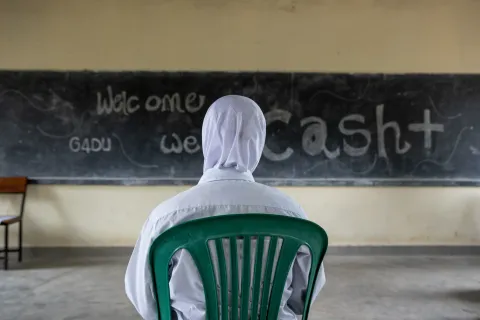
During the COVID-19 lockdown in Uganda in 2020, with nearly two years of school closures, Esther, who was in Senior Two, stopped going to school. Shortly afterwards, she ran away from abusive conditions at her uncle’s home in Namirembe, a Kampala suburb, and would often roam and sleep on the streets. She met a man who rented her a one-roomed structure in one of Kampala’s biggest slums _ Katanga. He later became the father of her child. When she gave birth at 15 years, Esther’s challenges seemed to increase, with abuse, joblessness and self-loathing.
Such was Esther’s life for two years, until she met Belinda one of the mentors under the GirlsEmpoweringGirls (GEG) social protection programme.
GirlsEmpoweringGirls is the first urban social protection programme in Uganda that seeks to ensure that in- and out-of-school adolescent girls living in Kampala transition safely into adulthood, and are empowered to achieve their goals, while contributing to their communities. Launched in 2019 by the Government of Uganda through Kampala Capital City Authority (KCCA) in partnership with UNICEF, and with funding from European Union and the Government of Belgium, the GEG Programme aims at strengthening the inclusive and gender-transformative social protection agenda in Uganda.
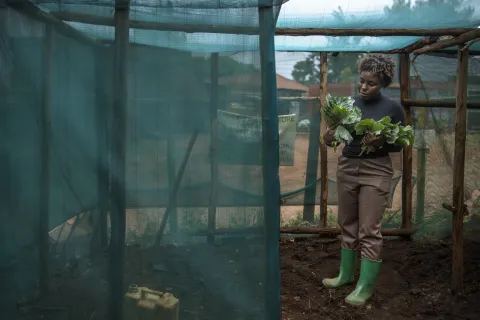
Through peer-to-peer mentorship, referral to services and cash transfers, GEG has so far supported 3,015 adolescent girls with specific focus on inclusion of girls with disabilities, urban refugees and pregnant/ teenage mothers, such as Esther.
“When we first met Esther, she was drunk, barely dressed and addicted to drugs, “says Belinda Ejoru, her mentor, adding “It also was evident she had not eaten in days.” Esther was enrolled onto the out-of-school component of GEG, upon recommendation of local leaders who identified vulnerable girls in Katanga.
Under GEG, each girl is assigned a mentor who she meets at least thrice a month for one-on-one and group mentoring. Though Esther eventually agreed to meet Belinda for weekly mentorship talks, she had to be cajoled into attending the monthly group mentorship or even the skilling sessions.
“I had zero self-confidence as I thought everyone looked down on me for being pregnant while so young, and that everyone could see the abuse I had been subjected to.”
With each mentorship session, Esther realised that she may not have chosen her circumstances, but she could choose her response.
“We tell them not to give up because teenage pregnancy does not mean it is over,” Esther’s mentor says.

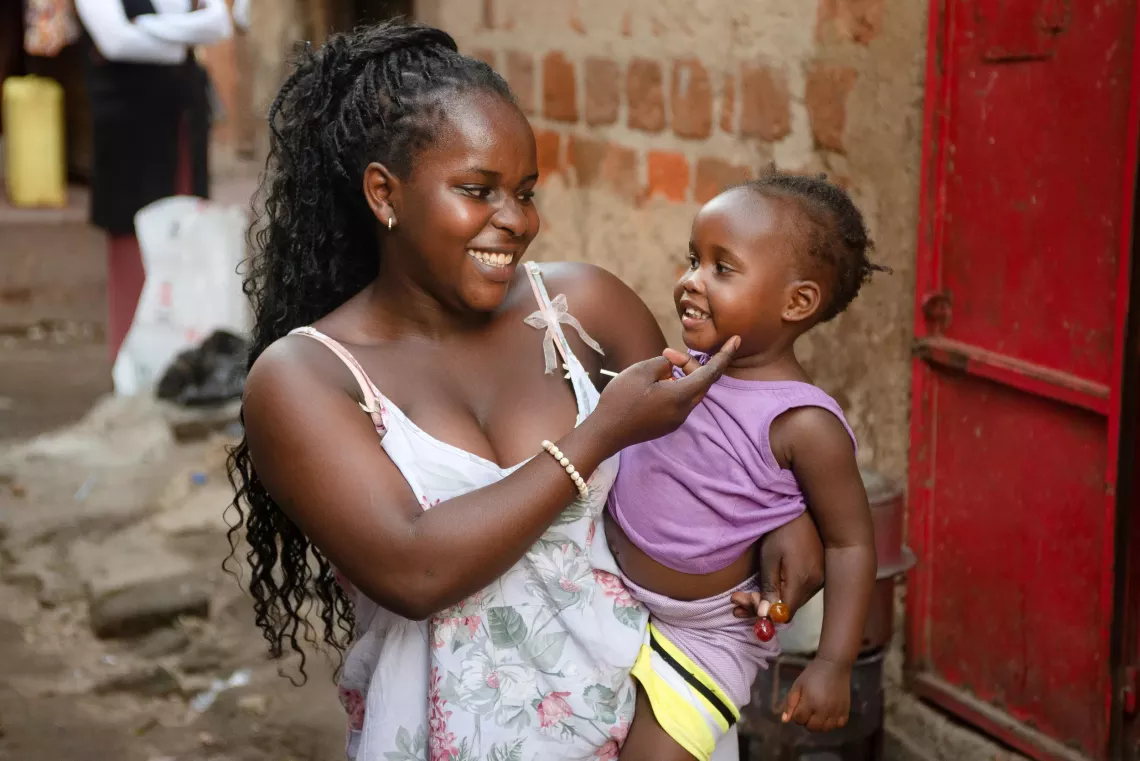
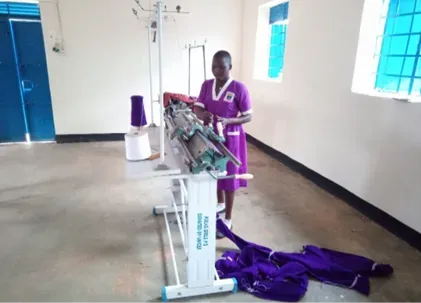
One year in, Esther has learnt basic principles of financial management and always draws up a budget for the cash transfer of UGX 40,000 (approx. US$10) that she receives monthly. She also sets aside money for her business, baby essentials such as diapers and food, and some personal effects. Esther has also been enrolled in vocational skilling in the areas of hairdressing and cosmetology which are her areas of interest. She hopes to set up her own salon one day.
During a group mentorship session on parenting, Esther sits among her peers, listening intently and laughing occasionally.
“We all marvel at the new Esther,” Belinda reveals, ‘She is confident, interacts well with others, can speak up and voice her thoughts on various issues, demonstrating a responsibility beyond her years!”
Esther no longer takes alcohol or drugs. She used part of her cash transfer to purchase apples that she hawks on the busting streets of Wandegeya. She sells between 25 – 50 apples daily and can make a profit of up to UGX 25,000 (approx. US$6) on a good day.
“I am embracing this new me, working hard to take care of myself and my baby, I get tired, but I know that I must run my own race,” Esther says.
After hawking apples, Esther walks to the back end of Wandegeya market, past a makeshift garage, multiple roadside food stands and takes a sharp right turn through a narrow-muddied corridor, makes a left turn, then emerges into Katanga, one of the biggest slums in Kampala. She pauses at a long block of mud brick structures, adjacent to which is a mud/clay brick structure with a door so low that an adult must bend to enter the room. Inside, small grains of sand keep falling from the ceiling, onto an otherwise clean cemented floor. This is Esther’s home. She pays her own monthly rent of UGX 100,000 (approx. US$25) and takes care of herself and her one-year-old daughter, Amaira.
As she stands in the dimly lit corridor outside her home, Esther’s smile belies her environment. “One day I will leave this place and find a safer home for my baby and I,” she says. The lyrics of the song playing on her neighbour’s transistor radio seems to echo her thoughts;
‘My head’s under water but I’m breathing fine.’
Two years since joining GEG, Esther’s environment hasn’t yet changed, but she has, and along with her, 26 other teenage mothers on the GirlsEmpoweringGirls social protection programme.