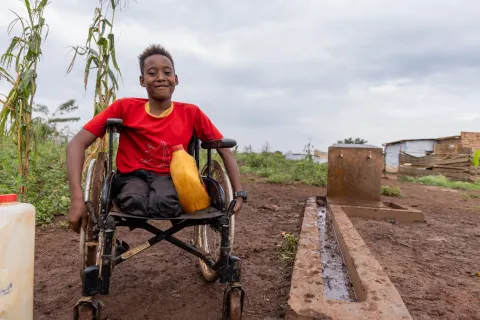
Early identification and interventions for children with developmental delays and disabilities
Experiences from Central Uganda

We drive through green fields of tea plantations and banana and jackfruit trees, manoeuvring through uneven roads, racing against the afternoon rains. At Kassanda District, 110 kilometres from Kampala, the capital of Uganda, we are greeted by a representative of the Chief Administration Office and his team. They share details about UNICEF’s partnership with the district to pilot early identification of and support for children with developmental delays and disabilities. The initiative implemented by Finn Church Aid is funded by the H&M Foundation and the Governments of Sweden and Norway. Through training of village health workers and awareness creation activities in the communities, among other interventions, the pilot has been a success, raising demand for the same services in neighbouring districts.
During a visit to Bukuya Health Centre, one can’t miss women in colourful outfits with babies and toddlers on their laps, seeking shelter from the sweltering sun under a building decorated with a banner featuring the pilot project. The Village Health Team (VHT) members present demonstrate how they utilize the Malawi Disability Assessment Tool to assess children for developmental delays and disabilities.
Joseph Muyanja, one of the Village Health Team (VHT) members, places a cloth on the ground and sits down. Jennifer Nankunda, a young woman with a 14-month-old toddler, Owen Namanya, sits down in front of the VHT. Her husband, Aloysius Niwamanya, sits on a bench behind her following attentively at what is taking place. From his backpack, Muyanja pulls out a form and several assessment kit items, including a measuring tape and various toys like a straw doll, all made with local materials.

Muyanja proceeds to go through the questions on the form - What is your name, what is your child’s name, have you noticed any difficulties in the child’s development? Nankunda replies, as Muyanja takes notes.


Several checks are done using the assessment kit items, including measurement of the circumference of the child’s arm and head to identify discrepancies in growth and rattling a bottle with stones to check for hearing.
After the assessment is finalized, Muyanja reports back to the parents clearly indicating the delays in the child’s development identified before referring the parents to the district hospital for a thorough assessment by trained health care professionals. At the hospital, the parents will also be provided with specialized services such as rehabilitation for their child.
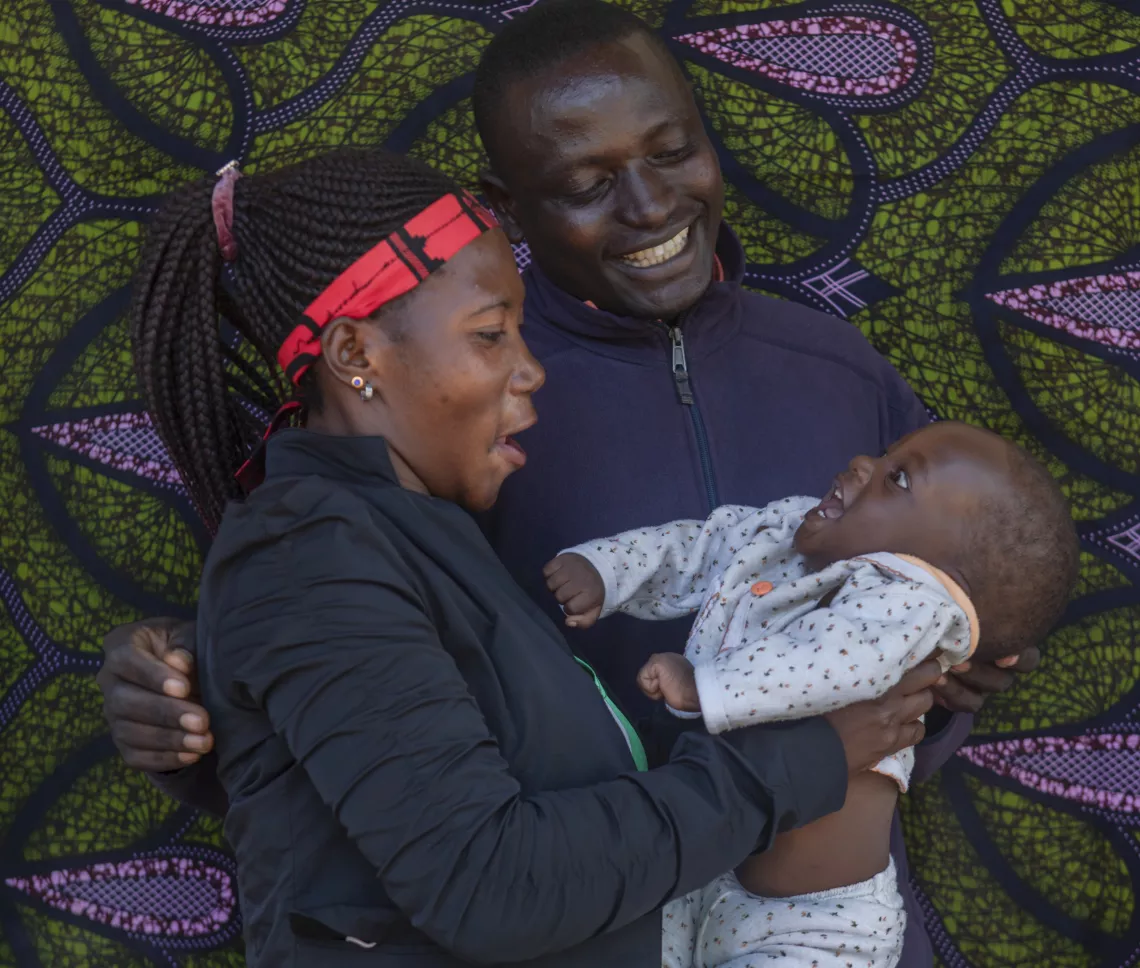
Nankunda and Niwamanya are pleased with the services at the health centre and have hope for Owen’s future. When asked what his dreams are for Owen, Niwamanya replies as he smiles under a protective mask - “He will be a doctor.”
The assessments done by the VHT members are usually conducted at the health centres targeting children brought for routine immunization, which is mandatory. Much effort has gone into social and behaviour change interventions to raise the community’s demand for the services and to address negative attitudes towards disabilities.
UNICEF continues to work with the government and partners to identify lessons learned from the pilot and possible scale up. Providing timely support and services to children and their families from the early onset of developmental delays and disabilities will ensure these children develop to their fullest potential, fulfilling UNICEF’s mandate of leaving no child behind.