

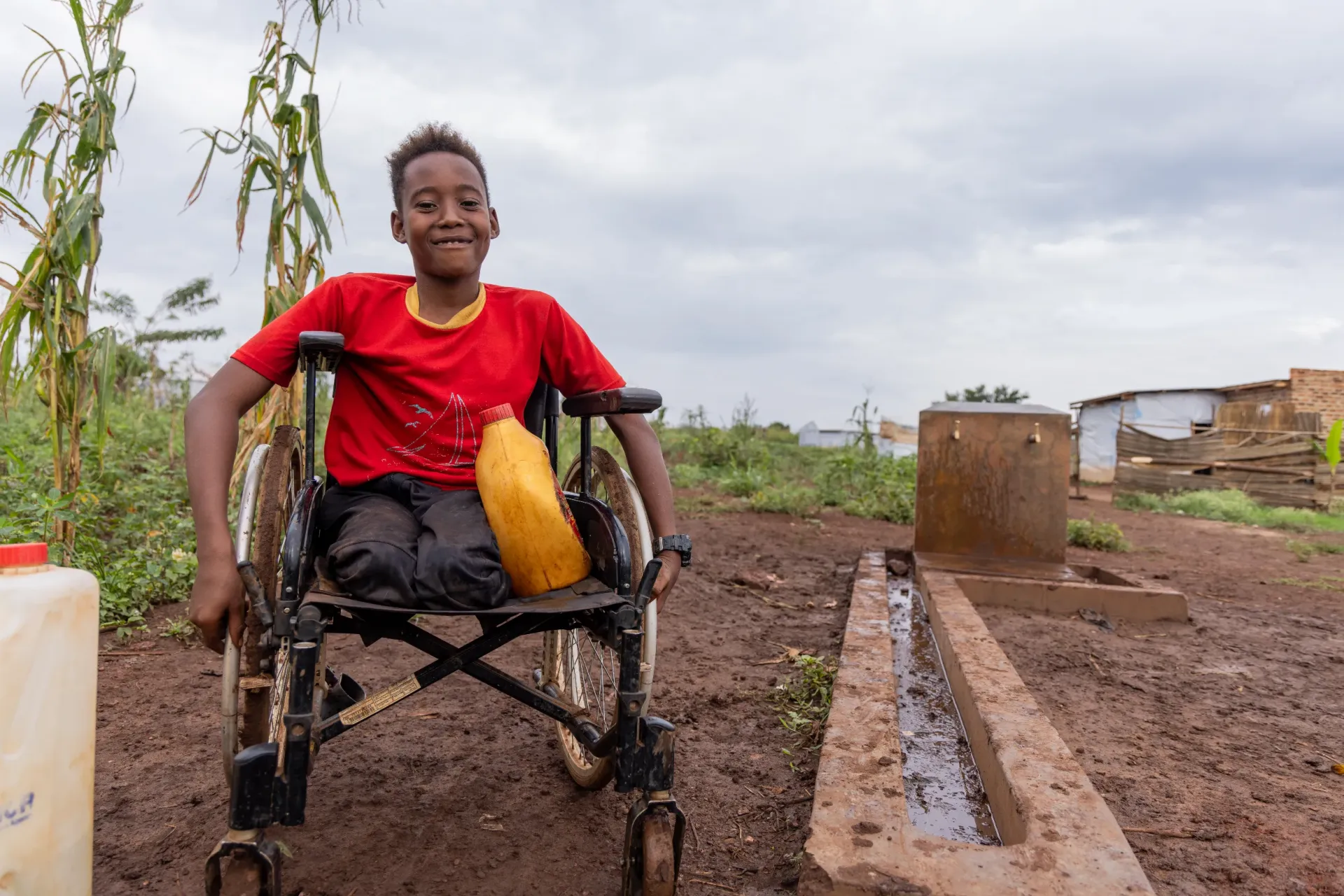
A new promise of inclusion for Uganda’s children with disabilities
With UNICEF’s evidence, technical support and advocacy the disability grant was turned into a national commitment
For many families raising children with disabilities in Uganda, each day brings impossible choices: paying for transport to a health facility or buying food; keeping a child in school or covering medicine costs.
With Parliament’s recent approval of the Financial Year 2026/2027 national budget, including Uganda Shs 15.6 billion (US $4.3m) for a new National Child Disability Assistance Programme (NCDAP) under the Uganda Shs 326.74billion (US $89m) social protection sub-sector budget, Uganda has taken a decisive step toward changing that reality.
Led by Uganda’s Ministry of Gender, Labour and Social Development, with technical support from UNICEF Uganda and partners, the grant will provide predictable monthly support to families caring for children with severe disabilities. More than a cash transfer, it recognizes children’s equal rights, hopes and potential, while helping prevent families from falling deeper into poverty for providing essential care. UNICEF’s support included evidence generation, technical guidance, costing analysis, programme design and advocacy
From policy commitment to daily change
The Programme is expected to begin with an initial cohort of children with the greatest needs before expanding over time. The benefit has been designed to include complementary services such as parent support groups, early stimulation, motor skills support, referral to existing services, and assistive devices.
Members of Parliament helped make the programme a national priority by advocating for adequate financing and budget protection.
UNICEF Uganda Representative Dr Robin Nandy has emphasized that investing in children with disabilities is both a rights obligation and a smart national investment. “Every shilling invested in a child disability benefit can generate up to Shs2.5 in the economy,” he notes, highlighting the wider gains of helping children access services, enabling caregivers to remain economically active, and building more inclusive communities.
A continental example of inclusive social protection
Uganda’s NCDAP is notable in Africa for putting children with disabilities at the heart of a nationally led, publicly funded social protection response.
While several countries have cash transfer programmes for older persons, vulnerable households or persons with disabilities, Uganda’s approach is distinctive in its explicit focus on children with severe disabilities, its link to care and support services, and its ambition to scale nationally over time.
The way forward: Turning a law into lasting change
The next stage is critical. While passing the law and securing seed funding are historic milestones, families will benefit only when the programme reaches children in a timely, predictable and transparent way. This will require clear eligibility criteria, accessible registration and assessment, strong district-level coordination, reliable payment systems, safeguards to ensure support directly benefits children, and continued engagement with children with disabilities and their caregivers so implementation reflects their priorities, removes barriers and upholds children’s right to be heard.
For a child kept out of school by transport costs, or a mother carrying her child long distances to receive care, the programme offers something profound: a sign that Uganda sees, values and is ready to invest in their future.


