

Adolescents teetering on the edge of dropout find hope in CashPlus.
European Union funded initiative snatches adolescent girls from the brink of teenage pregnancy and child marriage.
CashPlus combines direct financial support with mentorship and parental engagement to enable girls in Acholi, Lango, and West Nile to complete lower secondary school. This is the journey of the girls, caregivers, and community members benefiting from the initiative.
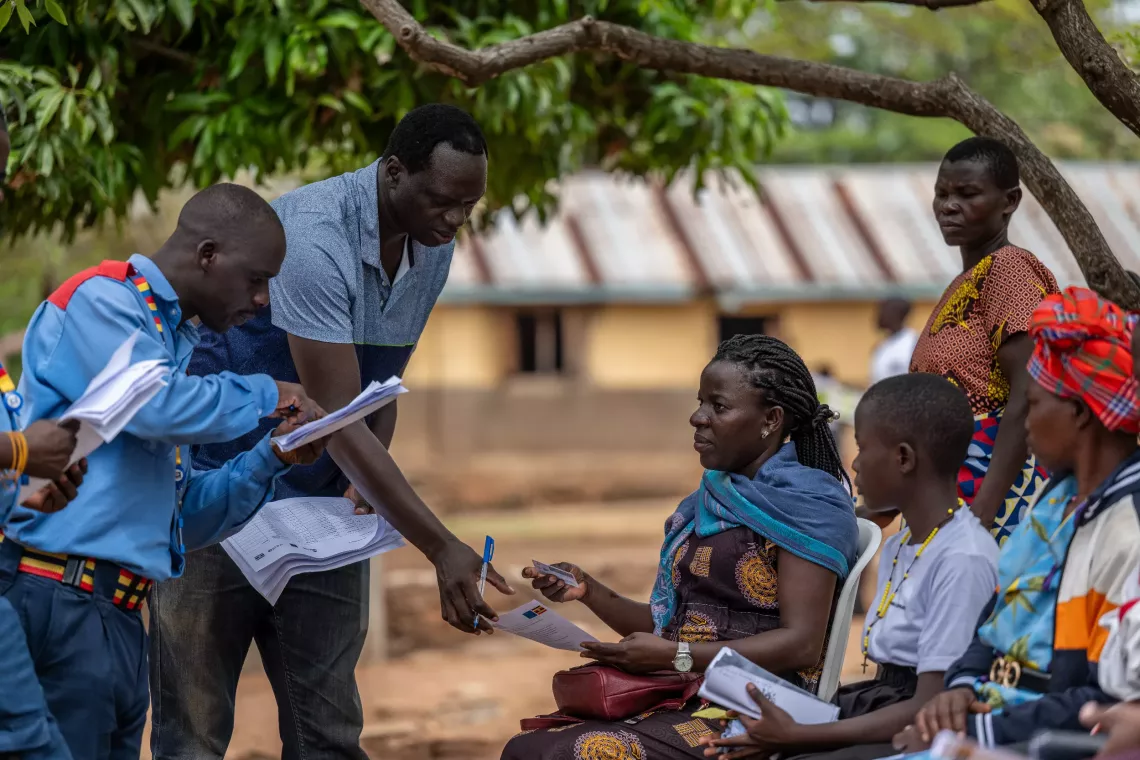
Hope Nyamungu, an orphan, sits beside her aunt, Annet Apio, her guardian and the twin sister of her late mother, as they undergo verification and clearance to receive funds through the CashPlus programme. Hope’s journey has been one of resilience, having lost her mother at just 4 years old. Holding the confirmation slip firmly, Annet says, “She has been my responsibility for the past 10 years. This money is more than cash; it is a step towards fulfilling the promise I made to care for my late sister’s daughter.”
The CashPlus initiative supports vulnerable girls like Hope to enroll and stay in school. By transferring funds directly to verified caregivers, the initiative which is a sub component of the European Union funded Gender for Development Uganda (G4DU) programme, helps to reduce financial barriers and enables families to prioritize education.
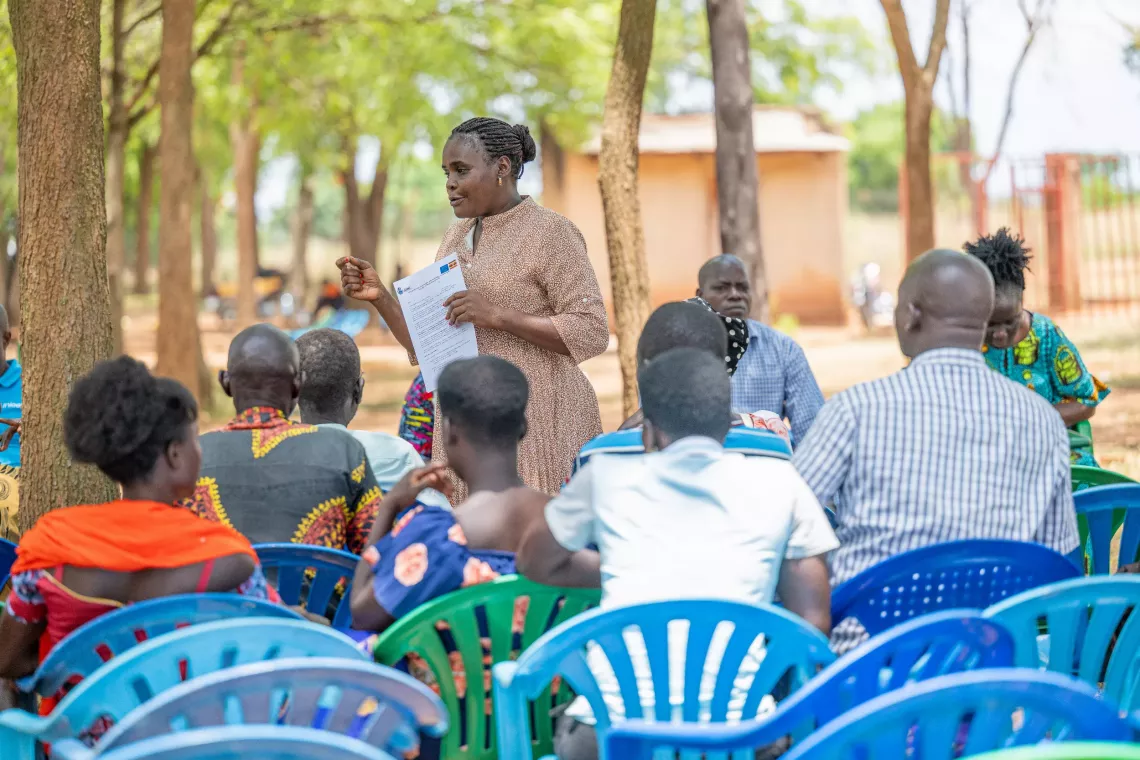
Joyce Atimango of the Trailblazers Foundation, which is working with UNICEF Uganda to implement the CashPlus initiative across seven districts in Acholi, Lango and West Nile, speaks to parents at Parombo Secondary School in Nebbi District about the importance of their involvement during a mentorship session. “You are not just here to receive money,” she told them. “You are part of the ‘Plus’ in this initiative. Without your support at home, we cannot succeed in school.”
Mentorship is a core component of the programme. Parents learn about adolescent development, school attendance, and how to create supportive home environments. As Joyce puts it, “Our girls can only rise as much as their parents and guardians allow.”
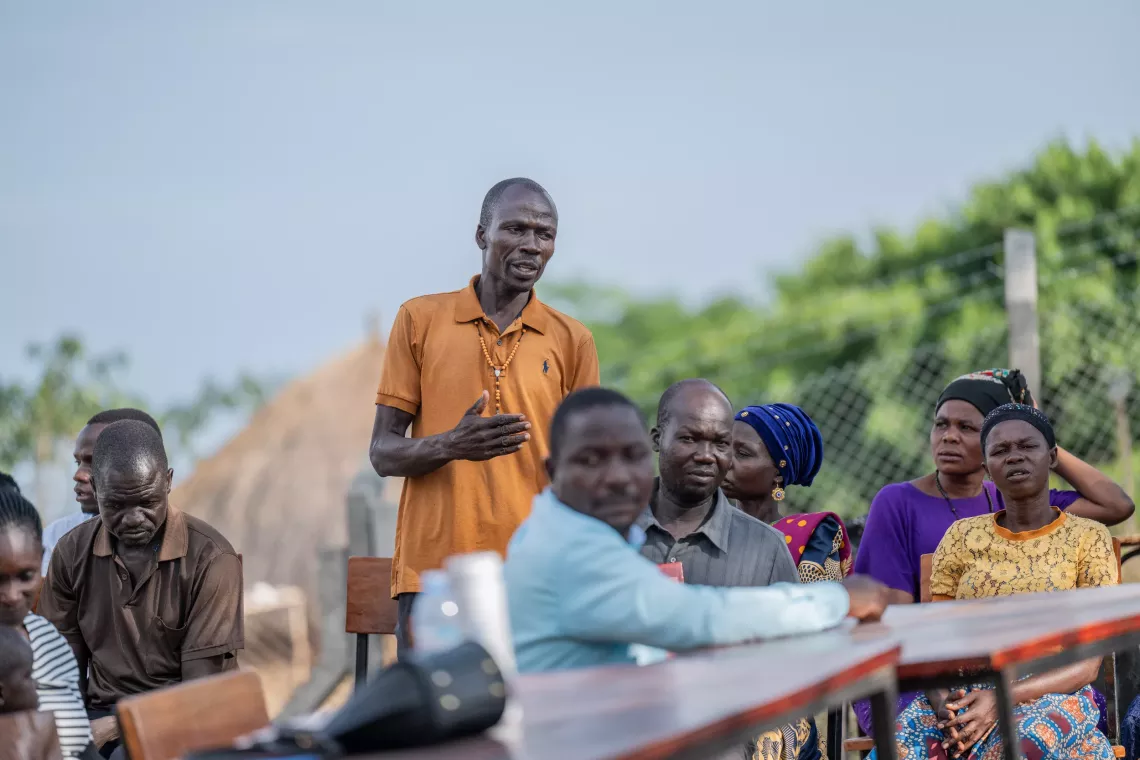
Gerald Ogen, a father of a beneficiary daughter at Atengo Seed Secondary School in Nebbi District, speaks during a parent sensitization meeting. “I now understand that the money from the initiative must be used strictly to pay school dues. I will also ensure that I create an adolescent girl friendly environment at home and support my daughter to complete Senior Four.”
This shift in mindset is exactly what the G4DU programme and CashPlus initiative aims to inspire. CashPlus not only removes financial barriers, but it also equips families with the tools to support girls emotionally, promote regular attendance, reduce early marriage, build self-esteem and encourage fathers like Gerald to actively participate in their daughters’ success.
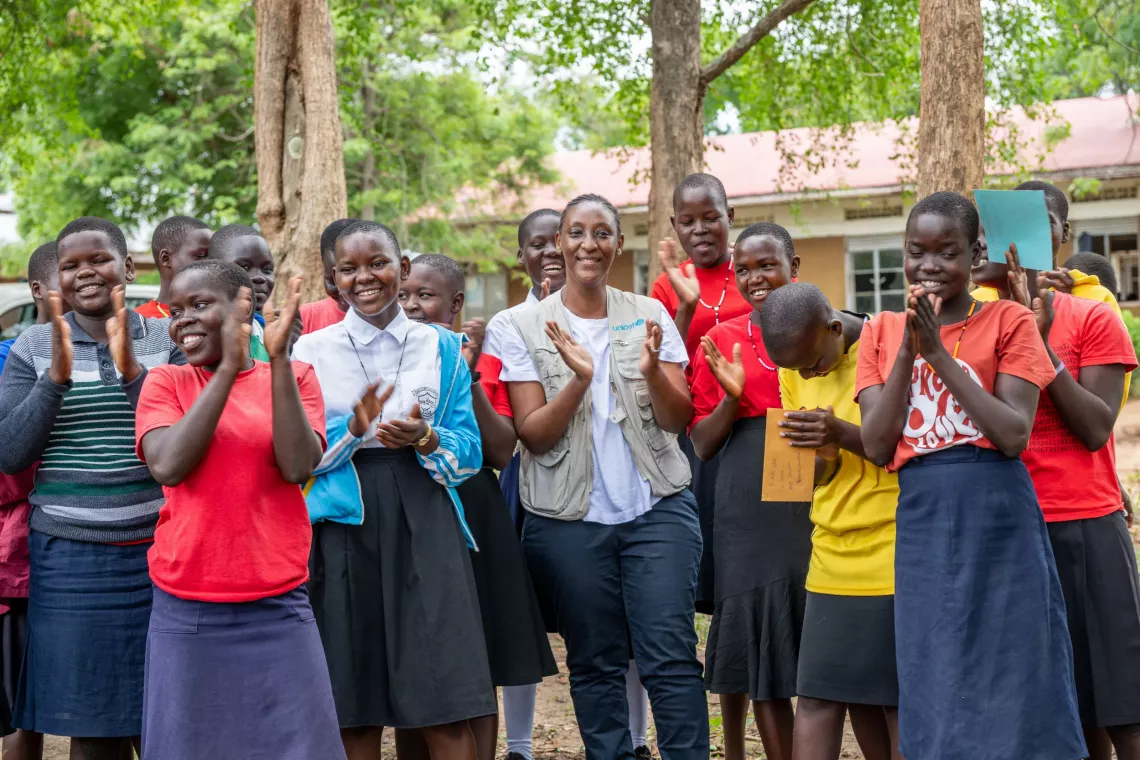
Laughter and song echoed through the compound at Rhino Camp Secondary School in Madi-Okollo District as adolescent girls posed with UNICEF Uganda’s Social Policy officer, Allen Nakalo. They waved, danced, and shouted their dreams after receiving CashPlus funds. “I want to be a doctor,” one said. “A lawyer,” another chimed in, and all together they shouted, “Thank you UNICEF! Thank you European Union!”
Yet behind their joy lie layers of trauma. These girls come from refugee host communities, where many of their neighbors have fled conflict, lost family members, or live in overcrowded homes. CashPlus provides them with the stability to receive a decent education, and envision futures beyond mere survival.
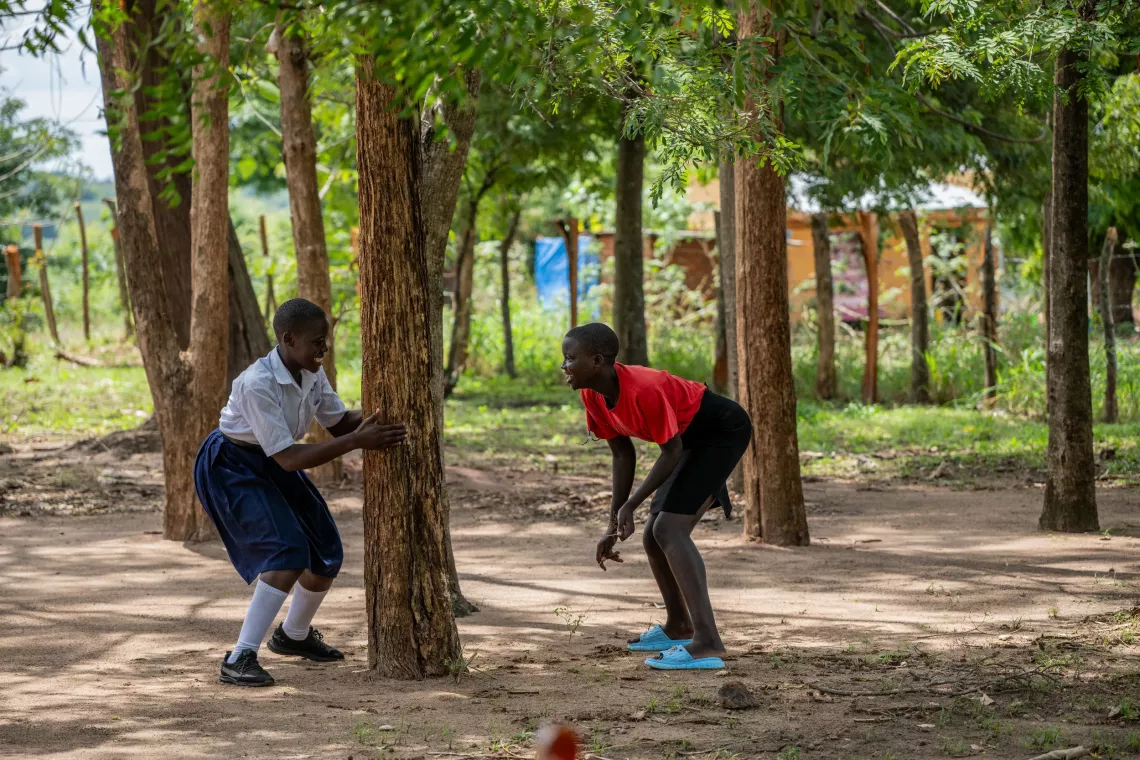
Under the canopy of trees at Rhino Camp Secondary School, Madi-Okollo District, two best friends, Precious Letasi and Comfort Lenia, play during break time after confirming that they were both beneficiaries of the CashPlus initiative. They live in Tika, a host community near Rhino Refugee Settlement Camp, where life is already difficult for many Ugandan families.
Hosting refugees brings immense pressure on local schools, health centres, and water sources. Families in host communities, already struggling with poverty often feel overlooked. Yet here, education has become a unifier. The CashPlus initiative recognizes this delicate balance, ensuring that both refugee and host community girls receive equal support. For Precious and Comfort, the CashPlus means the cost of school requirements, shoes, and meals are met. But more than that, it represents solidarity. “We know at least six girls in our community who got pregnant and dropped out of school, but we will keep each other going,” Comfort says.
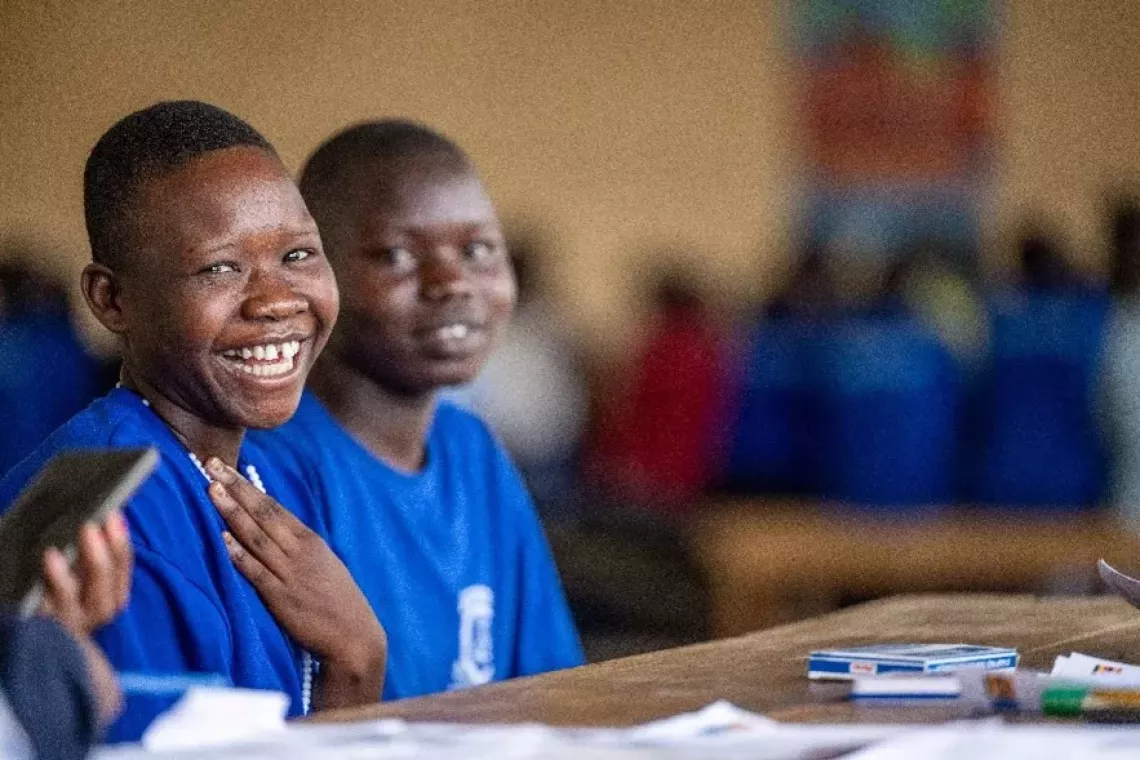
Consulate Alimuchan and Vivian Adinzeru, two friends at Uringi Secondary School in Nebbi District, beam with contentment after confirming they are part of the CashPlus beneficiaries. “We’ve made a pact,” Consulate says. “We will finish Senior Four together. We will not get pregnant or miss classes. If one of us wants to drop out, the other will pull her back.”
Their friendship, born of shared struggles, is a lifeline. In West Nile, where dropout rates are as high as 80 per cent, these girls are finding strength in peer support, boosted by the reliability of CashPlus.
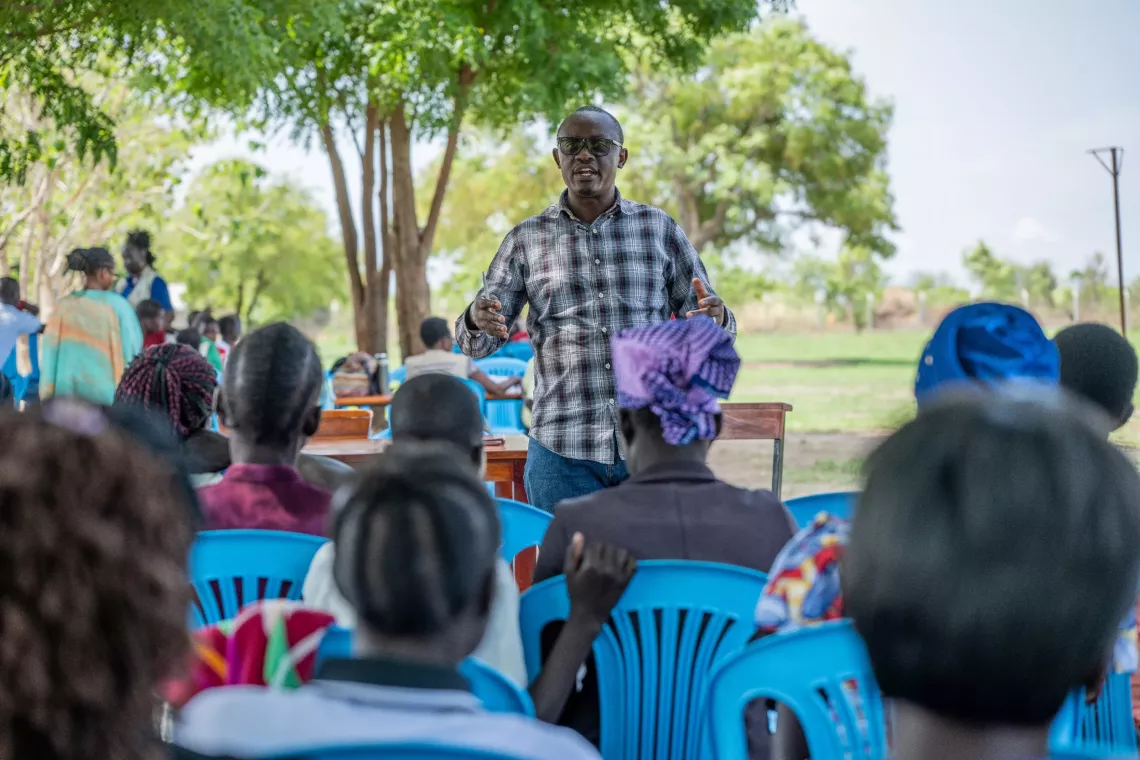
Francis Tihinduka, a Ministry of Education and Sports official, talks to parents at the school compound of Palabek Ogili Secondary School in Lamwo District about the progress of CashPlus implementation. “This is a European Union-funded and government-led initiative. We’re here to make sure every girl supported stays in school and finishes strong.”
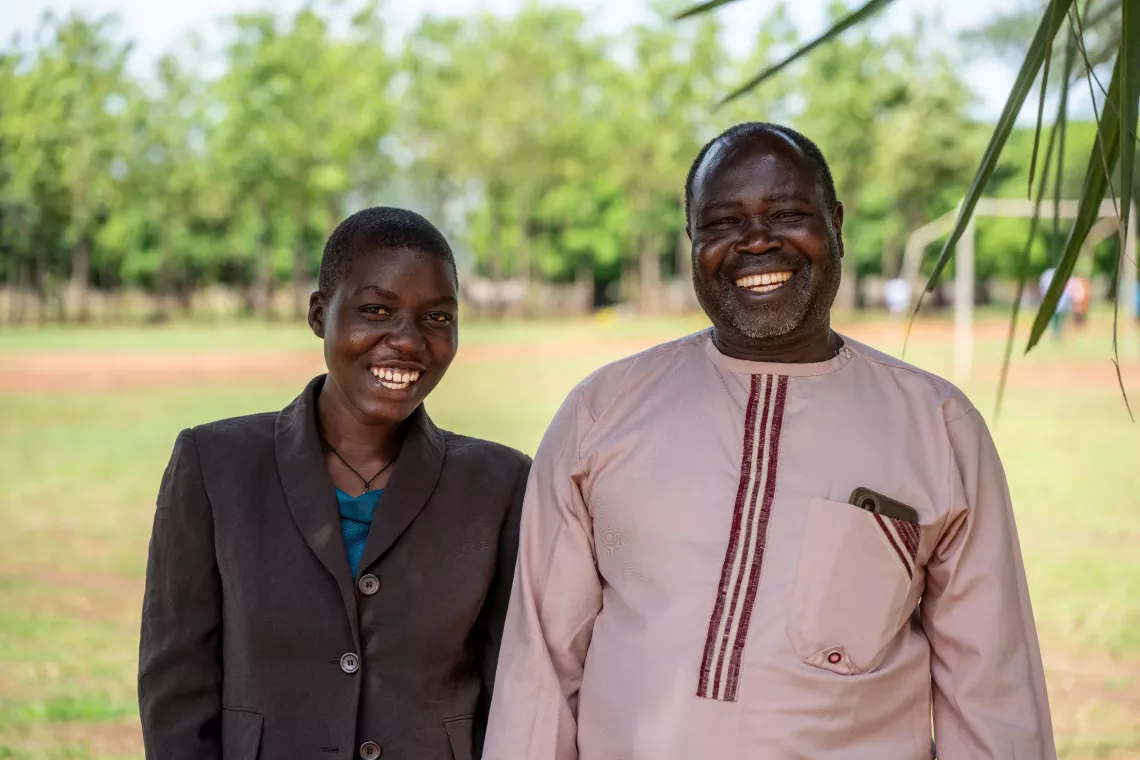
Beatrice Aber and her father, Daniel Uhuru, pose under a tree at Palabek Secondary School in Lamwo District after receiving their CashPlus funds. “We lost everything, including her mother, when we fled,” Daniel says. “But I didn’t want her to lose school too.”
For refugee families, every term in school is a struggle, but CashPlus helps cover the gap and with each cash transfer and each peer mentorship session, the goal of finishing school draws closer.


