

Fostering Vaccine Confidence in Turkmenistan Through Community Engagement
Building Trust in Vaccines Through Community Involvement

When European Immunization Week kicked off in Turkmenistan on April 27, the goal was clear: to go beyond information and spark real understanding and trust in vaccines. What unfolded over the following seven days was a series of experiences that showed how listening, engaging, and simplifying science can lay the groundwork for longer-term change.
It began with a new format — Dialogue with a Child Development Expert — that proved to be anything but routine. Parents, caregivers, and community members filled the space, eager to ask questions and share concerns. Experts Olena Staretz and Sulgun Berdiyeva didn’t just deliver information; they created a space where people felt heard. With 150 participants and strong online engagement, the series reminded us that trust grows when we talk with people, not at them.
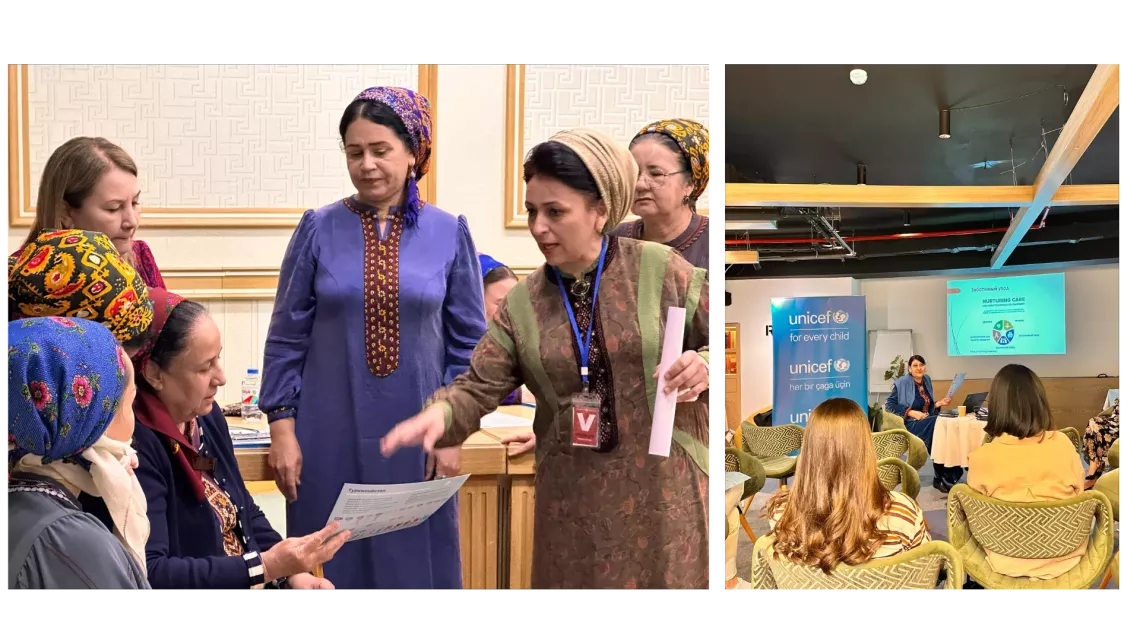
Meanwhile, in a seminar room, another important conversation was unfolding — this time with family doctors. In a UNICEF-led training, doctors explored how their personal stories, biases, and communication styles influence how families receive immunization advice. Through role-playing and reflection, the session reframed doctors not just as service providers, but as human connectors. It’s a shift with potentially large ripple effects — especially during national immunization campaigns.
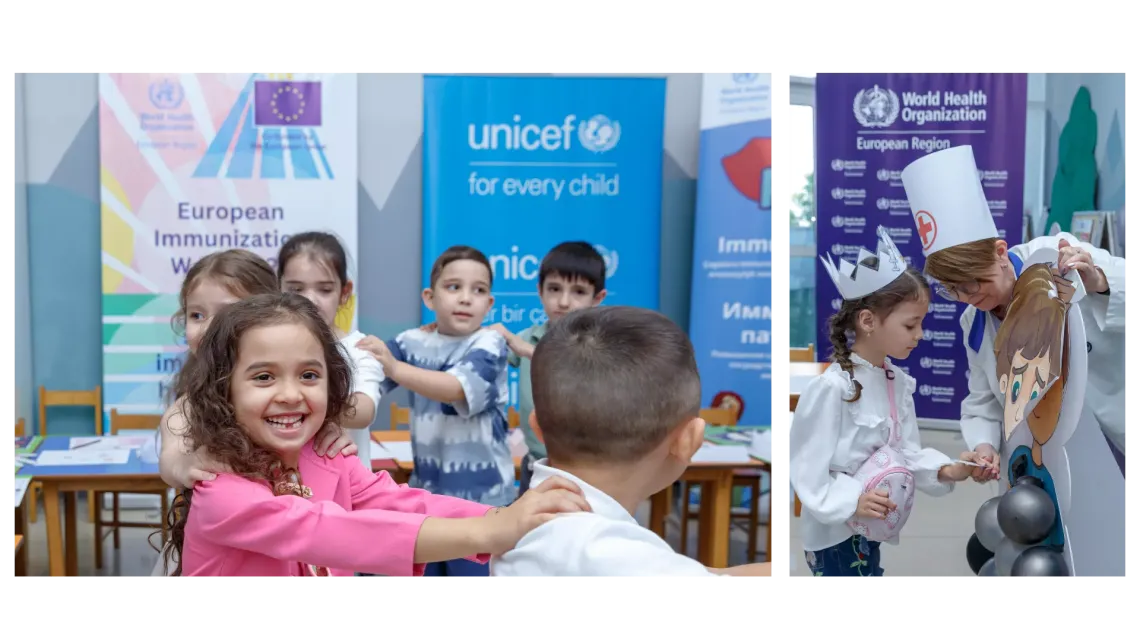
Finally, came the children. At an educational center called Clever Kids, a room full of six- to eight-year-olds learned how diseases spread and how vaccines work — all through play and storytelling. The result? Curiosity, laughter, and parents asking when the next session would be.
Across digital platforms, a coordinated social media campaign brought these themes to a wider audience, using plain language and myth-busting visuals to reinforce key messages. In just one week, the posts reached over 4,600 people and garnered nearly 7,000 views — a reminder that smart digital content can amplify in-person work.
Looking ahead, these efforts point to several strategic opportunities:
- Sustaining community dialogue: Events like the expert-led sessions could evolve into a regular platform for engaging families in broader child health topics — creating a space for good practice in parenting thrive. UNICEF hired experts promote messages and point to resources available.
- Embedding communication into health systems: The interpersonal skills training for doctors should not be a one-off. There is strong potential to integrate this approach into medical education and in-service training, ensuring it becomes a standard part of immunization delivery. UNICEF Turkmenistan plans to further introduce ECA RO developed toolkit on interpersonal conversation on immunization.
- Expanding early childhood engagement: The children’s session revealed a promising entry point for age-appropriate health education. With further support, this model could be scaled up across schools, helping build a generation of health-literate youth.
European Immunization Week in Turkmenistan may have lasted just seven days, but its insights offer a roadmap for something more enduring: a health communication strategy rooted in empathy, relevance, and participation. With continued investment and collaboration, these small steps can lead to bigger shifts in how we engage the public and protect children’s health — not just once a year, but every day.
European Immunization Week in Turkmenistan may have lasted just seven days, but its insights offer a roadmap for something more enduring: a health communication strategy rooted in empathy, relevance, and participation. With continued investment and collaboration, these small steps can lead to bigger shifts in how we engage the public and protect children’s health — not just once a year, but every day.


