Growing Up with Questions and a Safe Place to Ask Them
In Reyhanlı, adolescent girls are finding confidence, trusted information and the freedom to ask the questions that shape their future.

- Türkçe
- English
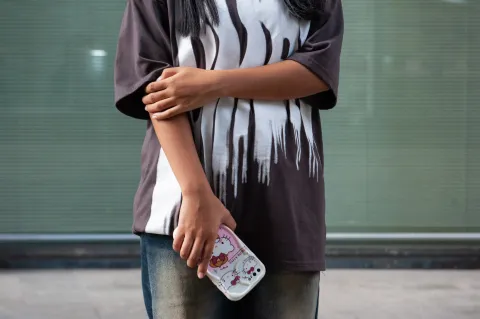
Growing up comes with questions. Questions about changing bodies, friendships, feelings, rights and the world around us. Asking questions is how children learn, make sense of new experiences and discover who they are becoming.
Yet for many adolescent girls, asking those questions is not always easy.
For adolescent girls in particular, embarrassment, fear of being judged or simply not knowing whom to turn to can leave important concerns unspoken. As a result, questions that matter can remain unanswered.
In Reyhanlı, Hatay, a group of adolescent girls participating in a UNICEF-supported programme have found a place where curiosity is welcomed and questions are met with reliable information, support and understanding.
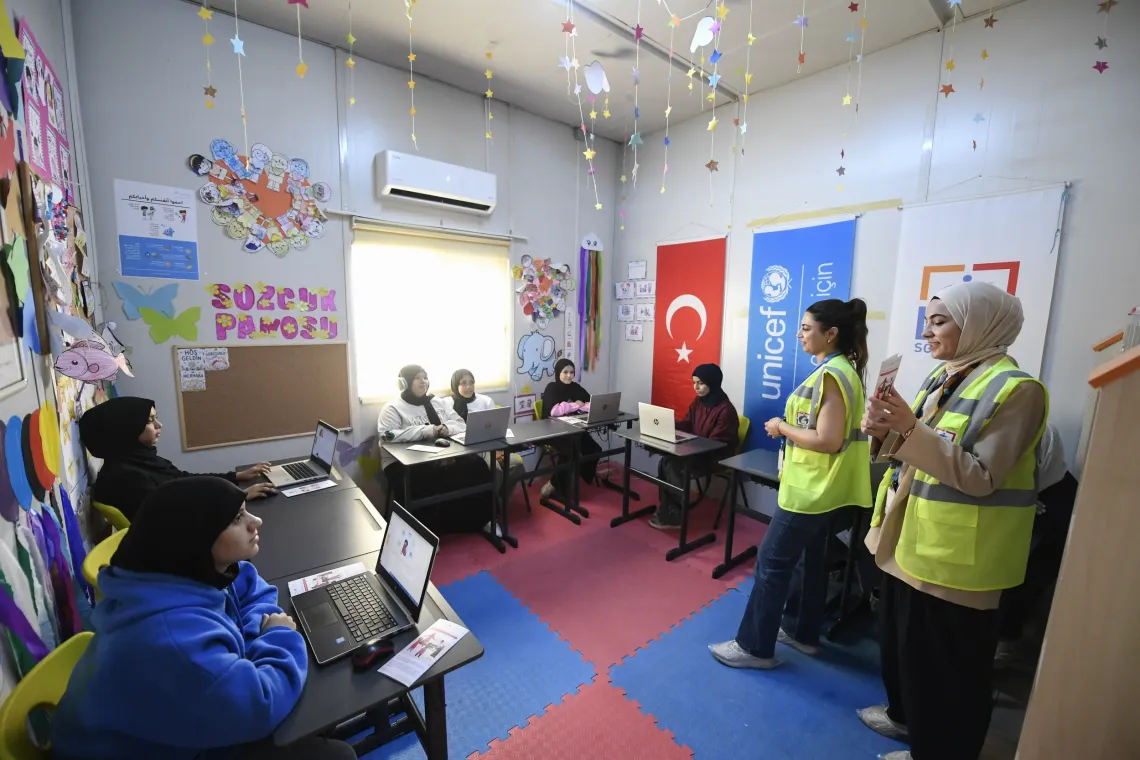
Most of the girls have been attending activities at the centre for around a year. They come from different schools and backgrounds, but the centre offers something they all value: a safe environment where they can spend time together, connect and talk openly about issues affecting their lives.
For Hacer, who is preparing to start eighth grade, the programme offers opportunities to explore topics that are often left out of classroom conversations.
“We learn some things here that we don’t learn at school,” she says. Many of these issues are exactly the ones adolescents can find most difficult to discuss.
Through UNICEF’s partnership with the Association for Social Development and Aid Mobilization (ASAM), the girls are introduced to Laaha, UNICEF’s Virtual Safe Space for women and girls. Laaha provides a safe and accessible digital space where women and adolescent girls can find reliable information on issues including health, safety and protection from violence, ask questions and learn where to find services and support.
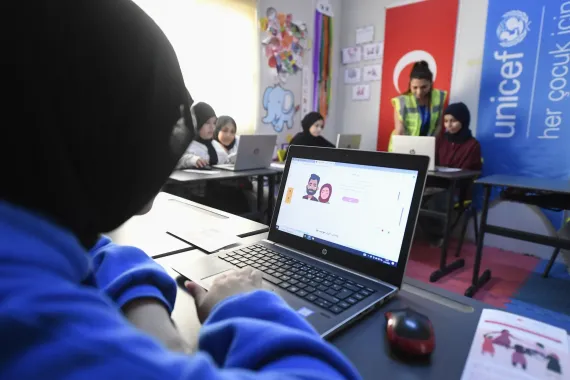
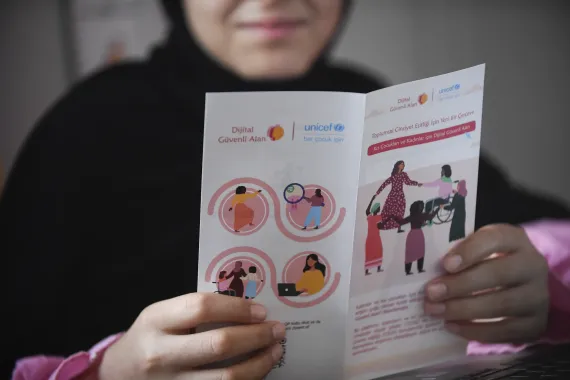
For the girls in Reyhanlı, access to trusted information is important. Equally important is having the freedom to seek that information privately, at their own pace.
One girl explains that adolescents can feel embarrassed to discuss it openly, even when information is available at schools.
“Even if we don’t talk about these things, when we want information, we can actually find it through the platform,” she says. “I think this is a very good platform for 13- to 18-year-olds.”
Another girl describes a situation familiar to many adolescents – having questions but not always feeling comfortable asking a parent or family member.
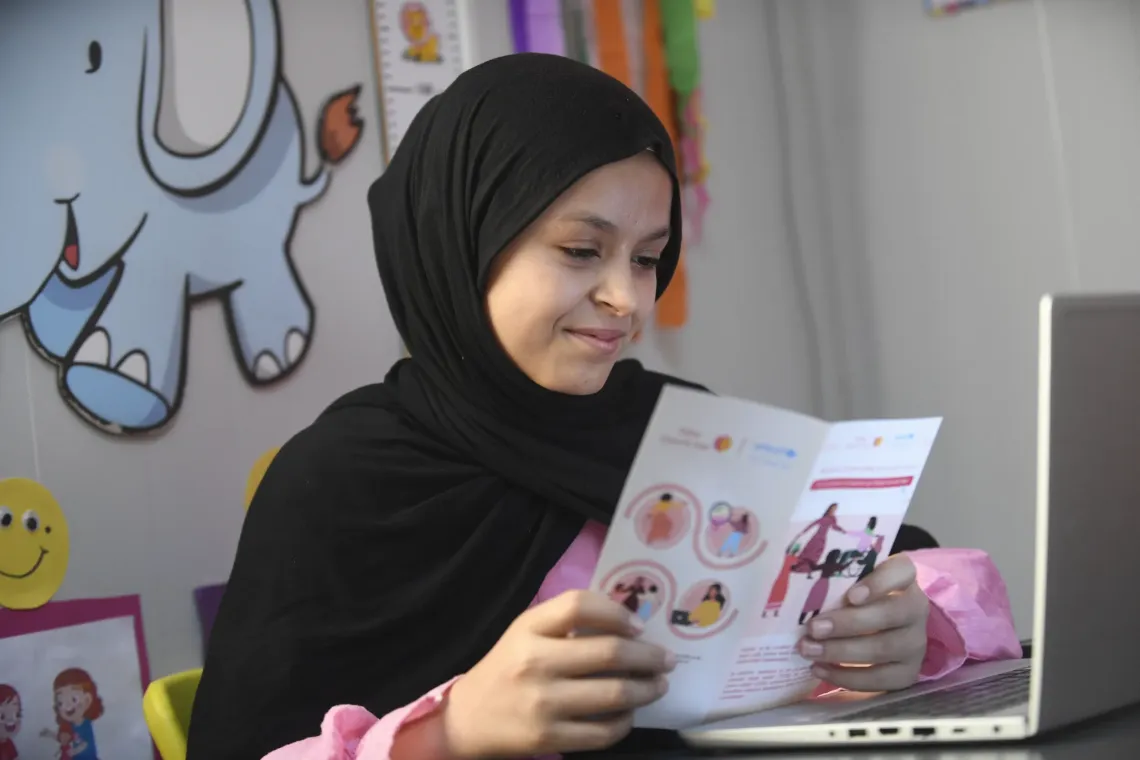
“If there is something I don’t know, or something I don’t want to ask my mother about, I can search for it here and find the answer,” she explains.
For a girl navigating adolescence, that can make a meaningful difference. Questions about physical changes, emotional well-being, personal safety or something encountered online do not have to be ignored simply because they feel difficult to ask aloud.
Instead, girls have a place to start.
And often, empowerment begins in exactly that way: with access to reliable information, confidence to seek answers and knowledge of where to turn for support for when it is needed.
Finding information they can trust
Laaha was designed with the realities faced by women and adolescent girls in mind. Physical safe spaces are not always accessible, particularly for those affected by displacement, crisis or other vulnerabilities. The platform complements face-to-face support by creating a digital space where women and girls access information, ask questions and learn where to find help.
Safety and accessibility are built into the platform. Its features include a quick-exit function, access to information on nearby services and a design intended to make the platform accessible to women and girls with different levels of literacy and digital access.
Language matters too. Laaha is available in Turkish, Arabic, English and Kurdish, allowing girls to explore information in a language in which they feel comfortable.
But what happens through the programme goes beyond the screen.
The girls talk about the online world too – from the risks of sharing photographs to the possible effects of social media on children and adolescents. They discuss online safety, learn more about their rights and explore where they can turn for information and support.
Yet what the girls gain from the programme extends beyond the digital platform itself.
When a girl believes she is the only one with a particular question or concern, silence can feel easier than speaking up. Hearing peers ask similar questions can help normalize experiences, build confidence and reduce feelings of isolation.
Through the newly introduced forum feature, girls can connect, exchange ideas and support one another. With this function, Laaha becomes a place where girls learn from one another, find their voices and feel more confident about the decisions that affect their lives.
As their conversations move between school, growing up, the internet and the challenges girls encounter, one message stands out: girls do not need to have all the answers. They need safe and trusted ways to find them.
A space girls want to return to
Virtual Safe Space forms part of UNICEF’s broader child protection work with ASAM in Hatay.
Hatay is home to more than 146,000 refugees, alongside vulnerable members of host communities. UNICEF has partnered with ASAM for many years to improve access to child protection services through community-based programming and mobile outreach. In Reyhanlı, the recent introduction of the Virtual Safe Space is complementing face-to-face programming by extending safe and accessible opportunities for girls to access information and support.
For the girls themselves, however, the value of the programme is deeply personal. One participant remembers discovering the centre almost by chance. Once she came inside and got to know the space, her reaction was simple: “I didn’t want us to leave the centre.”

Since its launch in Türkiye, the Virtual Safe Space has reached more than 17,000 girls and women from Hatay, Gaziantep, Kahramanmaraş, Adana, Kayseri, Şanlıurfa, Kilis, Ankara, Van, İzmir, Adıyaman, and İstanbul, comprising about 11,000 girls and 6,000 mothers, particularly from refugee and crisis-affected communities, helping them access reliable information and support.
Growing up will always bring questions. Empowering girls does not mean providing every answers. It means making sure they have the knowledge, confidence and safe spaces they need to seek those answers, understand their rights, find support and make informed choices for themselves.
In Reyhanli, that journey begins with something simple but powerful: knowing that every questions matter. UNICEF’s work with ASAM in Reyhanlı, including the Virtual Safe Space, is made possible with the generous support of FCDO.