Change begins at home
In Kilis, Anber works with children, youth, and parents to raise awareness about child, early, and forced marriage through a UNICEF-supported programme that promotes gender-transformative parenting and drives lasting change.

- Türkçe
- English
Changes do not always begin with big steps; sometimes they start with small conversations. In Kilis, these conversations with women, youth, and parents share a common thread: an invitation to reimagine the future of children. What begins as dialogue slowly shapes vision, and vision becomes action. Behind this transformation stands a woman leading all the field efforts, turning words into lasting impact.

As head of the field team at Kilis Municipality, Anber leads a UNICEF-supported programme that works to prevent child, early, and forced marriage while promoting gender-transformative parenting. Through tailored modules and materials, the programme equips parents and families with knowledge and skills, enabling Anber and her team to engage meaningfully with communities and create safe spaces for reflection and dialogue.
Equal parenting helps prevent child, early and forced marriage by challenging harmful gender norms at home, promoting equality between boys and girls, and equipping children with the confidence and skills to resist coercion. By modeling fairness and shared responsibility, caregivers create an environment where daughters are valued equally, reducing the pressure to marry them off early.
“Change starts within the family,” Anber says. “When families share care work, truly listen to their children, and stay connected to one another, trust grows and new possibilities open. In homes where girls feel valued and heard, the pressure to marry early diminishes. Parents who nurture equality and respect show their daughters that their future can be built on education, dreams, and choices—not on forced decisions. This is how families become the first line of defense against child, early, and forced marriage.”
“Sometimes, a child, mother, and father have never really heard each other’s stories, even within the same house. In these sessions, we create space for them to hear one another.”


“I got married at 19,” she says. “I was still very young. I didn’t have the awareness of this back then. Today, through this work, I help other girls and mothers recognize their rights earlier, so they can make informed choices, protect their futures, and break cycles of child and forced marriage that once felt inevitable.”
“By fostering equal parenting, we may transform family perspectives and play a key role in preventing child, early and forced marriage.”


To illustrate this programme’s impact, Amber shares a case directly from her sessions. “We had a 14-year-old student who came to me and said, Teacher, they are coming to ask for my hand in marriage. We immediately began conversations with her and her parents, creating a safe space where everyone could express concerns. In these sessions, we talked about the risks of child marriage, the importance of education, and the girl’s own hopes for her future. With follow-up meetings that also involved her school and social services, her parents gradually understood the long-term harm of marrying her so young and the opportunities she would gain by staying in school. Over time, they changed their minds. She is still in school today. Every time we see her, we are reminded why these sessions matter and why we do this work.”


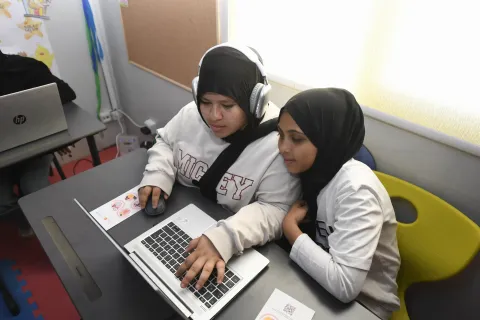
UNICEF, with the generous financial support of the Government of Japan, reached more than 24,000 adolescents, parents, and caregivers, including families facing increased risks of child protection concerns and gender-based violence through the skills and empowerment activities, gender-transformative parenting sessions, and the Virtual Safe Space platform in earthquake-affected and refugee-hosting communities.