In Case of an Emergency, Put on Your Own Mask First to Help Your Child
By prioritizing specialized mental health and psychosocial support, UNICEF and its partners are helping to restore hope and stability in the lives of those affected by the earthquake, one session at a time.

- Türkçe
- English
In emergencies, we are often reminded to put on our own mask before assisting others, especially our children. This airplane safety measure, while seemingly self-centered, is a life saving measure. This principle vividly came to life during a recent UNICEF-supported specialized mental health and psychosocial support activity carried out by TARDE.
The devastating earthquakes of February 2023 profoundly affected millions of lives across Türkiye. Everyone—men, women, parents, children, the elderly, and the young—struggled with their own traumas. Despite the support available, this journey of recovery is one that each person had to undertake individually.

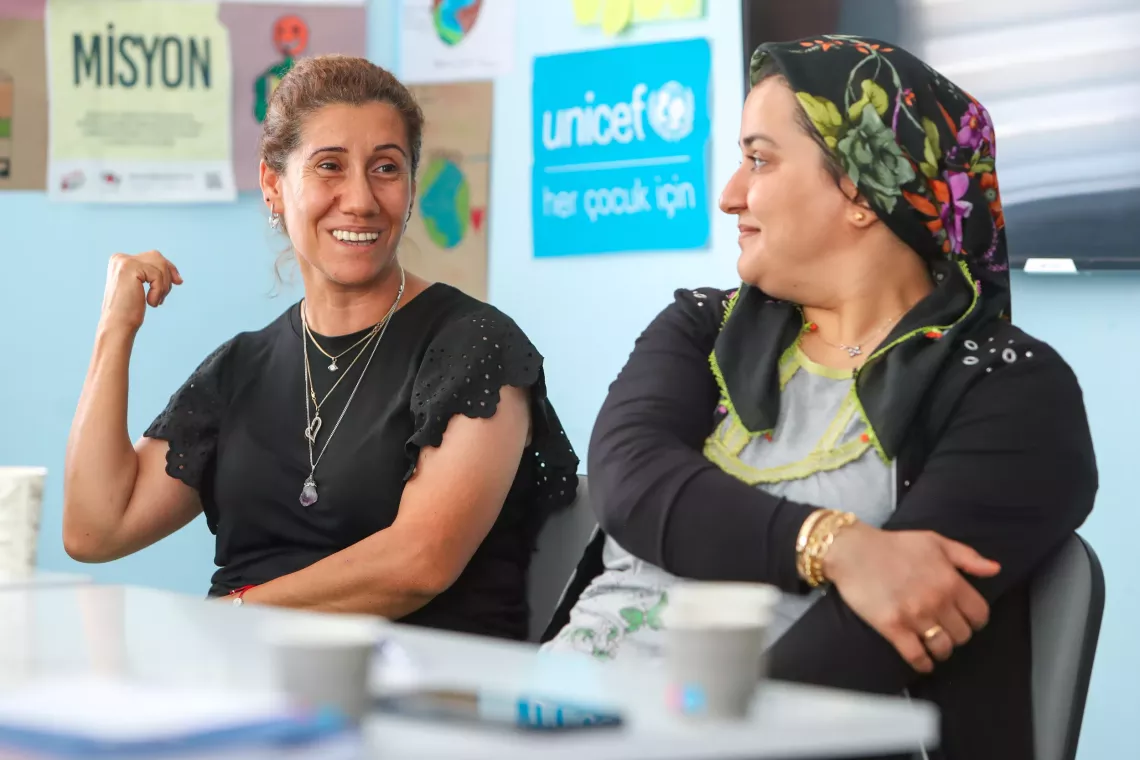
Şükran, a mother of two, shared her harrowing experience at a UNICEF-supported specialized mental health and psychosocial support session organized by TARDE in Iskenderun.
"I didn't know what a panic attack was. I felt like I was having a heart attack. I lost my sister in the earthquake, but I didn't even have time to mourn. As a mother, I had to maintain order here too. I couldn't express my feelings and experiences. There were times I would force myself to cook even when I did not want to do anything," she said.
Through these specialized mental health and psychosocial support sessions, which she learnt about from her neighbour, Şükran finally had the opportunity to talk about her experiences.
“As I continued attending these meetings, I began to feel more like myself. My children and my husband also experienced this earthquake, and I suffered close losses. Yet, I was expected to maintain order as if we were still in our old home. Until I shared my feelings, I couldn't be useful to them. Then I said, “We have all experienced the same pain and difficulties. Please help me so we can deal with this together. When I expressed this, they truly understood how I feel and changed their attitudes. I realized I had never actually asked them for help before.”

Among the hardest hit were the residents of Iskenderun, who now find themselves living in container settlements, grappling with the trauma of loss while trying to maintain a semblance of daily life. TARDE, a recently established NGO, supported by UNICEF, has been providing specialized mental health and psychosocial support to help families navigate their new reality across the earthquake region. To date, this initiative has reached around 46,000 people across the earthquake-affected areas.
During a visit to a container settlement in Iskenderun, I attended a session where women gathered to share their struggles and learn coping strategies. Many of these women have been living in these temporary shelters for over a year and a half, dealing not only with their personal losses but also with the immense responsibility of caring for their families.
One participant, Güler, spoke about her initial struggles and how the specialized mental health and psychosocial support sessions have become a lifeline for her.

"I have learned to say no when I am not feeling well, even to my children. This has helped me preserve my mental health and be a better mother " she said.
The sessions focus on teaching women how to prioritize their mental health, akin to the oxygen mask guidance on airplanes: they must help themselves first before they can effectively help others. This analogy resonated deeply with the participants, who often felt overwhelmed by their dual roles as caregivers and survivors.
The psychological impact on children was a significant topic of discussion. Many children exhibited signs of trauma—some became withdrawn and avoided social interactions, while others expressed their distress through anger and frustration. The lack of space and normalcy further exacerbated their struggles, affecting their concentration in school and overall mental health.
Through these sessions, mothers learned strategies to support their children's emotional needs while managing their own. They were taught to communicate openly with their children, set boundaries, and seek help when needed. As a result, many reported feeling more resilient and better equipped to handle their daily challenges.

Güler highlighted the transformative power of these sessions:
"These sessions have given me the strength to keep going. I look forward to Thursdays because I know I’ll feel better after sharing and listening to others."
There are also sessions for men, although cultural norms make it challenging for them to openly seek help. Many men feel embarrassed to admit they need support, adhering to the societal expectation that men should always be strong. Despite this, efforts continue to encourage male participation, understanding the crucial role they play in family dynamics.
These efforts have not only provided immediate relief but have also fostered a sense of community and mutual support among the participants. The women of Iskenderun now feel heard and understood, their resilience reinforced by the collective strength of their peers.

As the recovery process continues, the invaluable financial support from the United States Government and the ongoing assistance from UNICEF remains vital. These UNICEF-supported activities have significantly contributed to the progress made so far. However, the road to healing is long, and many families still require sustained assistance to fully rebuild their lives.
This story of resilience and support highlights the importance of addressing mental health in disaster recovery efforts. By prioritizing specialized mental health and psychosocial support, UNICEF and its partners are helping to restore hope and stability in the lives of those affected by the earthquake, one session at a time.