Reported attacks damaging water systems in conflict triple as children lose access to safe water - UNICEF
Water Under Fire Volume 4 documents a range of attacks harming water, sanitation and hygiene (WASH), the workers who run them and children and families who depend on them in 23 countries and territories
- Türkçe
- English
NEW YORK, 5 November 2026 – Reported attacks that damaged or destroyed water and sanitation systems in conflict rose threefold between 2021 and 2025, heightening children’s risk to disease outbreaks, malnutrition and violence, according to a new UNICEF report released today.
Water Under Fire Volume 4 documents attacks harming water, sanitation and hygiene (WASH) systems, workers and users in 23 countries and territories between January 2021 and June 2026. It finds growing patterns of attacks, with more frequent and varied attacks affecting wider geographic areas globally.
“Attacks on water and sanitation systems deprive children of safe drinking water and the essential services that rely on water to function effectively,” said UNICEF Executive Director Catherine Russell. “Humanitarian workers do their best to keep water flowing despite increasing attacks. However, repairs cannot substitute for the protection of these facilities that is required under international humanitarian law.”
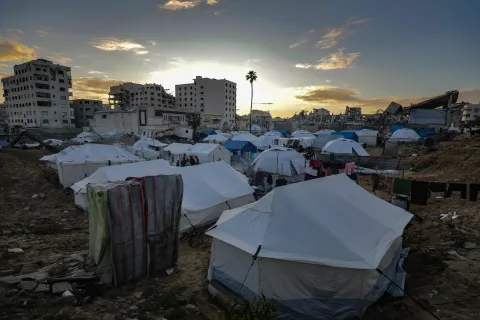
The report describes seven types of attacks. They range from strikes on treatment plants, pipelines and wells to the contamination of water sources, restrictions on spare parts and treatment chemicals. In Sudan, by March 2024 only one of Khartoum State's 13 water treatment plants was still functioning. In Burkina Faso, more than 145 water points had been destroyed in attacks between 2020 and 2025, cutting off access for around 830,000 people, more than half of whom were children. In Gaza, since October 2023, more than 130,000 metres of sewage pipeline had been damaged, and untreated sewage was being discharged into the Mediterranean Sea or to temporary holding areas.
The report shows how water can be cut off even where pipes and pumps are intact. In Ukraine, by December 2022, attacks harming energy infrastructure had left almost 7 million children without sustained access to electricity, heating and water. In Iraq, a drone attack on a gas field in November 2025 cut electricity production across the Kurdistan Region by about 80 per cent, and authorities had to ration power between water projects, hospitals and cities.
The effects reverberate beyond access to drinking water. Without clean water, health facilities cannot sterilise equipment, deliver babies safely, or prepare the therapeutic milk used to treat severely malnourished children. Repeated diarrhea from unsafe water stops children absorbing the nutrients they need and weakens their ability to fight the infections that multiply when water is unsafe or inaccessible.
In camps in eastern Chad hosting refugees from Sudan, WHO linked a hepatitis E outbreak to poor access to safe water and sanitation. Half of the 2,092 suspected cases recorded between January and April 2024 were children aged 6 to 17.
The report also documents how children have been killed, injured or harmed while queuing for water, with multiple examples documented in Gaza. Where families must collect water outside the home, women and girls do this in seven out of ten households. Longer, more dangerous journeys raise their risk of sexual violence and take time away from school.
The people who keep water running are also at risk, with the UN recording 14 staff of Lebanon's Water Establishments killed during the conflict in 2024.
The report lays out how humanitarian teams are adapting. In Afghanistan, around 65 per cent of UNICEF-supported water systems now run on solar power, which reduces dependence on fuel and the national grid. In other contexts, teams are training local mechanics, stocking spare parts before damage occurs and building smaller local systems so that one strike does not cut supply to everyone.
However, this work is at risk due to severe funding cuts. In countries with a coordinated humanitarian WASH response, 137.9 million people need WASH assistance, and only 26 per cent of the funding required for 2026 has been received.
UNICEF is calling on parties to conflict, Member States, donors and humanitarian and development actors to:
- Treat WASH systems in conflict as indispensable to civilian survival, particularly for children, and their protection as essential to the realization of their fundamental rights.
- Create a mechanism to systematically collect data on attacks affecting WASH in conflict.
- Protect children and communities seeking WASH services and WASH and energy workers.
- Enable safe, timely and unimpeded access for humanitarian, WASH and energy workers to people in need and to the essential supplies required to keep water and energy systems functioning.
- Invest in conflict-resilient WASH approaches and locally led service continuity arrangements.
Media contacts
Additional resources
About UNICEF
UNICEF, the United Nations agency for children, works to protect the rights of every child, everywhere, especially the most disadvantaged children and in the toughest places to reach. Across more than 190 countries and territories, we do whatever it takes to help children survive, thrive, and fulfil their potential.