Health and nutrition services closer to home: Reaching remote communities impacted by climate change
UNICEF supports ‘one-stop shop’ for remote communities

In rural communities, accessing health care is shaped by distance, difficult terrain, and a changing climate. Floods, droughts, storms and landslides can further isolate communities, disrupting all essential services, and especially health, nutrition and education.
A monthly integrated health outreach “one-stop” model fills gaps by extending services to hard-to-reach villages and linking communities to the health system. From screening to treatment, these services welcome all and can especially help detect malnutrition in children and support healthier pregnancies. In a country where climate change impacts are increasing and nearly half of children face stunting, these interventions are critical to protecting every child’s future.
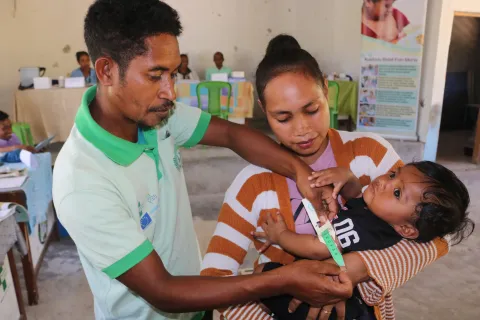
Zenesia arrives at the event, carried by her mother, Delfina, joining many others from the community. The monthly integrated health outreach is open to everyone. It’s a “one-stop” service that brings essential care closer to villages that are often hard to reach. Delfina brought her child for a check-up and to have a rash on her leg looked at.
Her journey begins at registration. Health workers carefully record her information and enter it into the national digital health system. This small step is important for connecting Zenesia to follow-up care and helps ensure that no child is missed, even in remote areas.
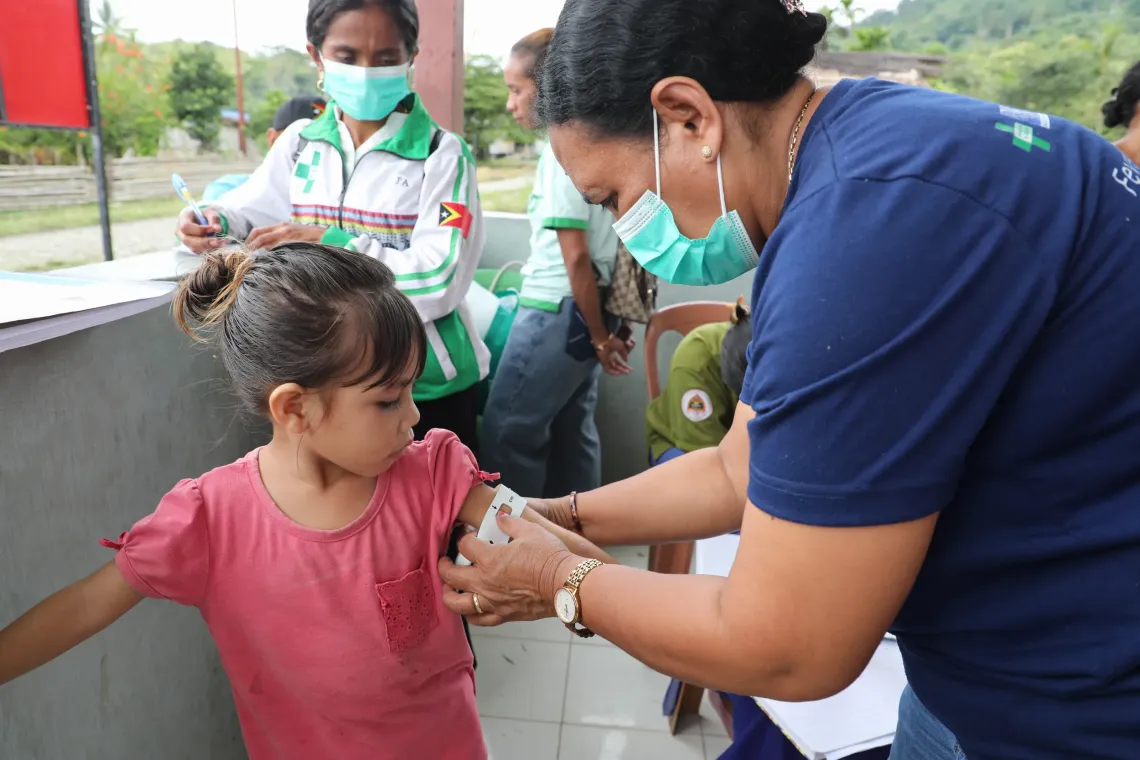
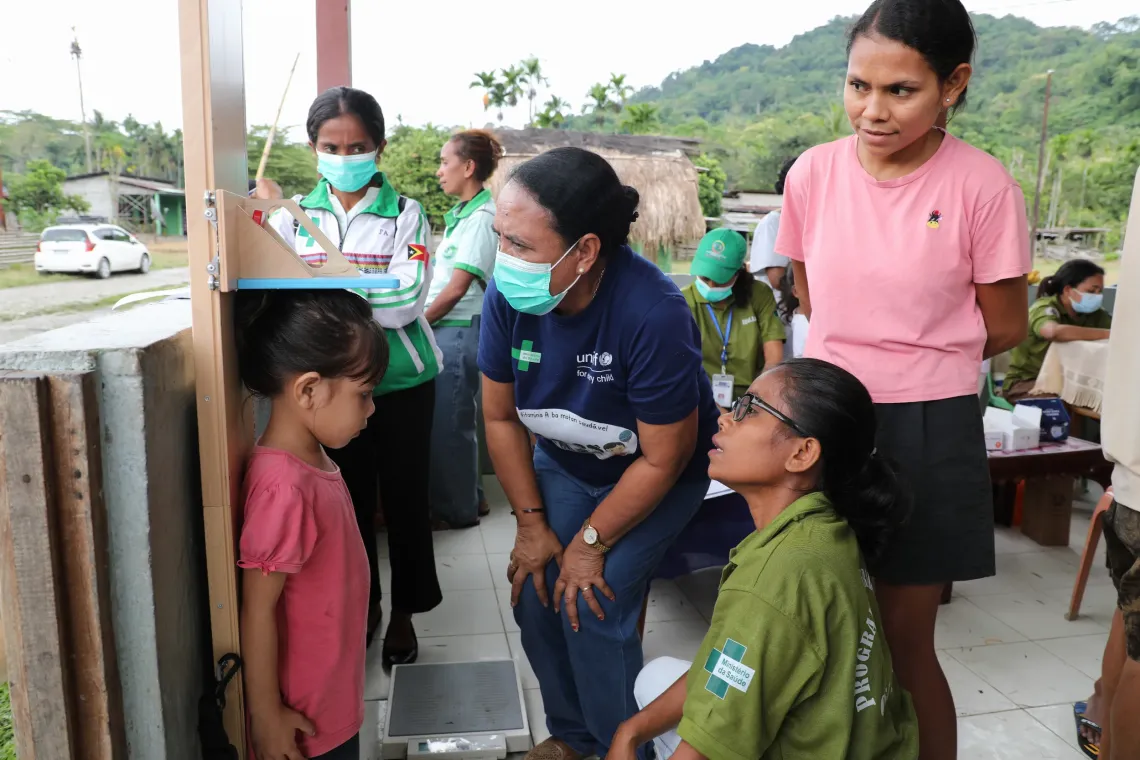
From there, she moves to the screening station. Her arm is gently measured using a mid-upper arm circumference (MUAC) tape, and her height is recorded. These simple checks help identify early signs of malnutrition. This is a critical step in a country where nearly half of children under five are affected by stunting.
For Zenesia, these services come at a crucial time. In many parts of Timor-Leste, changing weather patterns can affect agriculture and livelihoods. When harvests are disrupted or food becomes harder to access, children’s diets suffer, increasing the risk of malnutrition and illness.
Early screening helps catch these risks before they become life-threatening.
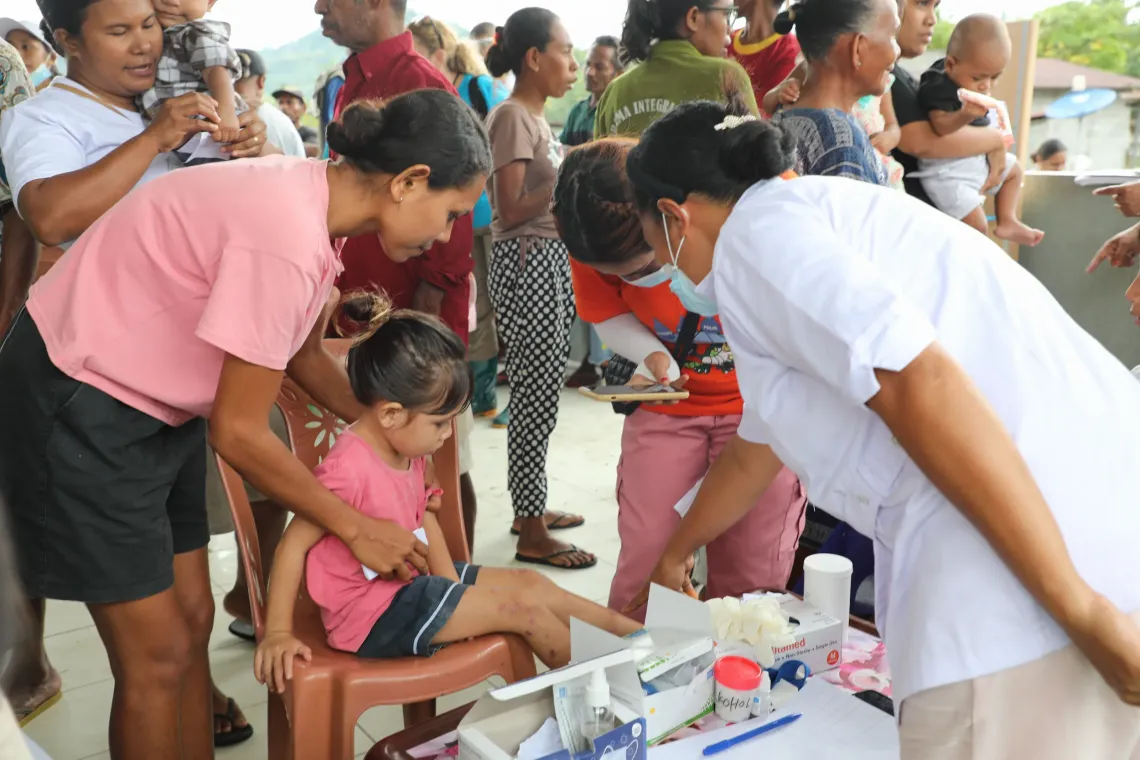
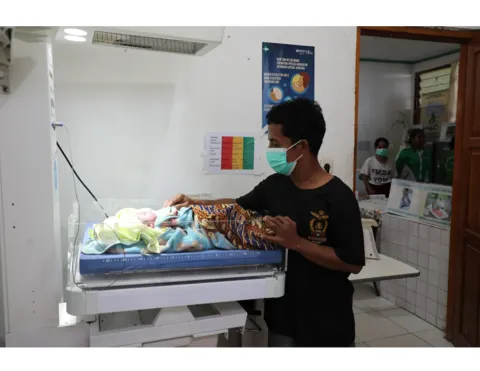
After screening, a nurse examines the rash on Zenesia’s leg and provides a cream to take home to treat it. Nearby, others are receiving different services. Pregnant women attend antenatal care consultations, where their health is checked and they receive nutrition counselling and supplements. Older patients have their blood pressure monitored.
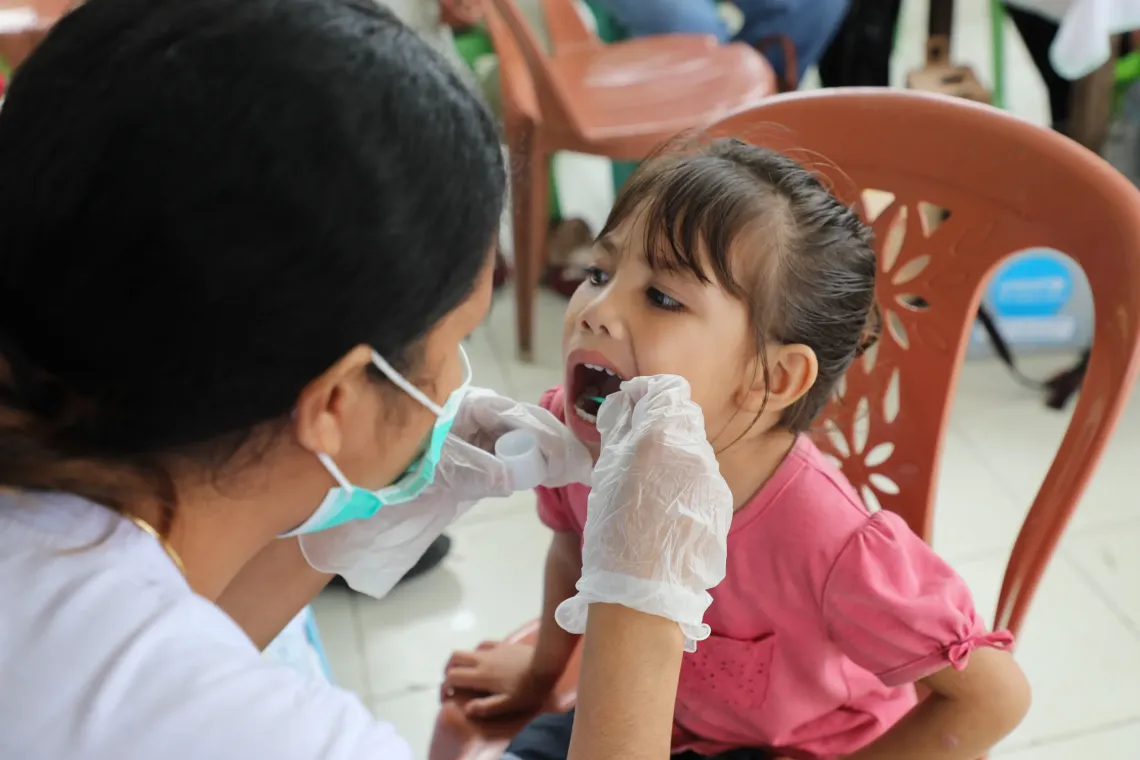
This integrated approach means that one visit can address multiple needs. It reduces the burden of travel, especially when heavy rains or poor roads can make repeat journeys difficult or impossible. The last stop for Zeneisia is a dental check-up.
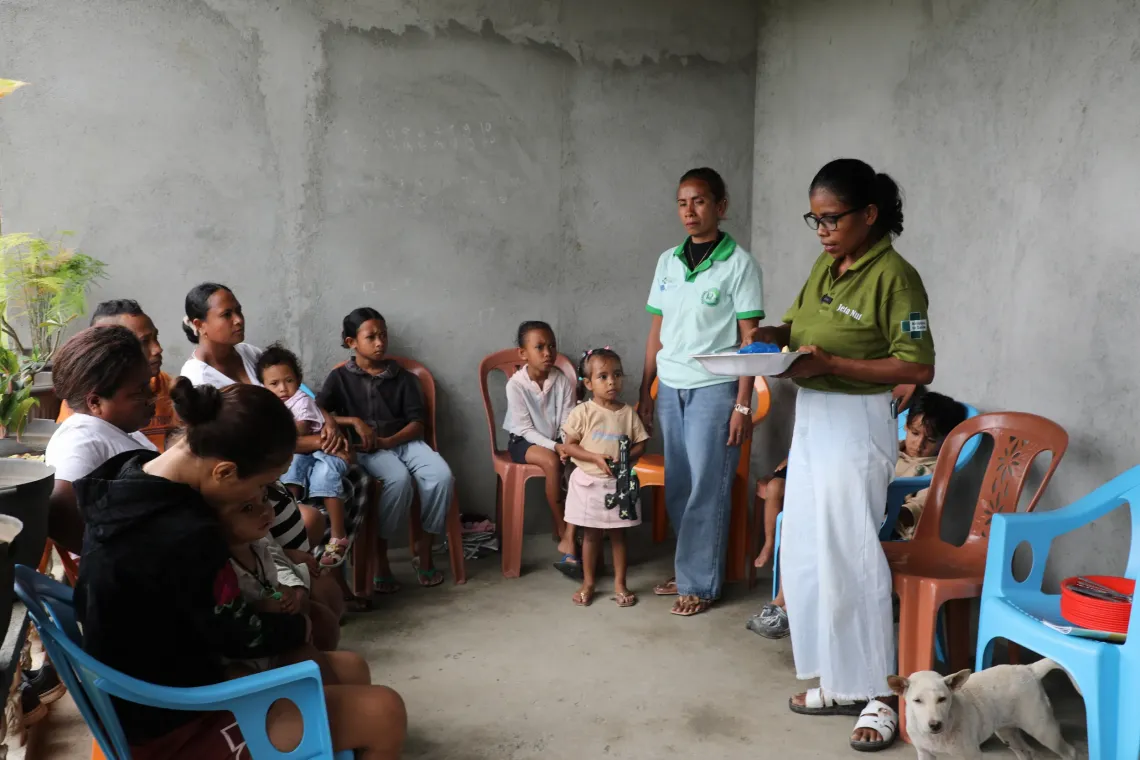
Beyond treatment, the outreach also focuses on prevention and resilience. Under a shaded area, community health volunteers and mother support groups lead counselling sessions and practical demonstrations. Families learn how to prepare nutritious meals using locally available foods, including crops that are more resilient to drought and changing conditions.
These small, practical lessons matter. As climate pressures continue to affect the foods grown in their area, families need the knowledge and support to adapt and keep children healthy, even as conditions become more uncertain.
By the end of the visit, Zenesia leaves with her rash treated, hergrowth monitored and teeth cleaned. But her family also leaves with something less visible: information, reassurance, and a stronger connection to the health system.
For communities facing increasing climate shocks, services like this are essential. They bring care closer, link health and nutrition, and help families respond to changing conditions before they become crises.
And for Zenesia, it is one step in a healthier start; all made possible by care that reaches her where she is.