Young voices, loud message
How the Sauti za Busara festival became a platform to speak about protecting children

When the drums began beating through the streets of Stone Town, children were not at the back of the street carnival.
They were leading it.
Among them was Nabiha Kassim Ally, a UNICEF Youth Advocate appointed in 2021 to champion mental health and speak out against violence against children, particularly girls.
Hand in hand with children, their voices joined in unison to chant:
“For every child! Every right!”
Acrobats swung through the air. Stilt dancers weaved between people. The sound of the ngoma (drumbeat) filled the streets. And yet at the centre of all of the energy, children claimed their space.
It was in this moment that the 2026 theme of Sauti Festival, Let Them (Children) Shine, truly came alive.


Sauti za Busara, one of the country’s most visible cultural platforms, became a space to amplify children’s voices. Together, UNICEF and Sauti turned music into a powerful call for children’s rights.
From the kick- off press conference, Nabiha’s voice took centre stage.
Standing before artists, media, and partners, Nabiha addressed the room with a quiet conviction:
“Every child is born with light. If we don’t protect them, nurture them, and believe in them, that light can fade. If my parents hadn’t believed in my light, I wouldn’t be standing here today, speaking on behalf of children in Tanzania,” she said.
Her words set the tone for what this partnership was about: ensuring that children are not just protected in policy, but supported, and given space to be heard.


On the second day of the festival, Nabiha joined the Movers & Shakers dialogue titled “Arts and Impact: Reaching Communities through Music to Address Violence Against Children,” alongside UNICEF Chief of Child Protection, Miranda Armstrong, Program Manager from the European Delegation, Ms Chiara Guidetti and popular Traditional Tanzanian musician, Manfongo. The discussion focused on how music and art can help address violence against children and women.
“Too many children remain silent,” Nabiha said. “Not because they have nothing to say, but because they do not feel safe to speak.”
She also encouraged artists to recognise their influence.
“Music reaches so many people in homes, in schools, and on young people’s phones. That’s why it’s important to carry messages that promote protection, respect, and care.”
The Sauti za Busara stage was not just for musical performances. It became a platform for protection.
On the final day of the festival, the microphones were quieter.
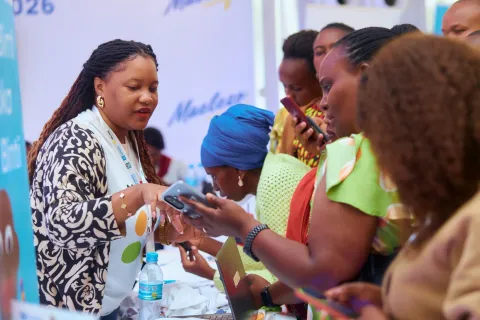
Instead of a stage or panel, Nabiha spent her time at the UNICEF booth, sitting with younger UNICEF champions, listening to their ideas, hearing their questions, and admiring their bold dreams.
There were no spotlights. Just whispers of conversations.
“When you actually sit and listen to children, you see that the future is already shifting. They are not afraid to speak up, and they are not afraid to lead either,” her face lighting up.

And perhaps that is what Let Them Shine truly means.
Not just celebrating children’s potential.
But protecting it.
Nurturing it.
Creating spaces where it can grow.
Because it is in these spaces where children truly shine.