Reimagining the future of fashion for a social change
In Tajikistan, girls-social entrepreneurs create responsible fashion collections thanks to Chloé’s support to UNICEF

DUSHANBE, TAJIKISTAN. A room full of tablets, a group of young girls-social entrepreneurs are sketching and creating digital prints, some are working to prepare mood-boards to get inspiration for the looks, while other girls have already started cutting, sewing and gluing the elements of what in a few days will become a real fashion collection.
They participate to a special fashion project proposed by UNICEF supported by the well-known luxury fashion house, Chloé.
Chloé has been UNICEF’s partner since 2019 and supports gender equality programs through the Skills4Girls initiative, with the aim to provide girls with skills for employability, learning and active citizenship in 5 countries, including Tajikistan. In this country, 89% of the NEET (not in education, employment or training) population between ages 15-24 are girls.
Supporting girls today for a successful future
Through the Skills4Girls program, UNICEF is working with and for girls to help bridge the gap between the skills they need to be competitive in the workplace, and the skills they traditionally have access to. The aim is to equip girls and young women with both, soft and digital skills that will enable them to learn tech and develop their entrepreneurship.
More specifically, the project aims to equip girls living in rural areas where having access to a computer is limited. The initiative is implemented within UNICEF Tajikistan Adolescent Development and Participation programme through Adolescent Innovation Labs (AILs). The adolescent Innovation Labs are the Innovative platforms established with support of UNICEF within the government institutions, such as Centers for Additional Education, and State University (under Ministry of Education and Science) and Youth Centers (under the Committee on Youth Affairs). The AIL programme is built on best practices of UNICEF globally: UPSHIFT, Adolescent Kit and Skills4Girls that provide opportunities to build 21st century, digital and social innovation/social entrepreneurship skills.
Innovation and creativity: core elements of the project
The project emerged as an idea to upgrade girl’s skills and align with their passion towards fashion and responsible solutions for their communities. The participants were selected from a number of social entrepreneurs who had previously participated at the UNICEF’s Skills4Girls programmes.
Mentored by famous renowned fashion designer and Oriental Fashion award holder, Nafisa Imranova, and jewelry brand owner, Kristina Ilyas, fifteen girls from the most remote areas of Tajikistan upgraded their skills by using digital tools and platforms to create a responsible fashion collection and accessories.
Some girls run their own recycle shopping bags sewing projects. Some girls beaded the jewelry by re-using plastic bottles, broken earphones, old leather bags and other leftover materials.
“In a matter of four days we tried to introduce the girls to the concept of responsible fashion and provide them with practical skills to use digital solutions in fashion. We were very pleased to see the sparkle in their eyes and their enthusiasm” said Nafisa Imranova.
Responsible fashion and owned responsible business
Rukshora Negmatova, 17 years old from Kanibadam city is studying in 11th grade. She participated in one of the skills-building interventions supported by Chloé in the Adolescent Innovation Lab in the north part of Tajikistan. When she knew about the call for applications for UNICEF’s fashion project, she didn’t hesitate to apply, as she had already gained some practice by re-designing her clothes and those of her family.
“Why throw something away when you can give a new life to it? I believe, if we are a little more creative and look for all sorts of options on how to recycle our outfits, we will create new looks! You just need to create, invent and be inspired!”
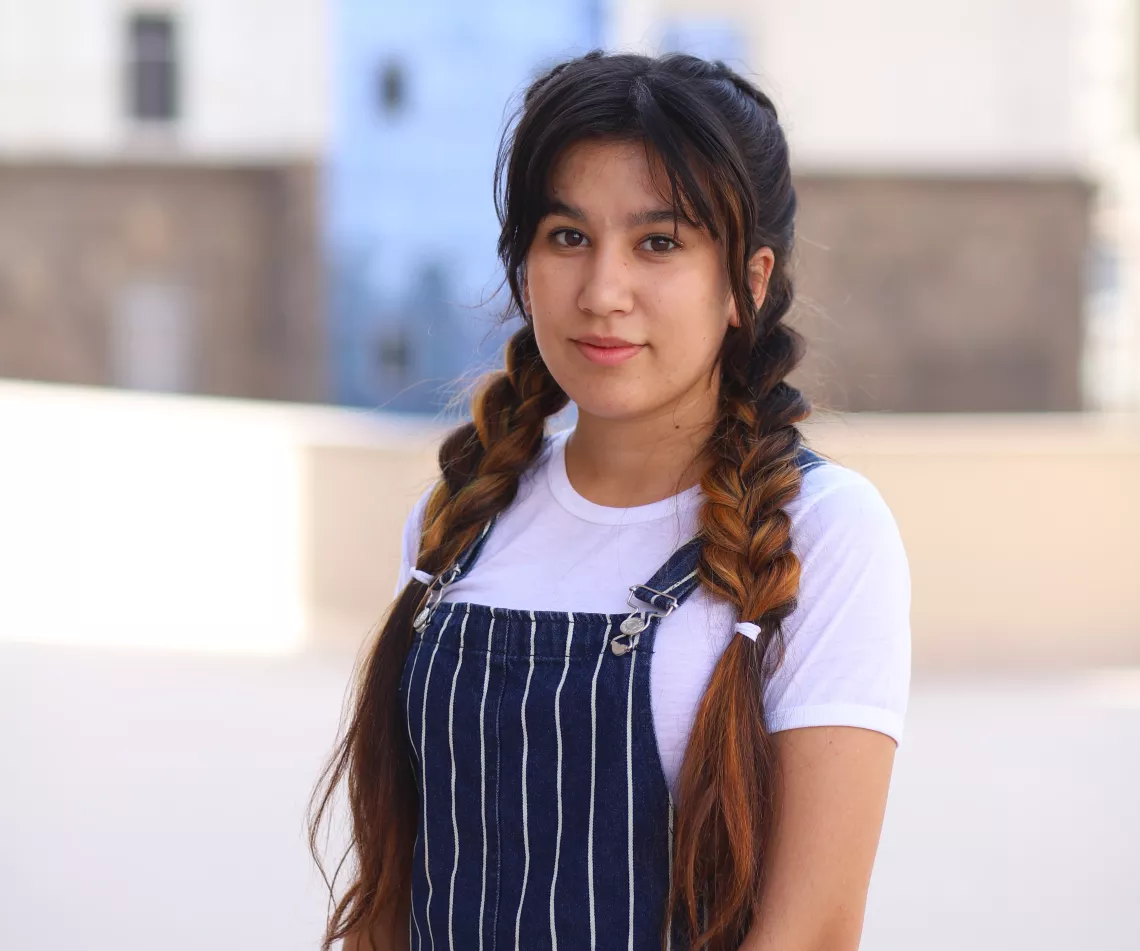

Farzona Hamidova, 23 years old from Dushanbe was always passionate to study graphic design. Within the innovative skills-building programme supported by Chloé she learnt social entrepreneurship skills and launched her own responsible business. She started practicing graphic design to open an Instagram page for her project.
During the project, she learned how to use Photoshop and create pop-art prints. In addition, she also received mentoring from Nafisa Imranova on social media marketing for her own brand on Instagram.
From sketching to the catwalk
In only two weeks, the girls participating to the project finalized the outfits and with the participation of many local influencers and celebrities prepared the collection for the catwalk for the National UPSHIFT/Tech4Development Forum conducted by UNICEF in Dushanbe in commemoration of the 10th anniversary of the International Day of the Girl. The National UPSHIFT/Tech4Development Forum is an annual event of UNICEF to celebrate and showcase youth-led innovative and socially important entrepreneurship ideas and start-ups.
The lights are dim, and models start walking on a specially decorated catwalk. The audience is greeting each look with excitement and applause. Eyes of the girls’ creators of the collection are teary and happy.
“Thank you very much UNICEF and Chloé for giving us such an opportunity to unlock our creativity in a way that is responsible. We also learned how to use digital tools for creative areas such as fashion.” shared Farzona Khamidova when called on the stage for the closing ceremony of the catwalk.


As a next step forward, Mavzuna Nurkhanova, ADAP (Adolescent Development and Participation) Officer at UNICEF Tajikistan confirmed UNICEF’s plans to support girls’ education and participation to help them unlock their potential and access better opportunities in the workplace through building their transferrable and digital skills.
“UNICEF’s aim is to provide girls in Tajikistan with skills for employability to decrease the gender digital divide and provide them with innovative opportunities for meaning participation in their communities. We are grateful to Chloé for helping us make this aspiration come true.” says Mavzuna.
*UNICEF does not endorse any company, brand, product or service